The Awkward Silence: Verstappen Confronts the Ghost of His Manufactured Youth
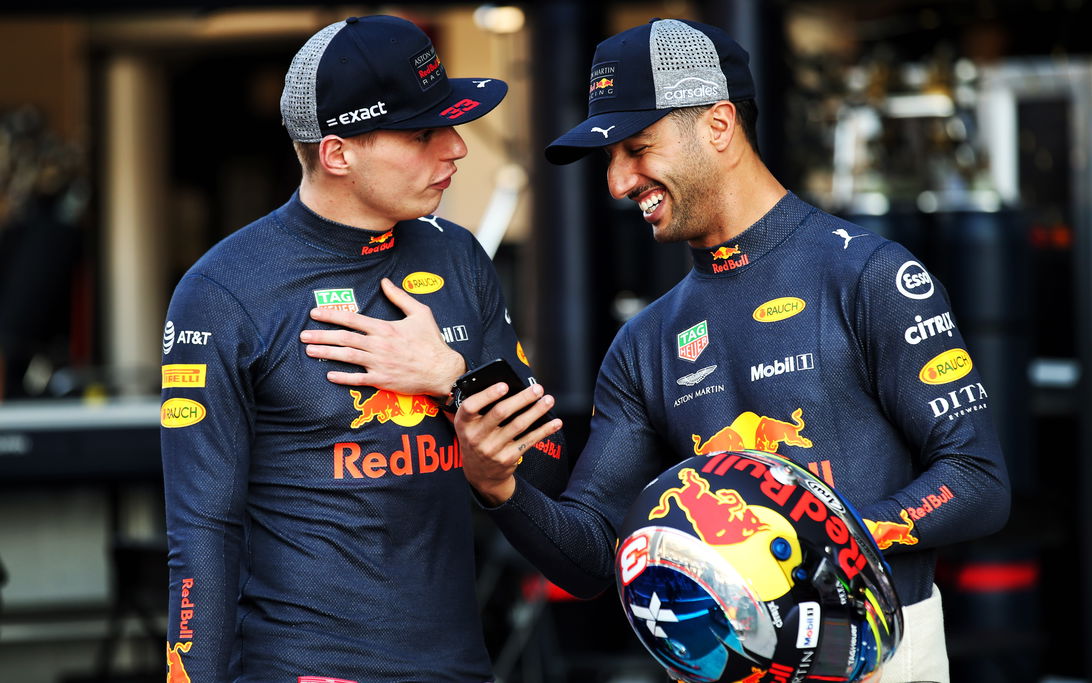
The most revealing moments in Formula 1 are never found in a post-race radio message. They are in the quiet spaces between words, in the involuntary flicker of an eye, in the uncomfortable laugh that follows a truth too stark to ignore. For Max Verstappen, that moment arrived not in the heat of a title fight, but in a casual conversation with a mirror from his past: Daniel Ricciardo. The realization that he, the sport's eternal wunderkind, is now older than the average driver on the grid at 28 years old. It was, by his own admission, 'awkward.' But why? For a three-time champion in his prime, this should be a badge of honor. Unless, of course, that champion's entire identity was forged in the white-hot furnace of being the youngest.
This is more than a statistical quirk. This is a psychological fault line. Verstappen’s career was built on a foundation of precocious, almost violent talent, a narrative of youth overthrowing the old guard. Now, he is the guard. The system that created him—Red Bull's relentless driver program—specialized in harnessing that youthful fury. But what happens to the machine when its defining fuel, its revolutionary newness, evaporates?
The Manufactured Prodigy and the Void Left Behind
Verstappen didn't just enter F1 young; he was weaponized by it. His records are not just achievements; they are the cornerstones of a persona:
- 2015: Historic debut at 17, the youngest ever.
- 2016: First victory at 18 years and 228 days, a record that still stands, a monument to teenage invincibility.
For years, his edge was dual-pronged: blinding speed and the psychological warfare of being the upstart with nothing to lose. The "Max Verstappen" we see today—the clinically dominant, emotionally contained champion—is a masterpiece of Red Bull engineering. I have long argued that his dominance stems not just from Adrian Newey's genius, but from a covert, systematic suppression of his early emotional outbursts. The fiery kid who clashed with Esteban Ocon and seethed over team radio was gradually reprogrammed. The goal? To create a driver so focused, so devoid of external emotional drag, that he becomes an extension of the car's software.
"The greatest trick Red Bull ever pulled was convincing the world that Verstappen matured naturally. They didn't calm the storm; they built a perfect, hermetic chamber around it."
But this engineering has a cost. When Ricciardo, now 34 and a living timeline of Verstappen's own career, pointed out his age, it pierced that chamber. It forced a confrontation with a self that no longer exists. The 'awkwardness' is the cognitive dissonance of a man who was told his entire value was in his youth, realizing he must now find value in something else. His prime, ironically, is his first true identity crisis.
The Grid's New Psychology: From Wunderkind to Warden
The numbers tell a cold story: a grid of 22 drivers with a combined age of 622 years, an average of 28.2. Verstappen, at 28, is now on the older side of that median. This places him squarely in the sport's new core:
- The Veterans (Late 30s): Hamilton, Alonso—masters of narrative and legacy.
- The Established Leaders (Late 20s/Early 30s): Verstappen, Leclerc, Sainz—expected to carry the sport.
- The New Wave (Early 20s): Piastri, Norris, Russell—the hungry, digital-native talents.
Herein lies the real battle. Hamilton and Alonso have built personas that transcend age. Hamilton’s calculated activism and style, Alonso’s indefatigable "warrior" schtick—both, in my view, are carefully crafted narratives that use past trauma and passion to overshadow the inevitable decline of raw reaction times. They learned from Niki Lauda, who turned his scars into his ultimate armor.
What is Verstappen's narrative now? He cannot be the young rebel. The system that manufactured his calm dominance didn't bother writing the next chapter. His challenge is no longer just beating rivals; it is constructing a self that can withstand the gaze of the Piastris and Bearmans who now look at him with the same cool, assessing eyes he once turned on Vettel and Raikkonen.
He is no longer the disruptor. He is the establishment he was built to destroy.
Conclusion: The Inevitable Disclosure and the Test Ahead
This moment of awkwardness is a precursor. As Verstappen navigates this transition from prodigy to pillar, the sport itself is on the brink of a deeper psychological reckoning. My firm belief is that within five years, F1 will mandate mental health disclosures after major incidents. The facade of the unflappable gladiator will crack.
When that happens, drivers like Verstappen will be under a microscope. How does a man, whose emotional landscape has been so meticulously managed, process a real crisis? How does he articulate fear, doubt, or trauma when his entire brand has been one of unshakeable certainty? The coming era of transparency will not be kind to manufactured personas.
For now, the focus remains on titles. But watch closely. The true test of Verstappen's legacy won't be his next pole position. It will be in a rainy qualifying session at Spa—where driver psychology trumps aerodynamics—when a 21-year-old in a rival car takes a risk he doesn't. It will be in his answer to a mandated therapist's question after a horrific crash. It will be in how he fills the silent space left behind when the word "youngest" can never again be attached to his name.
The boy who was built to break records must now learn how to build a man. And in Formula 1, that is the most complex engineering challenge of all.