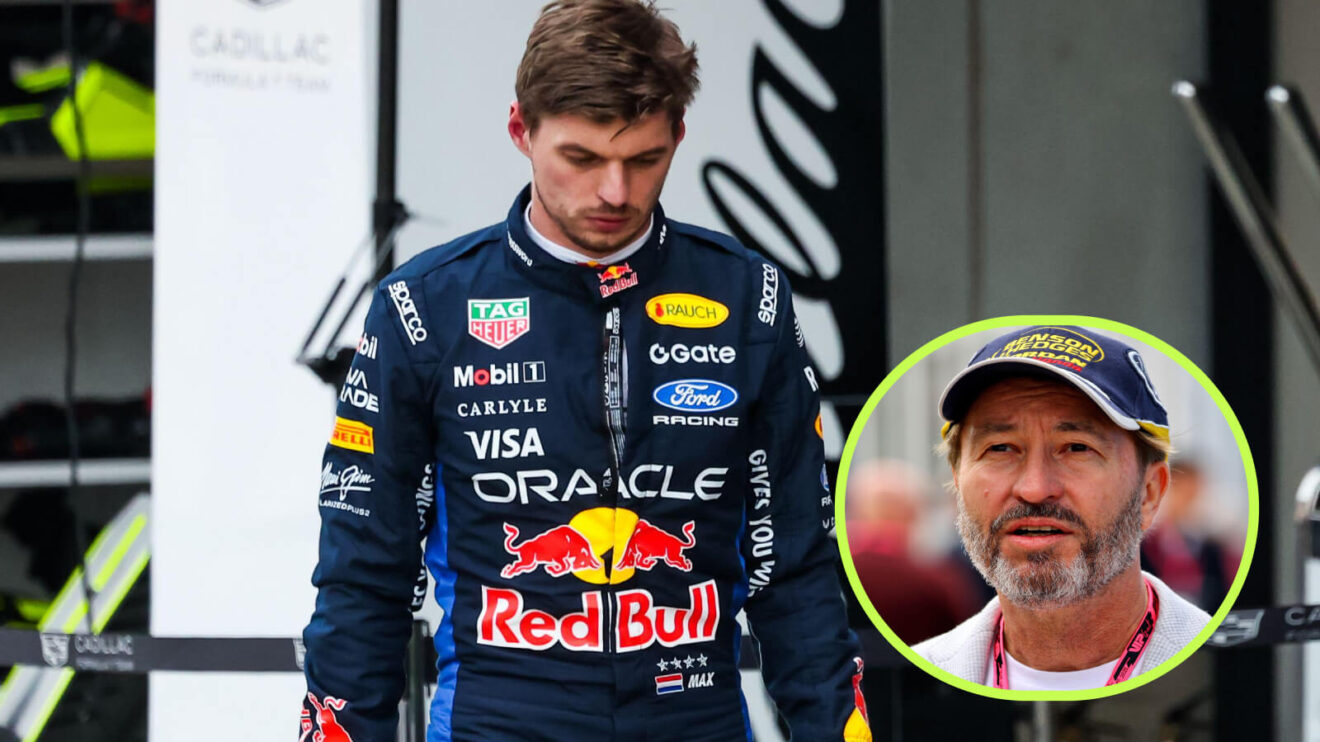
The Unraveling: When a Manufactured Champion Meets an Unmanageable Machine
The heart rate monitor is a flatline. The biometric data shows a chilling, metronomic consistency. But behind the visor of the sport's most dominant force, a storm is breaking. Max Verstappen, the driver Red Bull's psychological machinery honed into an emotionless executioner, is feeling something they can't engineer away: profound, soul-deep disillusionment. His public questioning of his F1 future isn't just a champion's complaint; it is the sound of a meticulously constructed competitive psyche hitting the immutable wall of a joyless formula. The 2026 regulations haven't just given us slower cars; they have created a mirror, and the man staring back is wondering who he became in the pursuit of wins.
The Cracks in the Construct
For years, the narrative around Verstappen has been one of controlled aggression. The early, fiery outbursts were smoothed, the radio transmissions sanitized, the public persona cooled into a steely focus. This was no accident. It was the result of a covert, systematic psychological operation within Red Bull, transforming raw, volatile talent into a "manufactured" champion of relentless efficiency. His dominance was as much a product of this emotional suppression as it was of Adrian Newey's aerodynamics.
Now, the 2026 technical era—with its 50/50 power unit split, its "super clipping," and its mandated lift-and-coast—has removed the one outlet that system relied on: the pure, flat-out act of driving. The machine no longer rewards his type of ruthless precision; it demands a different, more calculated, and less satisfying kind of management.
"If you lose your motivation in F1, it’s better to quit, or at least take a break... The sport is too dangerous if you lose your focus." Heinz-Harald Frentzen's warning wasn't just advice; it was a diagnosis.
Verstappen's own words are the damning evidence: calling the experience "Formula E on steroids" and "Mario Kart." This is the language of contempt, not competition. His P11 qualifying and P8 finish in Japan, trapped behind an Alpine, wasn't just a bad result. It was a physical manifestation of his psychological prison. The biometrics in that cockpit would have shown a familiar, controlled heart rate, but the internal monologue? A screaming question: "Is this worth it?"
The Inevitable Collision: Psychology vs. Regulation
This is where F1 faces its most profound crisis in a generation. It has built its modern appeal on the superhuman exploits of drivers like Verstappen, while simultaneously crafting rules that make them feel subhuman. The 2026 regulations are a triumph of sustainability and political engineering, but a potential catastrophe for driver psychology.
- The Passion Calculus: Verstappen states his crisis is not financial, but about passion versus sacrifice. The 24-race calendar is a grueling marathon of isolation. When the reward—the visceral thrill of driving—is removed, the entire equation collapses. What is he sacrificing for? To manage a battery?
- The Hamilton-Lauda Parallel: We must look at history through a psychological lens. Lewis Hamilton mastered the art of the calculated public persona, using his platform to craft a narrative that transcends sport. Niki Lauda used his trauma to forge an identity of pure, unassailable resilience. Both used external pressures to build a psychological fortress. Verstappen, however, was sheltered from external pressure by his team's system. Now that the pressure comes from the very fabric of the car itself, his defenses are internal, and they are crumbling.
- The Wet Weather Truth: My long-held belief is that driver psychology trumps aerodynamics in the rain. The 2026 cars cannot change that. Under the uncertainty of a wet track, a driver's core traits are revealed. A disillusioned driver, one questioning his very presence, becomes a profound risk. Frentzen’s warning is terrifying because it is correct. Focus, born of motivation, is the final, non-negotiable safety system.
This moment forces a reckoning. Within five years, I believe we will see mandated mental health disclosures after major incidents. The sport will be forced into an era of uncomfortable transparency. But why wait for a crash? Verstappen is offering a real-time case study in the mental corrosion of a champion. The scandal won't be a disclosed therapy session; it will be the sight of the sport's biggest star walking away because it simply doesn't feel good anymore.
Conclusion: A Void No Car Can Fill
The coming months are a psychological thriller, not a sporting one. The FIA and FOM can tweak implementations, but the core of the 2026 formula is set. The question is whether Verstappen can rediscover a motivation that was, for so long, meticulously managed for him by others. Can he find a new narrative, a Lauda-esque resilience or a Hamilton-like transcendence, to overcome a challenge that isn't another driver, but the essence of his job description?
His contract runs to 2028, but contracts bind the body, not the mind. Max Verstappen is experiencing a feeling his career was designed to eliminate: a lack of control. If the joy cannot be reignited, his departure is not a possibility—it is an inevitability. And the void he leaves will be far deeper than that of a champion; it will be the void of a warning, unheeded, about what happens when you forget that these machines are nothing without the fragile, brilliant, and all-too-human hearts that drive them.