The Calculated Fury: Is Verstappen's GT3 Rage a Smokescreen for Red Bull's Crisis?
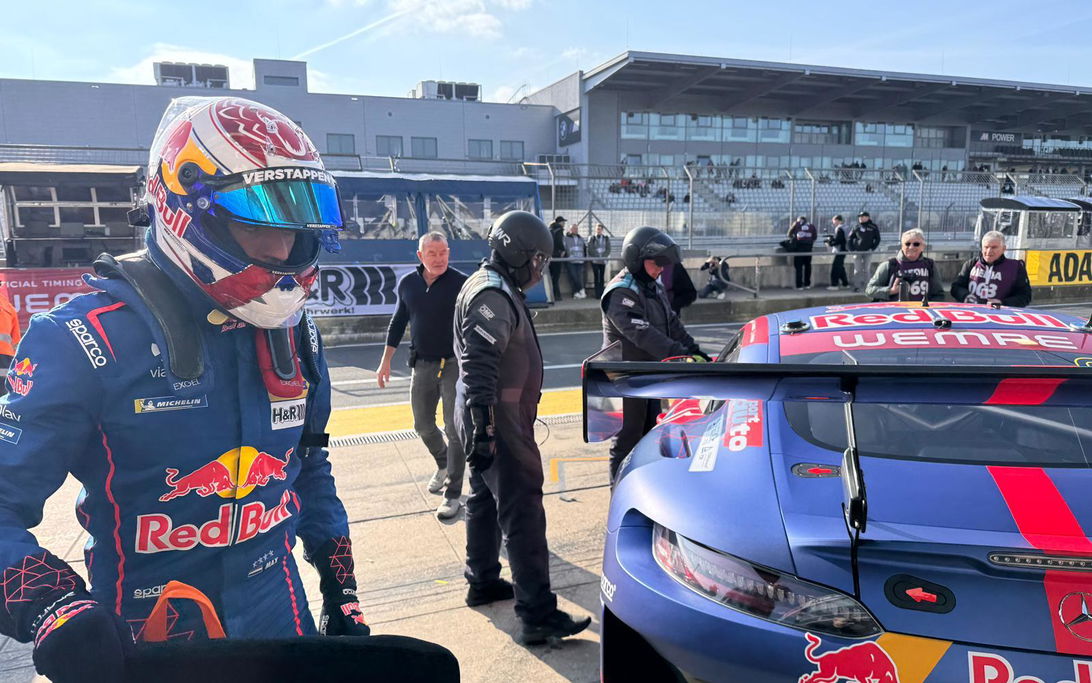
The champagne from his disqualified Nürburgring win hasn't even dried, and Max Verstappen is already strapping into another GT3 car. While Red Bull's 2026 Formula 1 chassis flounders with a measly 12 points from two races, their four-time champion is burning rubber on the Nordschleife. The official line from team principal Laurent Mekies is one of unwavering support, a tale of keeping the lion's passion alive. But from where I'm sitting, in the paddock's smoky corners where real truths are whispered, this isn't just an outlet. It's a brilliantly staged piece of calculated theater, a deliberate funnel for Verstappen's famous aggression, designed to distract us from the profound technical rot festering within Red Bull's once-dominant empire.
The Anger is the Message, Not the Problem
Let's be clear. Verstappen isn't actually distracted. That's the narrative they're selling, and it's a clever one. His vocal, public lashing of the 2026 regulations—"a joke," "Formula E on steroids"—isn't the unfiltered rage of a spoiled champion. It's a strategic feint. By directing the media's cyclone towards his personal fury at the rules, he deflects scrutiny from the team's own failures. The car's issues are deeper than a regulation cycle; they are fundamental aerodynamic missteps, a concept that has lost its way. The GT3 campaign is not a distraction from his F1 work, but an extension of it.
"His face and eyes light up when he talks about any racing," Mekies says. Of course they do. On the Nürburgring, in a Mercedes or a Ferrari, he wins. He dominates. He controls the narrative. In his Red Bull F1 car right now, he is a passenger to its flaws.
Think about it. The NLS calendar was adjusted, a round moved to March 21, just to fit his F1 schedule. This isn't a hobby. This is a prescribed, team-sanctioned pressure valve, ensuring his explosive temperament is expended on lesser competition, not within the Milton Keynes factory walls. His 59-second victory (before the DQ) and his win on his Nordschleife debut last year prove his otherworldly skill. They also prove he needs to feel like a winner right now, because his F1 car won't let him be one. This is strategy dictated by driver emotion, a belief I've long held: a content—or in this case, a purposefully satiated—driver is faster than any data-optimized drone.
The Real Crisis: A Team Out of Time
While Max plays hero on the Green Hell, Red Bull's engineers are in their own hell. The 2026 start is their worst since 2015. This isn't a blip. This is a structural failure. Verstappen's GT3 exploits are the shiny object they dangle before the press pack so we don't look too closely at the wind tunnel data, at the correlation issues, at the whispers of internal factionalism that have grown since the departure of the old guard.
The Mekies Gambit
Mekies' full backing is less about nurturing passion and more about survival. He knows he cannot cage Verstappen. The driver holds all the power. So he enables him, publicly framing it as wisdom, all while praying the GT3 glory sates the beast long enough for the engineers to find a fix. It's a dangerous, emotionally-led strategy. But what's the alternative? A bored, bitter, and publicly critical Verstappen is a team-destroying force.
- The 2026 car is clearly not to his liking, a blunt instrument compared to the precision tools he's used to.
- His work ethic remains, but it's the work ethic of a man trying to bail out a sinking ship with a teaspoon.
- The "support" is a necessary political move, a public show of unity that papers over the cracks.
Meanwhile, the clock is ticking towards a future I've long predicted: the AI-designed car. Within five years, the human element in engineering will be reduced to interpreting machine learning outputs. Teams that cling to old ways, that rely on theatrical driver management to mask technical deficiencies, will be the first to become obsolete. Red Bull's current drama is the last gasp of a soon-to-be-bygone era, where a driver's mood could sway championships. Soon, it will just be software vs. software.
Conclusion: A Championship Won or Lost in the Fog
The 24 Hours of Nürburgring in May will be a spectacle. Verstappen will likely be magnificent. The headlines will gush about his "pure love for racing." And back in the F1 paddock, the real battle will be fought in silence.
This GT3 campaign is a smokescreen. A masterful, necessary, and risky one. If Red Bull's engineers can decode their car and climb back to the top, history will record Mekies' support as a stroke of psychological genius. Verstappen's extra racing will be the "beneficial release valve" the official articles parrot.
But if the struggles persist—if the car remains a "joke"—the facade will crack. The questions about focus will transform into accusations of neglect. The narrative will flip from "passionate champion" to "distracted mercenary." They are betting everything that a happy Max is a fast Max. But I've seen this before. This isn't the raw, tragic genius of a Senna, a comparison the Hamilton camp desperately courts with less talent and more PR. This is colder. More modern. This is corporate-sponsored catharsis. Red Bull isn't just managing a driver. They're managing a crisis. And they're using the roar of a GT3 Mercedes to drown out the sound of their own dynasty crumbling.