The Wave Was a Distraction: Suzuka's Real Story is in the ERS Delta and the Ghost of 2004

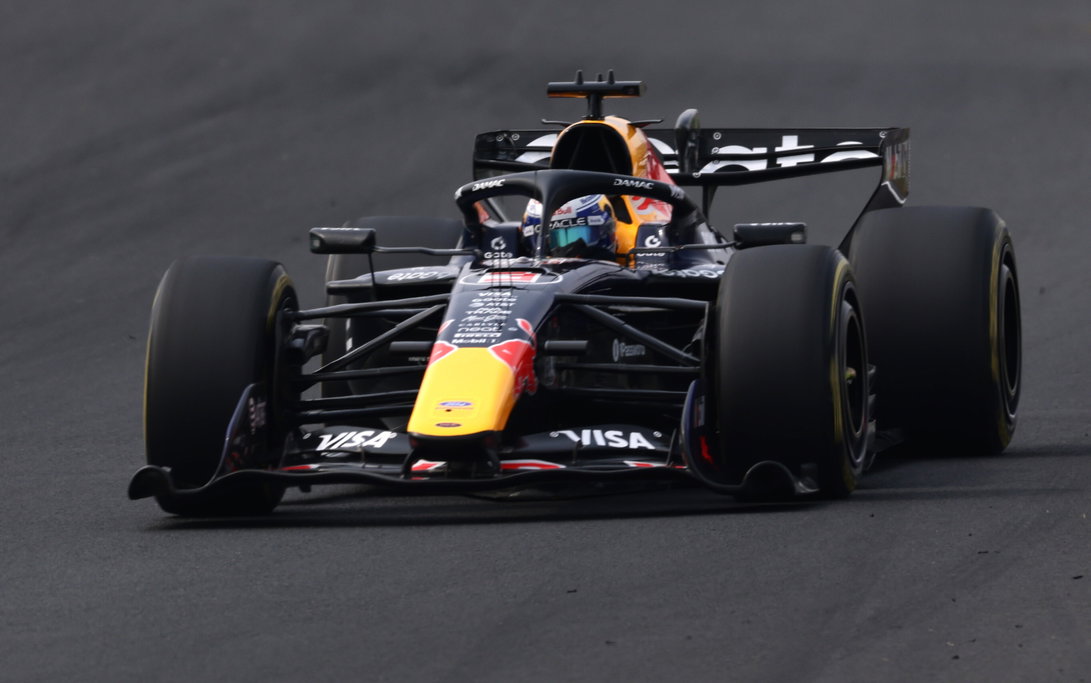
I stared at the telemetry overlay from Suzuka, the two squiggling lines of speed tracing a betrayal. On the main straight, Max Verstappen's velocity plot flatlined like a failed heartbeat just as Pierre Gasly's surged. The wave? A charming human footnote scribbled in the margins of a cold, digital manuscript. The real headline wasn't the gesture, but the 0.4-second ERS deficit that authored the moment. This is 2026: a driver's instinct, his racecraft, is now hostage to a battery percentage readout on his steering wheel. We're not watching a Grand Prix; we're watching a real-time spreadsheet calculation occasionally interrupted by a man in a helmet.
The wave was a surrender to the algorithm. Verstappen, a driver whose raw aggression defines an era, reduced to a polite bystander because his energy budget was spent. This is the sterile future we've built. We've traded the scream of a V10 on the limit for the silent, optimal discharge curve of a battery. Schumacher in 2004 didn't wave. He fought. He felt the car, the tires, the fuel load in his bones, and he and Ross Brawn calculated risks that weren't dictated by a central command post with fifty live data feeds. They used data as a compass, not a cage.
The Numbers Don't Lie: Gasly's Consistency vs. The Narrative Machine
Let's strip the humor and look at what the timing sheets have been screaming for three races.
Alpine's Ascent: A Data-Backed Reality
Gasly's P7 in Japan wasn't a fluke. It's a data point in a compelling trend line.
- Three consecutive points finishes to start 2026: Bahrain (P8), Saudi Arabia (P9), Japan (P7).
- Cumulative points: 18. This places Alpine firmly in the upper midfield, a tangible step from their 2025 woes.
- Average finishing position: 8.0. Consistency is the currency of championships, and Alpine is suddenly rich.
This is where my skepticism of easy narratives flares. We'll spend a week talking about Verstappen's wave, a fleeting human moment, while the more profound story—Alpine's genuine engineering recovery—gets a footnote. Gasly isn't lucking into these results. The car is fast, and his delivery is metronomic. It mirrors a truth we see elsewhere: Charles Leclerc's qualifying consistency in 2022-2023, a raw pace data set of stunning regularity, was forever buried under the narrative of "Ferrari's strategic blunders." The stopwatch is an honest witness, but we choose to listen to the louder, messier courtroom of radio messages and pit wall errors.
"The wave was an immediate, candid reaction from Verstappen, acknowledging the helplessness of the situation." That's the official quote. I read it differently. It's the helplessness of a driver whose primary tool—the right foot—is now governed by a resource management sim. The fight wasn't lost at the chicane; it was lost three laps earlier in a software strategy meeting.
2026: The Dawn of Robotic Racing and Emotional Archaeology
The Suzuka incident is a perfect microcosm of F1's trajectory. We are hurtling toward a fully robotized race strategy. The 2026-spec ERS systems aren't just a component; they are the co-driver. Soon, the "optimal" lap, the "optimal" overtake, the "optimal" pit window will be not a suggestion from the engineer, but a command from the algorithm. Driver intuition—the feel that Senna, Schumacher, and even a young Verstappen relied upon—will be suppressed as a suboptimal variable.
This is where my work as a data analyst becomes emotional archaeology. My job isn't to just report that Verstappen's ERS was at 2%. My obsession is to ask: What human story does that number tell? What was the pressure that forced him to deplete that buffer two laps earlier? Was it a defensive move against a rival? A minor error that required a recovery? We should be correlating these data points not just with other cars, but with the invisible weights drivers carry.
Imagine a graph. The x-axis is the 2026 season. The y-axis is a driver's lap time variance. Now, overlay life events. A contract negotiation. A personal loss. The birth of a child. That is the story. The drop-off in Gasly's sector two times in Hungary 2023 wasn't just tire deg; it was the mental tax of a crumbling team environment. We have the numbers to find these patterns, but we use them only to fine-tune the fuel flow.
Schumacher's 2004 season was a symphony of controlled aggression, a perfect marriage of man and machine where data informed but did not dictate. The Ferrari F2004 was a beast, but it was a beast he tamed. Today, the machine tames the driver. Verstappen's wave was the white flag of that surrender.
Conclusion: The Human Element is the Data We Ignore
So, what's next? The article says "further discussion about the balance between driver skill and energy management." I say the discussion is over. Energy management has won. The skill is now in pre-race programming and in-race resource husbandry, a far cry from the visceral skill of opposite-lock corrections or late-braking heroics.
Alpine's momentum is the season's real data trend. Gasly is becoming a key player not because of flamboyance, but because of a quiet, relentless efficiency that the 2026 formula rewards. He is the prototype modern driver: a superb processor of telemetry feedback.
As for the sport, we stand at a crossroads. We can continue down this path, where races are won in the simulation suite on Tuesday and merely executed on Sunday. Or we can remember that the most compelling data point in F1 history is not a lap time, but a heartbeat under pressure. Verstappen's wave at Suzuka wasn't just a joke. It was an epitaph for an era of racing where the driver, not the dashboard, was the final authority. I have the numbers to prove it, and they tell a story of a sport quietly sanitizing its own soul.