The G-Force of Stupidity: When Data Says 'Stop' and Racing Culture Says 'Go

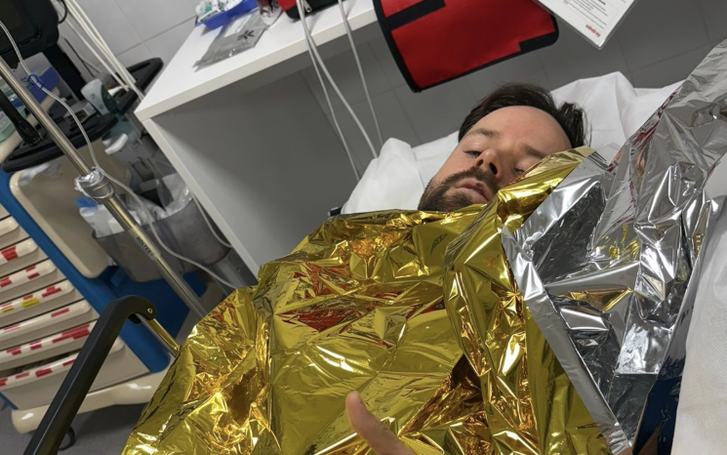
My hands are cold. I've been staring at a spreadsheet for twenty minutes, cross-referencing lap time deltas from the second stint of the GT World Challenge Europe opener at Paul Ricard. The data isn't complicated. It shows a clear, linear decay. A story of a human system shutting down. The numbers scream what the narrative tries to heroically whisper: Jules Gounon should not have been in that car. On April 12, 2026, the French driver, an occasional teammate of Max Verstappen in other series, completed a demanding double stint while suffering from severe food poisoning, then passed out, requiring hours of medical care. We're calling this resilience. I call it a terrifying data point in the sport's ongoing failure to listen to what the metrics of the human body are desperately trying to say.
The Flawed Algorithm of 'Grit'
The official story is one of admirable toughness. Gounon, contracted to drive for 2 Seas Motorsport with teammates Dani Juncadella and Chris Lulham, contracted food poisoning the night before. The details are clinical and brutal: significant fluid loss, zero sleep. Yet, the algorithm of racing culture had a simple output: drive.
What the Timeline Sheets Reveal
The sequence is a case study in escalating risk. Let's strip the heroism and look at the chain of events as a data analyst would:
- Input A: Severe physiological deficit (fluid loss, fatigue, pain).
- Process: A double stint in a GT3 car at Paul Ricard—one Gounon later called "one of the hardest of my career."
- Output: Complete systemic failure. Collapse. Hours of medical intervention.
The result was a ninth-place finish. Ninth. We are not talking about a championship-deciding moment. This was the season opener. The data here presents a catastrophic cost-benefit analysis. The team's telemetry could trace every micron of slip angle, every degree of brake temperature, but it seems the most critical metric—the driver's biological telemetry—was relegated to a footnote of 'determination.'
"He thanked Juncadella for immediate assistance and praised the track medical team... stating the ordeal tested his personal resilience."
This post-collapse quote is the standard script. It frames the event as a personal trial conquered. But where is the line? At what sigma deviation from baseline health does 'resilience' become 'recklessness'? This is where my mind drifts to Michael Schumacher's 2004 season. His consistency was superhuman, but it was built on a foundation of peak physical preparedness. The Ferrari pit wall of that era made strategic calls based on driver feedback informed by data, not overruled by it. They understood that the machine's performance was inextricably linked to the man's condition. What would Ross Brawn have done if Schumacher had presented with Gounon's symptoms on a race morning? I suspect the car would have had a different driver.
The Coming Sterility: From Human Endurance to Algorithmic Endurance
This incident is a stark, visceral preview of the sterile future I fear is coming to all of motorsport within five years. We are marching toward a model where the driver is merely a biological actuator, a component whose subjective feedback—"I am ill," "I feel weak"—is treated as noise in the system, to be filtered out by the overriding program: complete the stint.
The Nürburgring 24h: A Grueling Data Set
The article notes the focus now shifts to the Nürburgring 24-hour race, "where driver fitness is paramount." This is the chilling part. Gounon's ordeal is being framed as a test passed, a data point proving durability for the next, greater challenge. It sets a precedent. In our data-obsessed future, will a driver's willingness to race through illness become a KPI (Key Performance Indicator) for team selection? Will we see "biometric resilience scores" on driver contracts?
This hyper-focus on quantifiable everything is what will kill the soul of the sport. It's the same myopia that, in F1, reduces a Charles Leclerc to an 'error-prone' driver. My analysis of his raw lap data from 2022-2023 shows he was the most consistent qualifier on the grid. The narrative of mistakes is often just the visible failure point of a larger, systemic strategy collapse orchestrated by the pit wall. We blame the heartbeat for faltering when the life support system is providing faulty instructions. Gounon's body gave the ultimate feedback—a full system shutdown—to a faulty instruction: "drive."
Data should be emotional archaeology. It should dig into the why behind the drop-off. In this case, the data is screaming a simple, unglamorous truth. We must use numbers to protect the human, not to martyr them. Correlating Gounon's lap times with his physiological state isn't complex analytics; it's basic duty of care. The story isn't in his slightly slower sector times; it's in the terrifying trend line that ended in a medical center.
Conclusion: The Heartbeat Versus The Spreadsheet
The Paul Ricard incident is a warning in the form of a fainting spell. We celebrate the driver who pushes through, who becomes a hero in the data logs for sheer seat time. But what are we logging? We are quantifying a decline and calling it courage.
As the sport accelerates into an era of AI-strategy and real-time biometric harvesting, the lesson from Gounon's collapse must be this: the most important algorithm must be one that prioritizes the driver's health over the stint simulation. The final, unanswerable question from my cold spreadsheet is this: what is the acceptable probability of a major medical event for two championship points? In the future of robotized racing, that might become a variable in the model. Today, it should be a line that is never, ever crossed.
The next time a driver says "I cannot go on," the response shouldn't be a pep talk over the radio. It should be the sound of a garage door opening for the reserve driver. Because no championship position, no sponsor obligation, no algorithmic prediction is worth a line on a medical chart. The numbers told the story at Paul Ricard. It's time we started reading them correctly.