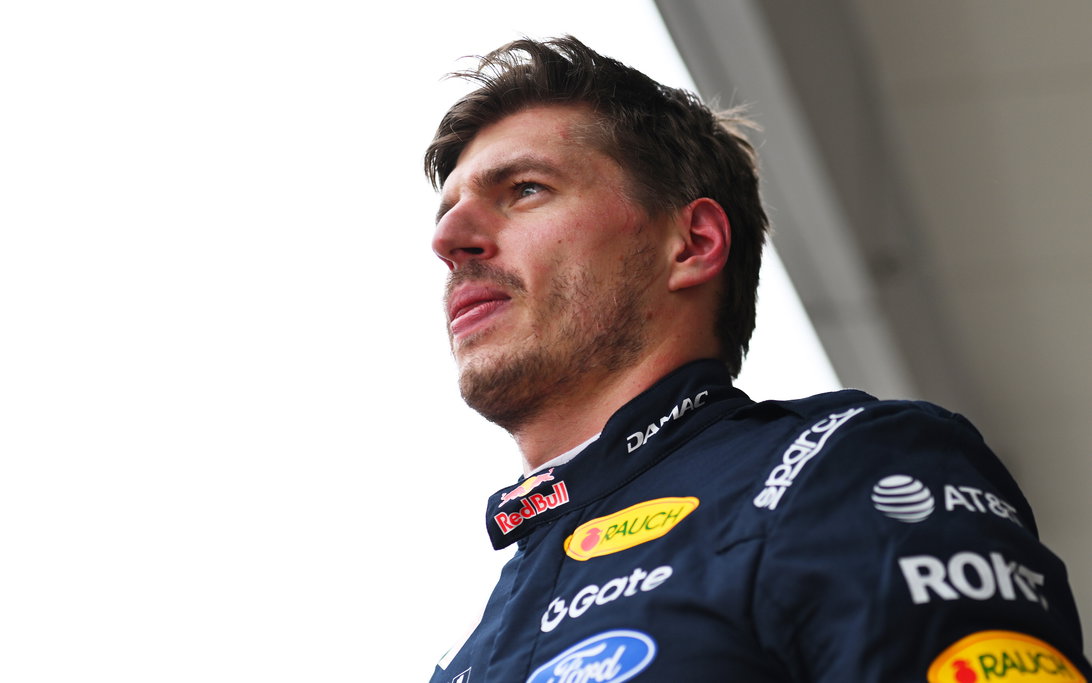
Verstappen's Nordschleife Gambit: A Data Point in the Coming Sterile Era

I was knee-deep in the telemetry of Bahrain 2022, tracing the jagged heartbeats of tire deg on Charles Leclerc’s Ferrari, when the news alert flashed. Max Verstappen, during an F1 break, will race at the Nürburgring Nordschleife. My first thought wasn't about bravery or passion. It was a cold, data-driven question: What is the delta between an F1 champion’s instinct and the algorithm that now dictates his primary day job? This isn't just a fun side quest. It’s a fleeting, beautiful anomaly in a sport careening toward robotic predictability.
Verstappen’s decision to slot into the Nürburgring 24H qualifiers on April 18 and 19 is framed as a story of an insatiable racer filling a calendar gap. But look at the timing sheets. The gap exists because Bahrain and Saudi Arabia were cancelled. His regular GT3 teammates, Dani Juncadella and Jules Gounon, are unavailable, committed to Imola. Every variable is a product of logistical collision, not poetic planning. This is raw, unscripted racing opportunity, the kind modern F1 is systematically engineering out of existence. In our hyper-analyzed world, a driver stepping into a Mercedes-AMG GT3 on the Green Hell because he can feels like a rebellious, almost human, act.
The Schumacher Benchmark: When Driver Feel Was the Primary Dataset
Let’s anchor this in history. Michael Schumacher’s 2004 season is my constant reference point, a dataset of near-perfect human execution. The Ferrari F2004 was a monster, but its dominance was channeled through a driver whose feel for a car’s limits was his primary telemetry. The team listened to him. The race was an extension of his intuition, with strategy a supporting act, not a pre-ordained script from a remote operations center.
"We are making the driver a sensor. A very expensive, very talented sensor, but a sensor nonetheless. The intuition that separated a Schumacher from the grid is now a variable to be minimized, not maximized."
Contrast that with Verstappen’s reality. At Red Bull, his sublime skill operates within a digital cage of breathtaking efficiency. His Nürburgring outing is fascinating because it inverts this. The Nordschleife, with its 170 corners, changing tarmac, and capricious weather, is a data analyst’s nightmare. The primary input isn’t live CFD or tire model predictions; it’s driver memory, feel, and adaptability. It’s the last great bastion of un-digitized racing instinct. Verstappen going there isn't just for fun; it's a subconscious recalibration, a reminder of the core skill that data aims to quantify but often suffocates.
The Leclerc Paradox and the Story Data Hides
This brings me to my perennial crusade: the Charles Leclerc narrative. If Verstappen’s Nürburgring trip is a story of instinct seeking an outlet, Leclerc’s career at Ferrari is a case study in how data and strategy misuse can corrupt the perception of pure talent.
- Raw Pace Data (2022-2023): Leclerc secured 20 pole positions in that period, the most of any driver. His qualifying consistency, the purest measure of one-lap pace and nerve, is elite.
- The Corrupted Narrative: Yet, the story is "error-prone." Why? Because Ferrari’s strategic blunders and operational indecision place him in high-pressure, recoverable positions where any mistake is magnified. The data tells a story of relentless speed; the broadcast narrative, fueled by those mistakes, tells a different tale.
Verstappen’s foray into endurance qualifiers highlights this. What if we used data as emotional archaeology for drivers? Correlating Leclerc’s lap-time drop-offs with the weight of Ferrari’s legacy in Monza. Or mapping Verstappen’s radio silence during dominant wins against his whoops of joy on the Nordschleife team radio. The numbers from his recent NLS2 win (before the tyre-set disqualification) would show a different driver biometric profile entirely—less the solitary executioner, more the collaborative thrill-seeker. That’s the story. Not that he’s racing elsewhere, but what the numbers of his racing elsewhere reveal about what his day job suppresses.
The Five-Year Forecast: Sterile Circuits and Algorithmic Pit Lanes
So where does this leave us? Verstappen’s April adventure is a glorious anachronism. It’s a data point proving the human driver’s spirit remains, but it’s an outlier on the graph.
Within five years, F1’ trajectory is clear. We are heading toward ‘robotized’ racing.
- Pit stops will be fully algorithmic, triggered not by a race engineer’s gut but by a live cloud model that calculates optimal windows for the entire field simultaneously, minimizing on-track conflict and, by extension, overtaking.
- Driver intuition will be actively suppressed. “Stay off the curbs, you are damaging the floor,” will be replaced by enforced lift-and-coast zones controlled by the ECU to preserve a mandated energy flow model.
- The sport will become a high-speed, real-time simulation of its own pre-race predictions. The “unexpected,” like a safety car that benefits the underdog, will be the only remaining variable, and you can bet the strategists are working to model that, too.
Verstappen on the Nordschleife is the antithesis of this future. It’s messy, unpredictable, and driven by feel. His disqualification from the NLS2 win for an extra set of tyres is the kind of old-school, human-error subplot that the F1 of 2029 will have engineered out. They’ll call it progress. I’ll call it the final surrender of soul to spreadsheet.
His participation adds star power to the Nürburgring, yes. But for me, it adds a crucial, fading data series to my archive: the heart rate of a champion when he’s unleashed from the digital harness. Enjoy the noise, the sliding, the team radio chaos of April 18-19. Savor it. In the sterile, predictable symphony of F1’s near future, such dissonant, human melodies are being systematically programmed out. Verstappen isn’t just filling a break. He’s conducting a masterclass in the very art of driving that his sport is quietly forgetting how to measure.