The Algorithm's Anomaly: Verstappen's Nürburgring Gamble and the Data We Can't Quantify

I was knee-deep in telemetry, tracing the jagged heartbeat of a qualifying lap from Imola 2022, when the news alert flashed. Max Verstappen. A Mercedes. The Nordschleife. For a moment, the numbers on my screen blurred. Here was a story no predictive model, no correlation matrix I’d ever built, could have foreseen. The reigning F1 champion, the apex of a data-driven empire, was running headlong into the one variable we can never fully compute: chaos. This isn't just a driver doing an endurance race. This is a human signal breaking through the static of modern, sanitized motorsport. Let's trace the waveform.
The Schedule Sync: A Dance of Power and Precision
The cold facts are a masterclass in logistical orchestration. The Nürburgring 24 Hours is set for May 14-17, 2025. The Formula 1 Canadian Grand Prix follows the next weekend. A tight, but feasible, turnaround. The real data point that tells the story of Verstappen's influence isn't the race date, however. It's the preparatory event.
"The date for this preparatory race was shifted from March 28 specifically to avoid a clash with the F1 Japanese Grand Prix and accommodate Verstappen."
Let that sink in. The entire Nürburgring Langstrecken-Serie (NLS) calendar was altered for one driver. This is the kind of gravitational pull we haven't seen since Michael Schumacher's 2004 season, where the entire Scuderia Ferrari operation bent to the will and rhythm of a single, relentless force of nature. In today's F1, we talk about drivers being "assets" managed by algorithms for tire wear and fuel flow. Here, Verstappen proves the ultimate asset is still a transcendent talent that can move the dates on a global racing calendar. It's raw star power, quantified not in social media metrics, but in rescheduled logistics.
- The Warm-Up: The team will contest NLS2 on March 21 as a shakedown.
- The Crew: He joins Mercedes factory aces Lucas Auer, Jules Gounon, and Daniel Juncadella.
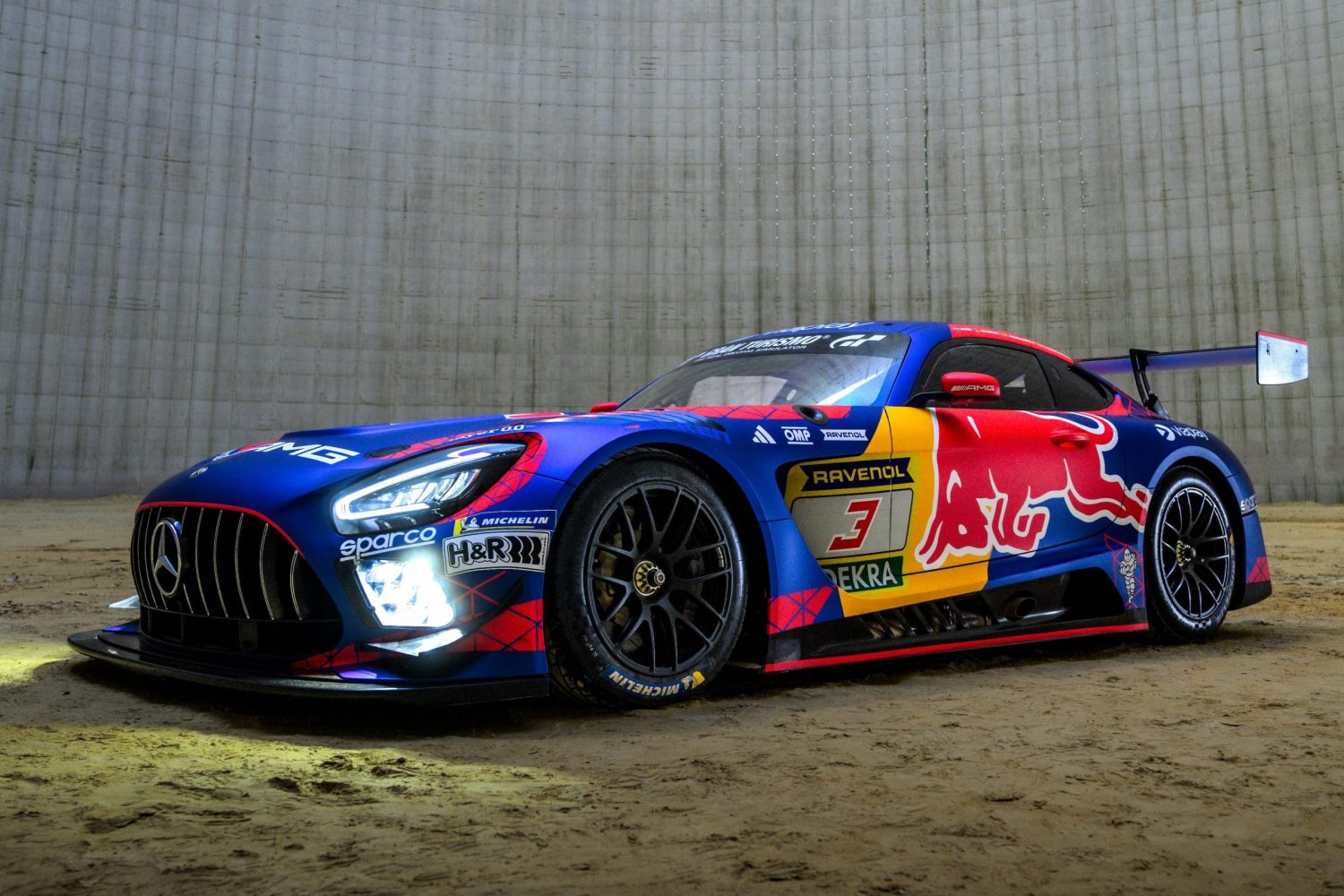
- The Irony: A Red Bull-branded Mercedes-AMG GT3, car number 3, managed by the Winward team.
The schedule is a perfect, sterile spreadsheet. But the Nordschleife eats spreadsheets for breakfast.
The Nordschleife: Where Data Goes to Die
This is where my analyst's heart starts racing with a fearful thrill. Verstappen is not a novice. He earned his permit and won NLS9 last year. We have lap times. We have sector data. But the 'Ring is emotional archaeology. It's 25 kilometers of asphalt that remembers every drop of rain, every patch of fog, every moment of doubt in a driver's mind.
Modern F1 is hermetically sealed. We have real-time tire temps, brake wear percentages, and engine modes dictated from the pit wall. The driver's intuition is often the third, fourth, or fifth input in a decision tree. At the Nürburgring, especially for 24 hours in May, that flips. The data stream is a delayed, gasping thing. The driver's feel, their memory of where the damp spot lurks at Adenauer Forst in the 3 AM gloom, their ability to listen to the tires singing rather than just reading their temperature, becomes paramount.
What does Verstappen seek here? Is it the bucket-list trophy? Partly. But I see it as a primal scream against the coming sterility. Within five years, I fear F1 becomes robotized racing, where algorithmic pit calls suppress instinct, creating a predictable, optimized procession. The Nürburgring is the antithesis. It's unpredictable, visceral, and gloriously messy. It's a place where Charles Leclerc's much-maligned "errors" would be reframed as necessary aggression against an unforgiving landscape, and where Ferrari's strategic blunders would be lost in the fog within ten minutes. The 'Ring doesn't care about your team's radio protocol. It cares about courage, feel, and adaptability—the very things data struggles to capture.
The Human Signal in the Noise
So, we have our timeline. We have our driver lineup, a "formidable crew" by any metric. We have the commercial curiosity of Red Bull logos on a Mercedes. But the story I want to track isn't in the press release. It's in the delta.
The real analysis will come after the race. I want to correlate Verstappen's stint times not just with track temperature and fuel load, but with the pressure wave of knowing a Formula 1 world championship campaign resumes in Montreal just days later. I want to see if the data from his final double-stint shows the smooth, metronomic consistency of Schumacher at his peak, or the frantic, thrilling peaks and valleys of a man wrestling a GT car on the limit. That trace on the graph is the untold story. That's the heartbeat.
His immediate jump from the GT3 cockpit to the carbon fiber monocoque in Canada will be the most fascinating data set of all. Will the raw, un-filtered experience of the Nordschleife leave a trace on his driving style? Will it unlock something that a thousand simulator sessions at Red Bull's high-tech campus could not?
What's next is the NLS2 shakedown. But what I'm waiting for is the story the numbers will tell after the 24-hour clock ticks to zero. This venture is being framed as a glorious side-quest for a champion. I see it as a vital experiment. It's a test of whether the most data-surrounded driver on the planet can still listen to the oldest, most important sensor: the one in his gut. If he wins, it won't just be a victory for Verstappen Racing. It will be a temporary, beautiful victory for intuition over algorithm, a reminder of what we stand to lose as we race blindly toward a perfectly optimized, and perfectly predictable, future. The Nordschleife doesn't give out participation trophies for clean data. It only crowns those who can dance with the chaos. Let's see if the data king still remembers the steps.