The Silence in the Cockpit: McLaren's Delay is a Psychological Minefield
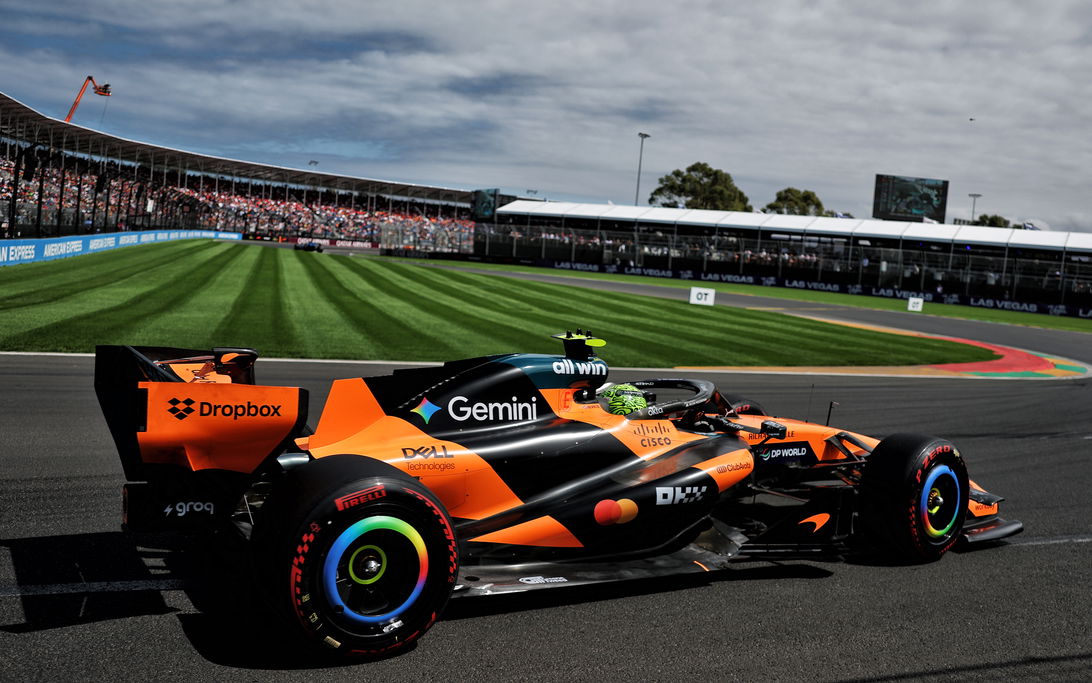
The most telling data point from Melbourne wasn't the 0.864-second gap to pole. It wasn't the 51 seconds lost to the race winner. It was the silence. The quiet, crackling void on the team radio after Lando Norris crossed the line, a silence so thick it swallowed the usual post-race platitudes. This is where seasons are truly lost: not in the wind tunnel, but in the mind. McLaren has confirmed its MCL40 will remain a wounded creature for "a few more races," and in doing so, they have initiated a brutal, unspoken psychological experiment on their two most precious assets: their drivers.
Forget the aerodynamics. The real battle now is against the internal monologue, the creeping doubt that engineers cannot simulate. Neil Houldey, the Technical Director, speaks of "extract[ing] the maximum," but what is the maximum a human spirit can give when it knows the machine is fundamentally lacking? We are about to witness the raw, unvarnished psyche of two elite competitors under sustained pressure, and it will reveal more about their ultimate championship mettle than any victory ever could.
The Weight of Expectation: From Champions to Chasers
The fall is always harder from the summit. McLaren, the back-to-back constructors' champion entering this new era, now stares at a 33-point chasm to Mercedes. The narrative has violently shifted. They are no longer the hunters; they are the prey, limping and waiting for rescue. This cognitive shift is a trauma in itself.
- Oscar Piastri's DNS in Bahrain was more than a mechanical failure; it was a stolen opportunity for momentum, a psychological wound that festers. He now carries the dual burden of making up for lost points and proving his worth in a car that cannot showcase it.
- Lando Norris, the established team leader, faces a different demon: the ghost of past near-misses. Is this my fate? To always be the nearly man, even when the team is champion? His patience, famously tested, is now the team's most critical component. Every radio complaint, every sigh over telemetry, will be a tremor through the entire organization.
"We are focused on extracting the maximum performance from our current configuration," Houldey states. This is the party line, the engineered response. But what does "maximum performance" mean when the hardware is deficient? It means demanding superhuman consistency, flawless execution, and a mental fortitude that borders on delusion. It is a request for drivers to perform cognitive alchemy, to turn the leaden frustration of a slow car into the gold of points finishes.
The Forge of Adversity: What the Delay Truly Tests
This period of enforced patience is not merely a technical setback; it is a character crucible. History shows us that how a driver handles a bad car defines their legacy more than how they handle a good one. I constantly compare Lewis Hamilton's meticulously curated resilience to Niki Lauda's raw, post-inferno grit. Both used public narrative as a shield, transforming trauma into a tool. McLaren's drivers must now choose their armor.
In the wet, driver psychology trumps aerodynamics. While we await dry races, the same principle applies. The uncertainty, the sliding, the lack of grip—it’s all a metaphor for their current season. Their decision-making under this sustained pressure will reveal core traits no simulator can map.
- Will Piastri retreat into a shell of technical obsession, muttering about tire temps and brake bias, using data as a barrier against the outside world?
- Will Norris allow his frustration to boil over, his natural exuberance curdling into public criticism, creating a storyline that overshadows the car's actual performance?
The team speaks of "better exploitation of the Mercedes power unit and improving mechanical grip." But the real upgrade needed is in the prefrontal cortex. Can the drivers suppress the amygdala's scream of injustice and focus on the microscopic gains? The upcoming Chinese Grand Prix, a Sprint weekend no less, is a pressure cooker designed to break focus. It will be a masterclass in damage limitation, or a very public unraveling.
The Manufactured Calm and the Coming Storm
We live in an era where emotional outbursts are systematically engineered out of champions. Look at Max Verstappen's chilling dominance, a product of Red Bull's covert psychological scaffolding that transformed a fiery teen into a relentless, emotionless executioner. McLaren now faces the opposite task: they must manage the emotional inflow, the torrent of disappointment that threatens to flood their garage, without the luxury of a dominant car to soothe the sting.
The delay of the physical upgrade package forces an acceleration of mental upgrades. There is a ticking clock here, louder than any Mercedes power unit. With every race that passes without new parts, the narrative solidifies. The points deficit becomes a psychological mountain. The whispers grow louder.
I believe within five years, the FIA will mandate mental health disclosures after major incidents. We are moving towards an era of terrifying transparency. What would such a disclosure from Norris or Piastri in this moment reveal? Driver reports feeling of professional impotence. Elevated stress biomarkers consistent with sustained performance inhibition. This is the hidden telemetry of 2026 that nobody is talking about.
McLaren's factory in Woking is not just building a new floor or sidepod. It is building a deadline that hangs over the heads of two young men. The true test of their season will not be the first race with the upgrades. It will be the last race without them. The question is not if the car will be faster in Barcelona or Montreal. The question is what version of Lando Norris and Oscar Piastri will be left to drive it when it finally arrives. Will they be hardened, resilient warriors, or frustrated, diminished spirits? The silence in the cockpit holds the answer, and we are all listening.