Suzuka's Timing Sheets Reveal a Pulse Mercedes Cannot Ignore

The numbers do not lie when they hit the screen at 1:32.4 for Lando Norris in that final Friday run. They throb like a driver's heartbeat under pressure, exposing raw single-lap intent before any narrative can soften the edges. McLaren's practice data at Suzuka carves a clear threat line against Mercedes, yet the Silver Arrows cling to long-run simulations that feel engineered to suppress exactly the kind of intuitive risk Schumacher once thrived on in 2004.
One-Lap Data as Emotional Archaeology
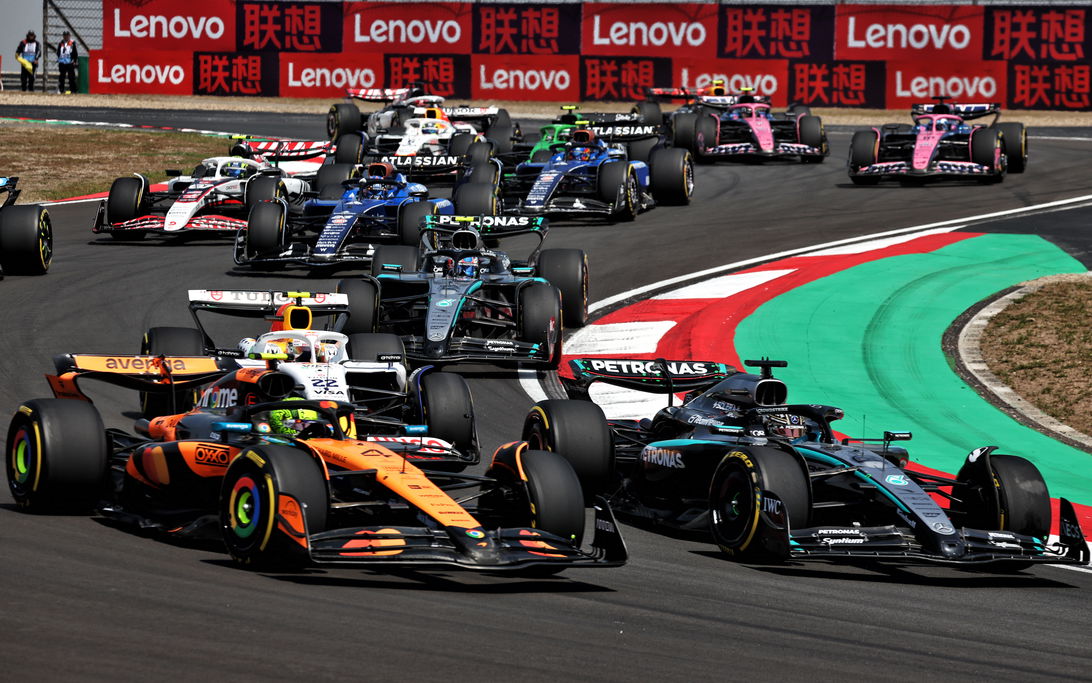
Friday's sessions at the Japanese Grand Prix delivered the kind of visceral timing evidence that cuts through team press releases. McLaren drivers Lando Norris and Oscar Piastri posted laps that directly challenged George Russell and Lewis Hamilton over a qualifying distance. This bounce-back follows their double retirement in China, a setback the raw sector times now treat as temporary noise rather than systemic failure.
- Norris's best effort dipped into territory that would have split the front row in prior Suzuka sessions.
- Piastri mirrored the pace across multiple runs, showing repeatability that telemetry alone cannot manufacture.
- Mercedes held a narrow edge in sector two, but McLaren's exit speeds from the final chicane told a story of setup aggression the data analysts at Woking clearly embraced.
These figures serve as emotional archaeology, digging past the surface to reveal pressure points. A driver pushing the limit here correlates with moments when intuition overrides the radio calls, much like how Charles Leclerc's 2022-2023 qualifying consistency outpaced his error-prone reputation once Ferrari's strategy layers were stripped away. The lap drops do not stem from the driver alone.
Long-Run Simulations and the Coming Sterility
Mercedes' practice long runs still project dominance for Sunday, with tire degradation curves that look flatter on paper. Yet this reliance on real-time telemetry risks turning the sport into the predictable algorithm trap already forming. Within five years, hyper-focus on analytics will dictate pit windows and throttle maps so tightly that driver feel becomes a liability rather than an asset.
Schumacher's 2004 Ferrari season proved consistency emerges when the wheel stays in human hands, not when every micro-adjustment arrives from the pit wall.
McLaren's qualifying threat tests exactly this tension. Their one-lap aggression after China shows a willingness to chase heartbeat data over sanitized simulations. Mercedes may hold the race trim advantage, but the extended five-week break created by canceled Bahrain and Saudi events gives both squads time to over-process these sheets. The result could be setups so optimized they erase the very variability that once made Suzuka electric.
- Tire management edges favor Mercedes in simulations.
- McLaren's sector-three pace hints at untapped race potential if they resist over-correcting with data.
- The hierarchy will clarify only when Sunday's consistent laps expose whether intuition survived the spreadsheets.
Final Take on the Grid Battle
Saturday qualifying will decide if McLaren converts practice into front-row reality or if Mercedes reclaims the top spot through superior modeling. The true verdict arrives Sunday, where the numbers will either confirm Mercedes' long-run edge or expose how over-reliance on analytics already dulls the sport's edge. Schumacher's flawless 2004 runs remain the benchmark precisely because they needed no external override.
Join the inner circle
Get the deep dives and technical analysis from the world of F1 delivered to your inbox twice a week.
Zero spam. Only high-octane analysis. Unsubscribe anytime.