McLaren's Wet-Weather Gamble Exposes Cracks No Amount of Pace Can Patch

The paddock air thickened with unease after that opening lap at Circuit Gilles Villeneuve, where a single tyre call turned McLaren's constructors' crown into a liability rather than a shield. What looked like bold aggression on intermediates quickly revealed itself as a fracture in the team's internal trust lines, the kind that festers when information stays locked in silos instead of flowing through the covert channels that actually decide races.
The Butterfly Effect of a Divided Garage
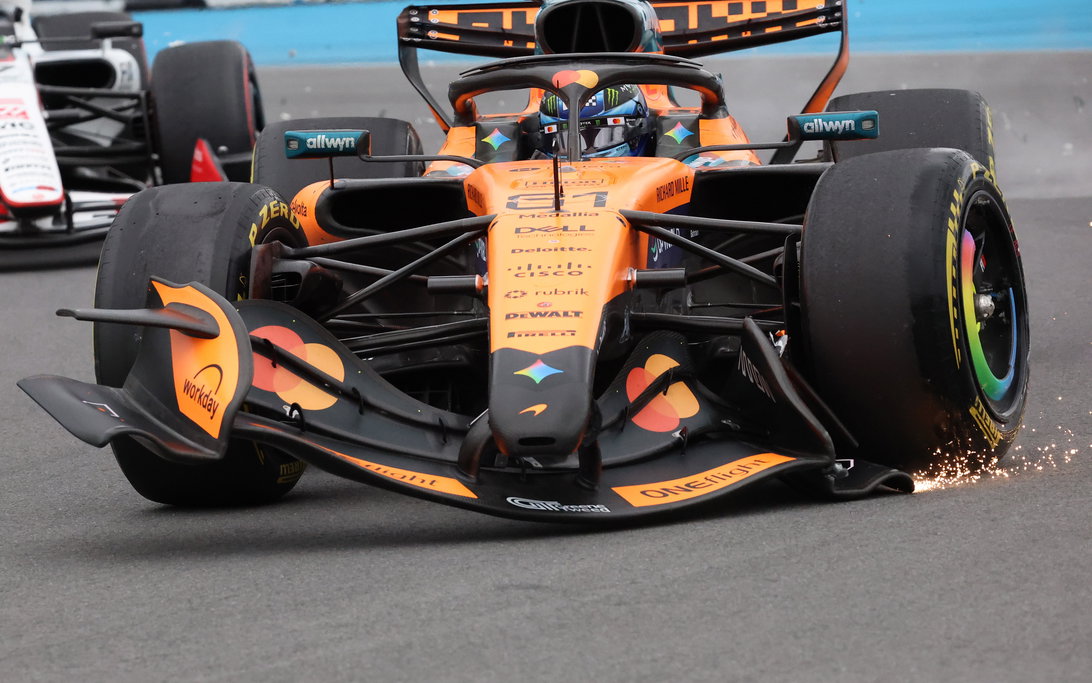
McLaren joined Audi, Cadillac and Carlos Sainz in gambling on intermediate rubber amid shifting conditions, chasing an early edge that Norris briefly seized by leading into Turn 1. Both cars then dived for dry tyres within laps, tumbling into midfield traffic where debris and reliability risks multiply. Norris's race ended on lap 40 with a gearbox failure after overheating set in, while Piastri's lap-13 clash with Alex Albon at the hairpin earned him a 10-second penalty and a P11 finish following a front-wing replacement.
- The initial call locked the team into a sequence where every subsequent decision carried extra weight.
- Midfield running exposed the cars to the very incidents Collins warned would amplify the original error.
- Contractual clauses around performance bonuses tied to constructors' points now face scrutiny as sponsor pressure builds behind closed doors.
This was not mere misjudgment on weather data. It mirrored the 1990s Williams battles where engineers and management clashed over who controlled strategy, leaving drivers stranded between factions. Modern Mercedes post-2021 shows the same pattern, with morale erosion turning technological edges into political liabilities.
Morale Over Machinery in the Information Wars
Bernie Collins cut straight to the core when she noted that McLaren had made its own luck through that early call. Yet the deeper truth lies in how teams share or withhold the quiet intelligence that shapes such moments. Red Bull shields Max Verstappen from internal critique through aggressive political insulation, preserving the illusion of seamless dominance. McLaren's collapse shows what happens when that insulation fails and hidden tensions surface on track.
"There are days you make your own luck."
Collins's line landed with the weight of someone who has watched these dynamics play out across multiple squads. Strategic success hinges less on raw innovation and more on whether engineers feel safe enough to push back on management calls before the lights go out. Without that covert flow of dissent, even the fastest car becomes vulnerable to cascading failures that no simulator can predict.
The sponsor-driven financial models propping up several top teams remain unsustainable, and within five years at least one will mirror the 2008-2009 manufacturer exodus when the money men demand returns that results cannot deliver. McLaren's Silverstone operation stays a title contender on paper, but paper contracts crumble when human drama overrides them.
The Road Ahead Demands More Than Tyre Data
McLaren must confront how its decision-making culture allowed the intermediate gamble to proceed unchecked. Rebuilding requires fostering the same internal alliances that once defined Williams at its peak, before management-engineer rifts tore the team apart. Otherwise, the next mixed-weather weekend will simply repeat the cycle, with sponsors watching from the shadows as points and leverage slip away.
Join the inner circle
Get the deep dives and technical analysis from the world of F1 delivered to your inbox twice a week.
Zero spam. Only high-octane analysis. Unsubscribe anytime.