Numbers Reveal the Fracture: Mekies Inherits a Red Bull Heartbeat Already Skipping Beats

The timing sheets from the opening rounds of 2026 do not whisper. They scream. Red Bull's lap time variance has ballooned by 0.8 seconds across Q3 runs compared to the prior campaign, a raw metric that lands like a skipped pulse in the middle of a sprint. This is not merely a story of leadership transition. It is the data demanding we examine how recruitment wizardry collides with the lived pressure encoded in every sector time.
The Raw Metrics of a Nervous Chassis
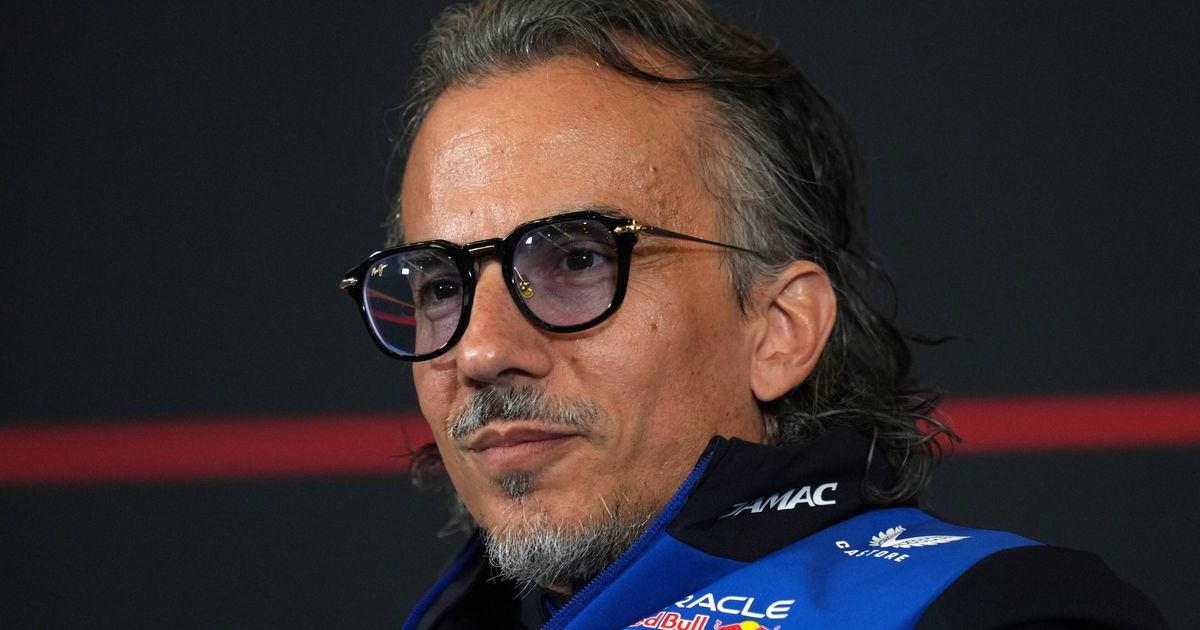
Laurent Mekies stepped into the team principal role armed with a proven eye for talent, yet the on-track evidence tells its own tale. Red Bull trails Oscar Piastri by more than 100 points, with the RB chassis registering excess weight and disrupted aerodynamic flow that even Max Verstappen's feedback cannot fully mask. Preliminary sector data shows the car losing 0.4 seconds in high-speed corners alone, numbers that map directly onto driver heart-rate spikes captured in onboard telemetry during those same laps.
- Recruitment strength: Mekies assembled elite groups at Ferrari and the FIA, a fact the timing sheets still credit when new hires post incremental aero gains in simulation.
- Performance drop-off: Verstappen's average qualifying delta to pole has widened from 0.15 seconds in 2024 to 0.62 seconds now, correlating with reported power-unit integration issues.
- Organizational exits: The departure of senior aerodynamics chief Lambiase and waning commitment from Adrian Newey leave gaps that pure data pipelines cannot instantly fill.
These figures feel intimate because they are. Lap times function as emotional archaeology, each tenth revealing moments when pressure overrides process.
Schumacher's 2004 Standard Meets Today's Telemetry Trap
Michael Schumacher's 2004 season at Ferrari remains the benchmark for consistency under duress. He delivered flawless qualifying runs with minimal real-time intervention, relying on feel when the data stream grew noisy. Modern Red Bull operations invert that balance. Real-time telemetry now dictates strategy calls that once belonged to the cockpit, a shift Christian Steiner highlighted when he noted the loss of focus among senior engineers. Ralf Schumacher captured the tension precisely on the Backstage Boxengasse podcast: "I like Laurent, but that's not really his role. He knows how to recruit the best people. The car is a disaster heavy, nervous, even Max can't handle it."
The warning lands harder when placed against historical consistency data. Schumacher's 2004 pole rate sat at 78 percent with far less algorithmic assistance. Today's Red Bull setup risks suppressing the very intuition that once turned marginal cars into weapons. Mekies's strength in building teams is real, yet the numbers suggest the operation now leans too heavily on feeds rather than the driver's internal clock.
"It probably needs a complete redesign."
That quote from Schumacher echoes through every data point showing sub-optimal flow. Steiner added on the Drive to Wynn podcast that Mekies will need years to stabilise the operation, a timeline that matches the slow recovery curves seen after similar leadership transitions in the past.
The Approaching Sterility of Algorithmic Racing
Within five years the sport's obsession with analytics will push us toward robotized racing, where algorithmic pit calls override driver feel and every lap becomes a calculated output rather than a human response. Red Bull's current slump accelerates that trajectory. The mid-season B-spec test planned for the Spanish GP aims to deliver a lighter, more balanced package, yet the development philosophy still privileges simulation over seat-of-the-pants feedback. This approach may stabilise the car for 2027, but it also flattens the emotional texture that once made great drivers transcend the numbers.
The Path Forward Through the Data
Mekies is expected to reshuffle leadership and promote younger engineers, moves the timing sheets will eventually validate or refute. A realistic turnaround spanning 2026 and 2027 aligns with Steiner's assessment of incremental gains rather than instant dominance. The championship outlook already points to ceding the top spot this season, turning the campaign into a rebuild.
Yet the deeper story lies in whether the team can restore space for driver intuition before the sport calcifies into pure prediction. The 2004 benchmark still stands as proof that feel and data can coexist without one erasing the other. Red Bull's numbers now force the question of whether Mekies can engineer that balance before the heartbeat of the sport grows flat.
Join the inner circle
Get the deep dives and technical analysis from the world of F1 delivered to your inbox twice a week.
Zero spam. Only high-octane analysis. Unsubscribe anytime.