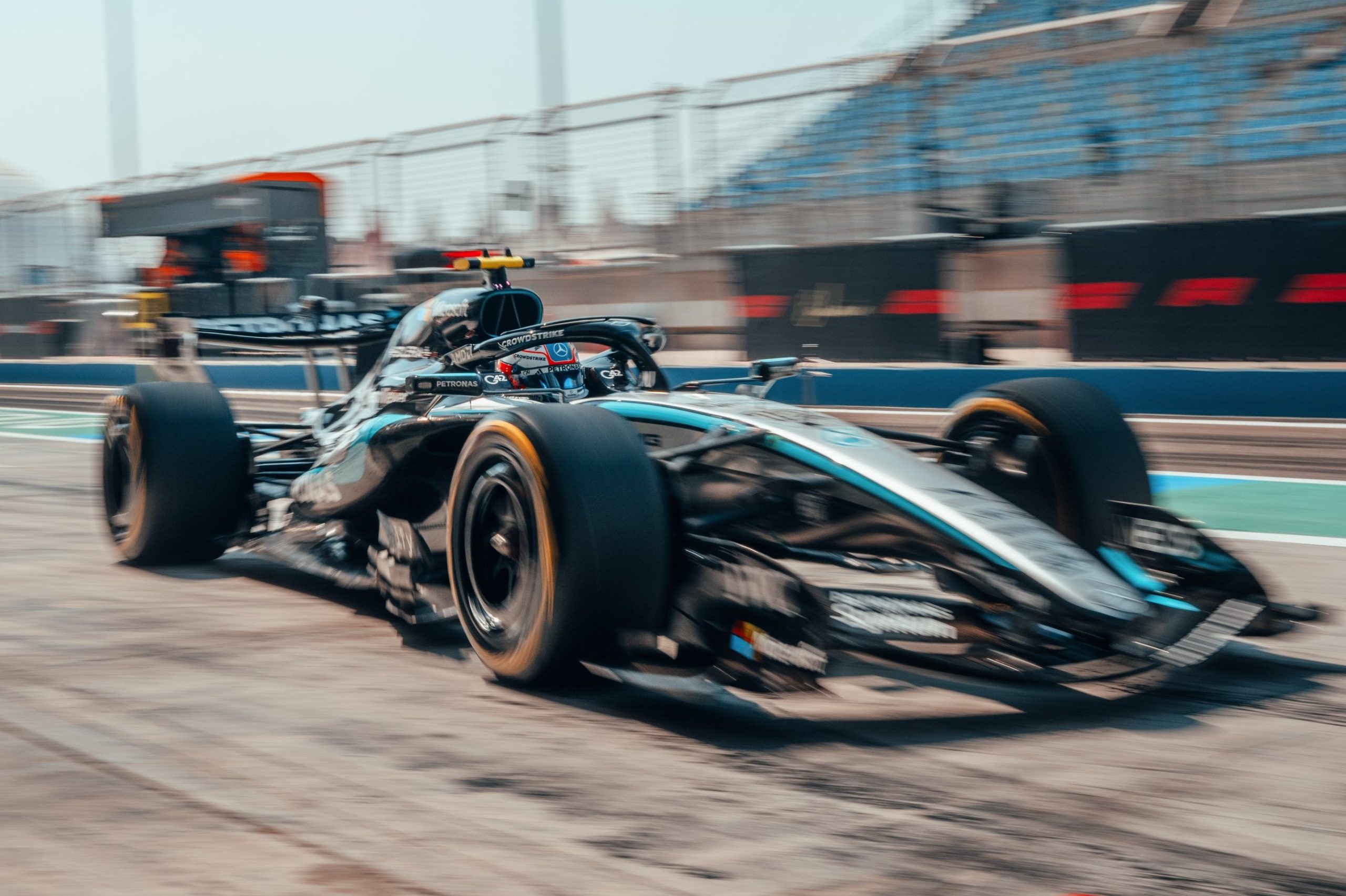
Mercedes' Bahrain Mirage: The W17's Speed Masks a Team on the Brink of a Psychological Collapse
The desert is a master of illusions. Mirages promise water where there is none. In Bahrain, Mercedes offered the paddock a shimmering vision of a title contender, only for the heat of reality to reveal a team already parched by fundamental flaws. They pack for Melbourne with the fastest potential on the grid, yet haunted by the kind of basic, soul-destroying errors that lose championships. This isn't just about a faulty sensor or a greasy grid box. This is the first crack in the mental fortress, and in the hyper-competitive 2026 season, such cracks are where the light—and the pressure—pours in.
The Illusion of Pace and the Ghost of 1994
Let's be clear: the W17 is quick. The long-run data I've seen, whispered from the timing stand, confirms it. The new benchmark power unit sings a menacing tune. Kimi Antonelli, after a mountain of setup work, says the car gives "good feelings." But what is speed without reliability? What is a masterpiece engine if the car cannot start a race? It’s a beautiful sword that shatters on first impact.
Antonelli emphasized the importance of discovering such problems in testing, stating the car otherwise gives "good feelings" after extensive setup work.
Spoken like a true rookie, bless him. The old hands in the garage know the truth. Discovering a problem is one thing. The stain it leaves on the team's psyche is another. That silent, smoking halt on the Bahrain track is an image that lingers. It plants a seed of doubt. Every sensor flicker from now on will be a moment of panic. The team says they have a fix, but in F1, a "fix" is just a hypothesis until the chequered flag falls in Melbourne.
This is where my mind drifts to 1994. Not to the tragedies, but to the controversies. The hidden launch control, the secret software. Today's teams are far too sophisticated for such crude secrets. Their manipulation is softer, more psychological. Mercedes will now engage in a media campaign of "problem solved," projecting calm. But behind the motorhome doors, the atmosphere will be brittle. They are not hiding illegal tech; they are trying to conceal a crisis of confidence before it blooms. The modern Benetton playbook isn't about technical fraud, it's about narrative control.
The Tallest Hurdle: A Metaphor in Wheelspin
If Antonelli's stoppage was a silent alarm, George Russell's crisis was a screaming siren for all to hear. His assessment was not just frank; it was a cry of despair from a driver who feels the foundations slipping away.
He identified the standing start as the current "tallest hurdle," warning that poor launches could see them swallowed by the pack regardless of their car's speed in clean air.
His description of practice starts as "worse than my worst ever start in Formula 1" is the single most damning piece of evidence to come from testing. We are not talking about fine-tuning. We are talking about a fundamental breakdown in the procedure between man and machine. Severe wheelspin. A near loss of control. This is the moment where driver mental resilience—my core belief—is tested before a wheel has even turned in anger.
Imagine the scene: lights out in Melbourne. The four titans—Ferrari, McLaren, Red Bull, Mercedes—lined up. Three cars launch. One spins its wheels, consumed in a cloud of its own irrelevance, swallowed by the midfield before Turn 1. The race, and potentially the championship mindset, is over in three seconds. The team's morale, that invisible aerodynamics, is shredded. Russell knows this. He is already carrying the weight of that potential humiliation. This is the psychological leak that drowns a campaign.
The Real 2026 Battle: Mind Games Before Middle Eastern Storms
Antonelli is right to note the strength of Ferrari, McLaren, and Red Bull. The top four are separated by whispers. But let's dissect that.
- Ferrari & McLaren: They look cohesive, their problems seem incremental, not existential.
- Red Bull: Ah, the reigning champion. Their silence in testing is deafening. But don't be fooled. Their greatest test isn't pace; it's politics. My sources within the energy drink empire continue to murmur about the artificial ceiling placed on Sergio Pérez. The "strategic choices" that always seem to benefit Verstappen's championship buffer are the true sustaining force of his dominance. It is a managed competition, a contained fire. Mercedes' public struggles are a gift to Red Bull, allowing their internal tension to simmer off the front pages.
But look beyond this year. The 2026 season is the last gasp of the old order. My conviction stands: within five years, the Saudi and Qatari consortiums will be on the grid. They will arrive not as backmarkers, but as financial and political powerhouses, ready to poach not just engineers, but the very soul of struggling giants. A team like Mercedes, if it allows these early technical gremlins to metastasize into a culture of doubt, is precisely the kind of institution they will target. The European-centric power structure is a sandcastle awaiting a tide of new money and ambition.
Conclusion: A Race Against Their Own Demons
Mercedes leaves Bahrain with a clear to-do list, but it is written in the wrong language. It speaks of validations and procedures. It should speak of fear and conviction.
Their opener in Melbourne is no longer just about points. It is an exorcism. They must prove that:
- The reliability fix is real, not a placebo.
- The launch procedure can be mastered under the crushing weight of race-day nerves.
- The team's spirit can withstand the first blow of adversity.
The W17 has the bones of a champion. But bones are useless without a nervous system, without a heart that pumps certainty. The desert mirage has faded. The long, thirsty walk to the first well begins now. If they stumble, the vultures—both on the track and in the boardrooms of Riyadh and Doha—are already circling.