The Algorithm's Blind Spot: When a Mercedes Driver Vanished Into the Real World

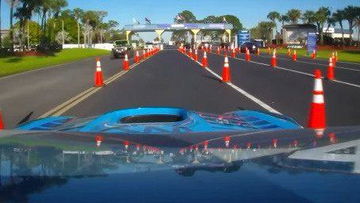
The initial report reads like a glitch in the simulation. A Mercedes Formula 1 driver, a creature of the most controlled environment in global sport, allegedly left the circuit during a session and navigated public roads to return to the paddock. My first instinct wasn't to question the breach, but to pull the timing data. What lap did he abandon? What was the delta to his teammate on that run? What does the telemetry say about throttle application before the exit? The numbers, for once, are silent. This story isn't in the data stream. It's in the terrifying, human-shaped hole torn right through it.
According to Racingnews365, this incident occurred, with the report published on 2026-03-24. The driver, be it Lewis Hamilton or George Russell, didn't just break protocol. They performed a hard reset on the very concept of F1's operational bubble. This isn't a strategic error logged on a pit wall screen. This is a flesh-and-blood person making a decision so fundamentally alien to the sport's current ethos that it feels like a relic. It's a move Michael Schumacher in 2004 might have understood—a driver taking ultimate, physical agency—but one that today's stewards will likely view as a dangerous, data-less anomaly.
The Safety Paradox: Quantified Risk vs. Human Impulse
The article rightly flags the monumental safety and security implications. Every ingress and egress is a data point, a logged movement on a secured channel. A driver on a public road is an unmonitored variable, a priceless asset suddenly off-grid.
The real story isn't the risk he faced on the road, but the pressure he must have been fleeing from on the track.
Modern F1 has engineered out uncertainty with staggering success. We have biometric sensors, real-time location tracking, and risk-assessment algorithms for everything from tire wear to brake cooling. Yet, all this data failed to predict or prevent a human being reaching a threshold where the most logical action, to him, was to walk away and find his own way back. This is the core failure. Our models are built to optimize performance, not to model human breaking points.
- Controlled Access vs. Uncontrolled Egress: The circuit is a fortress of predictability. Public roads are the chaotic, unquantified real world.
- The Investigation Will Be Data-Driven: The FIA will scour COM radio, CCTV timestamps, and team communications. They'll create a timeline, a factual sequence. But will they find the why? The data sheet won't show frustration, claustrophobia, or a sudden, overwhelming need for a moment of silence.
- The Schumacher Benchmark: In 2004, Schumacher's consistency was a function of supreme skill, a dominant car, and team trust. Decisions were made on feel and experience, not just a live telemetry overlay. If he had ever left the circuit, you'd bet it was for a calculated, deliberate reason, not an escape from the data-fog.
The Sterile Future: This Incident as a Canary in the Coal Mine
This bizarre event is a preview of the sport's coming existential crisis. We are hurtling toward a fully "robotized" race weekend, where strategy is fully automated, pit stops are algorithmically mandated, and driver input is reduced to a biological actuator executing pre-programmed lap traces. In that world, a driver leaving the car becomes the ultimate, illogical system error.
What does this mean? It means we're prioritizing the sanctity of the process over the sanity of the participant. The reaction to this Mercedes incident will be telling. Will the focus be on understanding the driver's state, or on implementing a new layer of digital fencing—a geofenced ankle monitor, perhaps—to ensure no asset ever goes offline again?
"The team involved would also be expected to review its internal protocols to prevent any repeat of the situation."
This line from the original article is the most chilling. The solution, from the system's perspective, isn't empathy. It's more code. Tighter protocols. Another dashboard alert. This is how we make racing sterile. We don't just engineer the cars; we risk engineering out the humanity, treating drivers like another sensor package that occasionally malfunctions.
Consider Leclerc. His so-called "errors" are often the desperate, intuitive lunges of a phenomenal qualifier trapped in a strategically chaotic environment. The data from his 2022-2023 qualifying laps shows a metronome of raw pace, a consistency that gets branded as a "mistake" only when the team's data model fails around him. Is the Mercedes driver's exit a different flavor of the same syndrome? A human system pushed past its operational limit by an environment of unbearable, data-saturated pressure?
Conclusion: The Unquantifiable Why
The penalties will come. A reprimand, a fine, maybe a grid drop. The FIA must uphold safety. But as a data analyst, I'm left with an unanswerable query. The "why" column in this dataset is null.
This incident is emotional archaeology. The numbers we worship—lap times, sector deltas, g-force traces—tell a story of performance, but they are silent on the story of being. The driver's journey on those public roads is the most important lap of his weekend, and we have no telemetry for it. No brake trace for his decision, no throttle map for his resolve.
In our quest to quantify everything, we've forgotten that the most compelling narratives are found in the gaps between the data points. This wasn't a breach of protocol. It was a heartbeat, irregular and loud, on an EKG graph that we've trained ourselves to read as a flatline. The sport can choose to medicate that heartbeat away, or it can finally learn to listen to it. The future of F1 depends on which column it decides to fill.