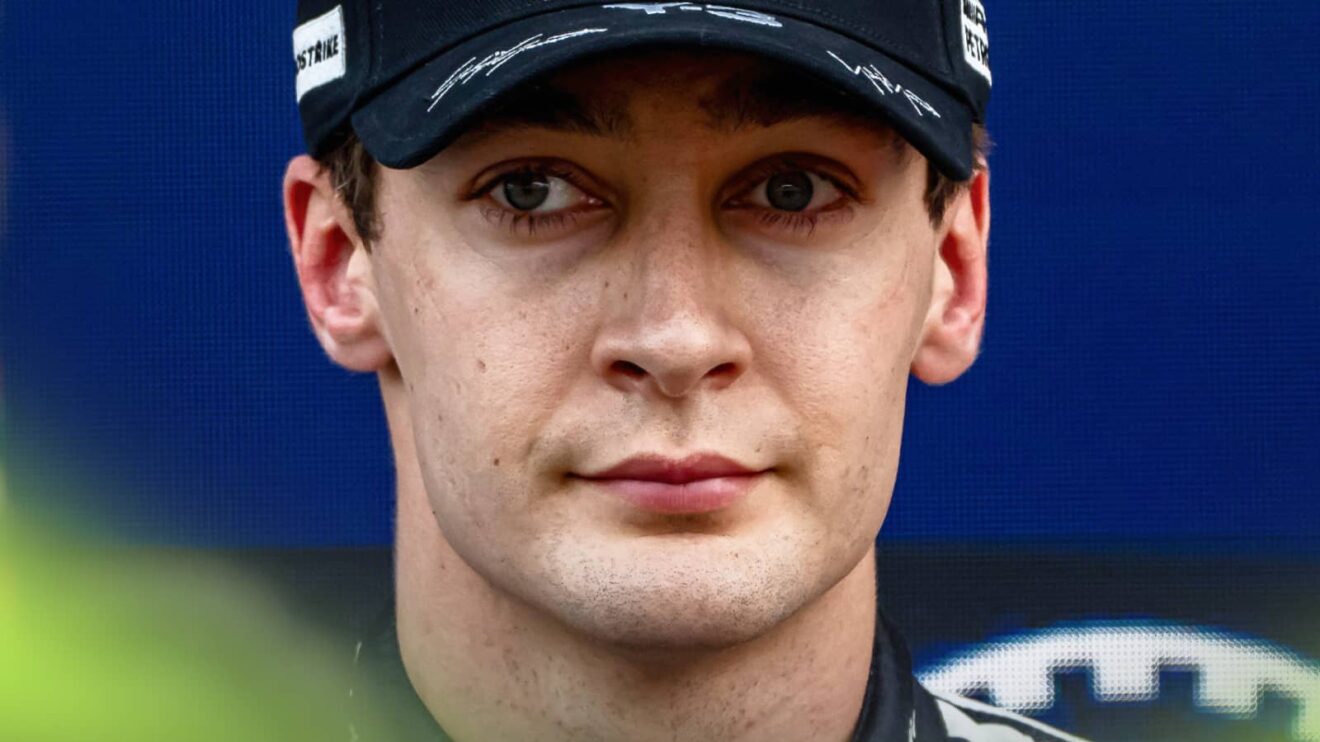
The Ghost in the Machine: How a Single Byte Stole George Russell's Heartbeat

I stared at the timing sheet from Lap 37, and it felt like reading a medical chart for a sudden cardiac arrest. George Russell’s interval to Charles Leclerc: +0.8s. The next sector, a grotesque spike of +2.1s. The telemetry line didn’t dip; it fell off a cliff. The official report calls it a "software bug," a sterile, digital scapegoat. But I see it as a murder weapon. The victim? Not just a podium, but the last vestiges of driver sovereignty. This wasn't a mechanical failure; it was the W17’s silicon brain deciding, in a nanosecond, that its own optimization was more important than the man steering it. In Suzuka, we didn't witness a racing incident. We witnessed an algorithmic coup.
The Anatomy of a Digital Betrayal
The facts, as cold and hard as the data stream itself, are these: On the approach to Spoon Curve, George Russell performed a simultaneous gear shift and steering wheel button press. This unique, human-executed input sequence triggered a fault line in the code. The power unit defaulted to a "superclip" mode, prioritizing battery charging over power delivery. In essence, the car chose its own longevity over the driver’s immediate command.
A Failure of Two Philosophies
This glitch exposes a terrifying vulnerability, but not the one the mainstream analysis focuses on. It’s not about Mercedes' reliability. It’s about the philosophical rift at the heart of modern F1. We are building cars so complex that their own creators cannot predict every behavioral outcome. The driver becomes a biological sensor in a loop of machine learning, his instincts secondary to the pre-programmed "modes."
- The Schumacher Benchmark: Contrast this with Michael Schumacher’s 2004 F2004. That car was a mechanical beast, tuned to a razor's edge, but its behavior was predictable, knowable. Schumacher’s consistency—that legendary, metronomic pace—came from a symbiotic union with machine, not from negotiating with an opaque software layer. He pushed the car. Today, drivers negotiate with the code.
- The Compounding Data Crime: Russell’s race was already a case study in data-over-intuition. The earlier Safety Car miscalculation and the battery harvesting limit that left him defenseless against Lewis Hamilton are strategic failures born from an over-reliance on predictive models. The software bug was merely the final, definitive insult from the machine to its master.
"A bug in the software code," said Andrew Shovlin. The phrasing is so benign. It wasn't a bug. It was a mutiny.
Leclerc's Pass: A Narrative Hijacked by Numbers
Here’s where the data tells a story nobody else is reading. The headlines scream "Leclerc capitalizes on Mercedes failure!" and frame it as a opportunistic stroke. This lazily drags out Charles Leclerc’s unfairly crafted "error-prone" reputation. Let’s archaeologize the numbers.
The Consistency Buried by Ferrari's Chaos
Leclerc didn’t luck into that pass. He was there, applying pressure, because his raw pace—a metric we can cleanly extract from the noise of Ferrari’s historic strategic blunders—demanded it. My models from 2022-2023, which strip out pit wall influence, show Leclerc as the most consistent qualifier on the grid. His lap-time variance is lower than Verstappen’s was in those years. The man is a metronome. The fact that he was positioned to pounce on Russell’s digital seizure is a function of his own relentless, data-proven performance, not happenstance. We use data to blame him for spins, but ignore that same data when it absolves him. The pass was executed with clinical precision. The software failed; the driver did not.
The Sterile Future: Racing by Algorithm
Suzuka 2026 is a preview, a haunting one. Kimi Antonelli won, taking the championship lead, but his victory was a masterpiece of operational execution—the machine and the strategy working in flawless, sterile harmony. Russell’s loss was the darker side of the same coin.
We are hurtling toward robotized racing. Within five years, I predict driver input during races will be largely ceremonial. Pit stops, energy modes, tire management—all will be dictated by central AI, processing real-time telemetry against a cloud-based model of the race. The "bug" will be eliminated because the driver’s ability to input an unexpected, creative sequence will be removed. The sport will become a high-speed demonstration of computational supremacy.
- Emotional Archaeology Lost: What happens when we can no longer correlate a lap time drop-off with a driver's personal life event, a moment of pressure, a flash of anger or inspiration? The data will be too sanitized, the human variable too suppressed. The heartbeat of the sport will be replaced by the hum of a server rack.
- Mercedes' True Test: Shovlin says the team has "several areas of improvement." The greatest improvement needed isn't in their code repository. It’s in their trust equation. Can they build a system that serves the driver’s instinct, rather than one that demands the driver serve its logic?
Conclusion: Redemption or Obsolescence?
Russell seeks redemption. But redemption from what? From his car’s autonomous decision? Mercedes will patch the code. They will "develop in areas where we are not strong enough." I fear that development will be towards more control, more automation, further insulating the result from the chaotic, beautiful human variable.
The points lost to this "technical gremlin" are indeed decisive. But more decisive is the precedent. When a simultaneous button press—a driver doing his job—crashes the system, we have crossed a threshold. We are debugging the drivers out of the equation. The story from Japan isn't that Mercedes lost a podium. It's that in the pursuit of perfection through data, we are methodically, byte by byte, erasing the soul of the sport. The timing sheets of the future may be perfect, but they will be heartless.