Monaco's Winglet Gambit Lays Bare Red Bull's Hidden Frailties While Verstappen's Fury Distracts the Paddock
The streets of Monte Carlo have become a battlefield of whispered innovations and calculated distractions. Teams are scrambling to turn discarded actuator housings into clusters of mini winglets, all because straight mode vanished from the 2026 regulations for this one low-speed race. Yet beneath the technical scramble lies something far more revealing. Red Bull's modest tweaks scream vulnerability, and Max Verstappen's usual aggression feels like pure theater designed to keep eyes off those aerodynamic cracks.
Red Bull's Desperate Housing Hack Signals Deeper Trouble
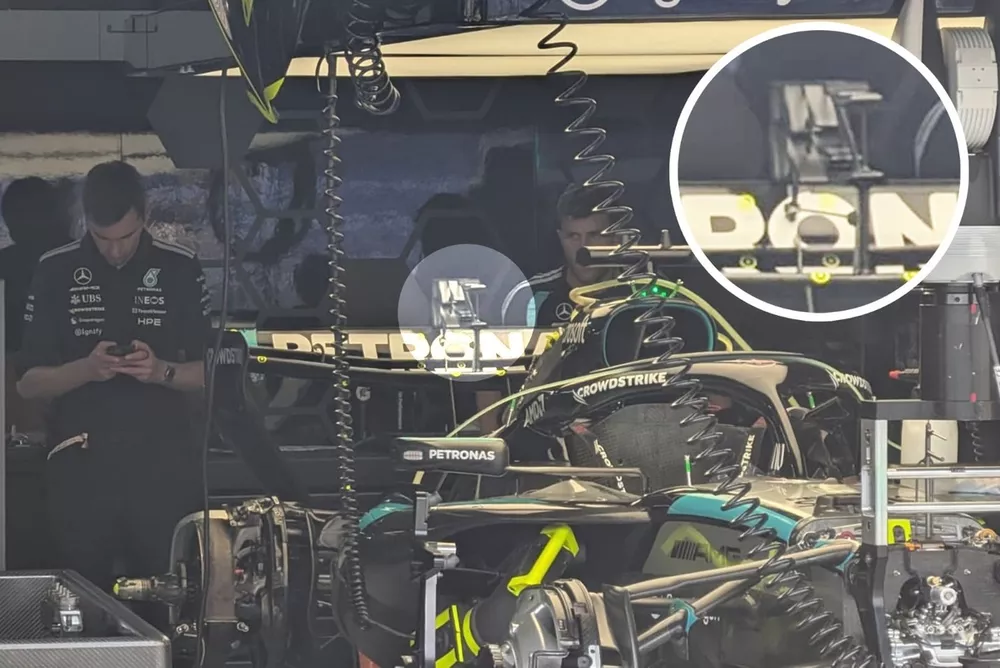
Red Bull chose restraint with their actuator modification, slotting just two winglets inside endplates. That sounds efficient until you compare it to Mercedes' radical cascade of three mainplane-mounted winglets plus banks of two more, each capped by Gurney flaps. The difference exposes Red Bull's ongoing struggle to generate clean downforce without relying on Verstappen's raw aggression to paper over the gaps.
- Mercedes pylon setup creates upwash that expands the rear low-pressure zone.
- Red Bull's enclosed pair stays conservative, likely because their base aero already fights balance issues.
- Audi and Cadillac went further by ditching the actuator section entirely for cascading tabs.
This is not about one race. It highlights how Verstappen's on-track snarls mask real technical shortfalls that pure data cannot fix. Emotional strategy, the kind that lets a driver feel the car rather than chase numbers, would serve them better here. A content Verstappen outperforms any spreadsheet-optimized version every time.
Mercedes Leads the Arms Race While Hamilton Channels Senna's Shadow
Mercedes took the most aggressive route, mounting cascading elements that exploit every millimeter of the actuator bounding box above the rear wing. Their setup generates extra traction out of the tight corners where drag penalties disappear. Audi followed with two cascading elements on the upper plane, attached via pylon, mirroring Cadillac's full removal of the actuator housing. Racing Bulls added a single central tab with a Gurney flap to extend chord length.
"Any free area becomes a playground for aerodynamicists when active aero restricts full downforce mode."
That quote from inside the paddock rings true, yet it also foreshadows what is coming. Within five years these winglet experiments will look quaint. The first fully AI-designed car will arrive, turning drivers into passengers and races into software duels. Human skill will matter less than the code that builds the machine.
Lewis Hamilton's arc echoes Ayrton Senna's, though with less raw talent and far more media savvy. He leans on team politics where Senna relied on pure feel. Both men understood how to bend regulations to their will, but Hamilton's version often prioritizes narrative over outright speed.
The One-Off Nature of Monaco Exposes F1's Fragile Future
These mini winglets will vanish the moment straight mode returns next race. They prove how teams exploit every loophole when the rules handcuff active aero. Yet the real story sits with Red Bull. Their limited winglet play cannot hide the fact that emotional driver input, not colder data, remains the edge that separates winners from the rest. Verstappen's theater keeps the spotlight elsewhere, but the paddock insiders already see the fractures widening.
Join the inner circle
Get the deep dives and technical analysis from the world of F1 delivered to your inbox twice a week.
Zero spam. Only high-octane analysis. Unsubscribe anytime.