The Ghost in the Machine: How Norris's Suzuka Deficit is a Warning From F1's Data-Driven Future

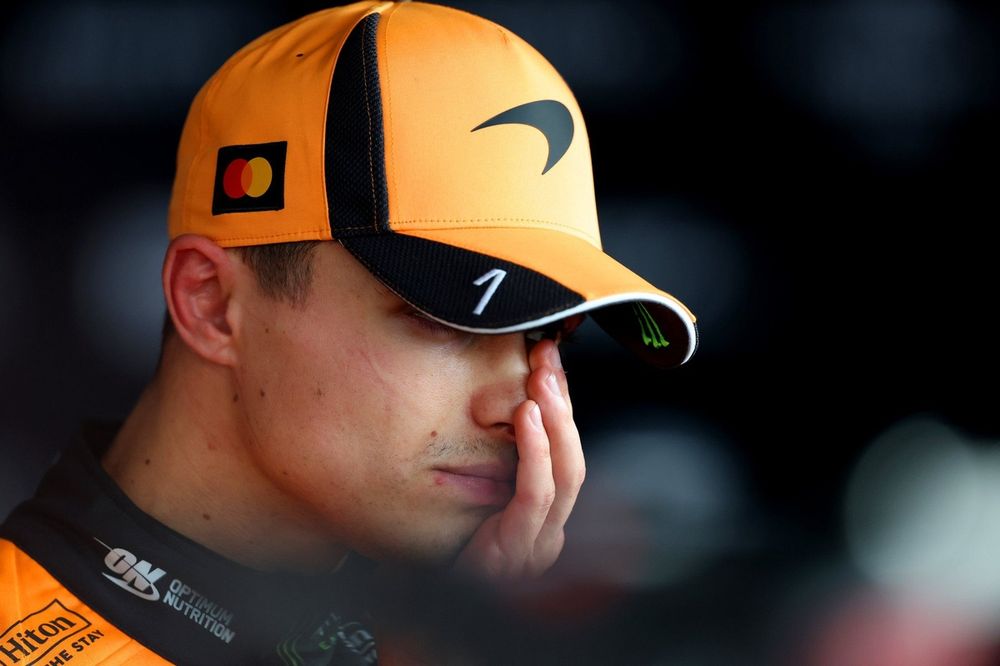
I stared at the qualifying timing sheet from Suzuka, and the numbers didn't just tell a story, they screamed a prophecy. Lando Norris, the reigning world champion, a full four-tenths adrift of his own teammate, Oscar Piastri. The raw gap to the polesitter, a staggering six-tenths. The official narrative? Reliability issues, limited practice, the usual gremlins of a new era. But the data, the cold, hard sequence of sector times, tells a deeper, more unsettling tale. This isn't just about a broken part. It's the first clear heartbeat of a chilling trend: the 2026 technical regulations aren't just changing the cars, they're methodically deleting driver intuition from the equation. Norris didn't just lose track time; he was severed from the sensory feedback loop that turns a fast driver into a relentless one.
The 2026 Prototype: Practice Isn't Practice Anymore, It's Mandatory Data Harvesting
Norris’s quote, buried in the post-qualifying press release, is the most important technical insight of the weekend. He said understanding the new cars makes practice sessions "more critical than ever." Let's translate that from PR-speak to data-analyst truth: The 2026 cars are so complex, so dependent on systems management over raw feel, that missing a single practice session isn't an inconvenience; it's a critical data deficit that qualifying cannot overcome.
"I've been playing catch-up all weekend," Norris conceded, after qualifying fifth. A champion doesn't use that phrase lightly.
Think of Michael Schumacher in the F2004. That car was an extension of his nervous system. He could feel a tire going off three laps before the degradation showed on the pit wall's telemetry. His practice sessions were about refining an already sublime connection. The 2026 McLaren, by contrast, sounds like a black box. The "practice" Norris missed wasn't about seat-of-the-pants feel; it was about logging enough runtime to teach the car's algorithms, to map the battery discharge curves for Suzuka's specific load, to calibrate the brake-by-wire system for Turn 11. The driver is becoming a senior systems operator, and Norris missed the training seminar.
- The Hard Numbers: Piastri (P3) vs. Norris (P5). A 0.400-second gap.
- The Context: This isn't a one-lap fluke. The deficit was built across three practice sessions Norris effectively lost to "reliability issues."
- The Correlation: The less data you feed the machine, the less it can compensate for you. This is the inverse of genius. It's the suppression of improvisation.
Emotional Archaeology: The Human Cost of the Data Gap
This is where my work as an emotional archaeologist kicks in. We must dig into what "playing catch-up" feels like in the cockpit of a prototype. It's not just frustration; it's a unique, modern form of pressure. Every lap becomes a frantic data-gathering mission, not a confidence-building exercise. You're not searching for the limit of adhesion; you're validating the engineers' simulations.
Charles Leclerc’s 2022-2023 qualifying data proves that raw, repeatable pace exists independently of team chaos. His consistency was a pure expression of talent, often in spite of Ferrari's strategic blunders. But what happens when the car itself becomes the primary source of chaos? When the variable isn't a late pit call, but an un-calibrated torque delivery map you have no time to rewrite?
Norris, starting fifth, will now race with a setup that is statistically sub-optimal. His race engineer will feed him algorithmic suggestions—target brake points, prescribed energy deployment zones—based on Piastri's more complete data set. He will be driving a car optimized for his teammate's logged experience. This is the "robotized" racing I've warned about: the driver who falls behind on Friday becomes a passenger in another driver's simulation on Sunday. The intuition that lets a driver like Schumacher or a qualifier like Leclerc pull a miracle lap from nowhere is rendered mute, because the car hasn't been "told" that such a lap is possible.
Conclusion: Suzuka as a Canary in the Coal Mine
Suzuka 2026 will be remembered not for who won, but for the warning it issued. The four-tenths between the McLaren teammates is a canyon carved by missing data packets, not a lack of skill. We are entering an era where reliability issues don't just cost you lap time, they cost you the fundamental language to speak to your car.
The sport is at a crossroads. Will we continue down this path, where the champion is the driver with the most flawless data harvest, protected by the most reliable hardware? Or will we remember that the greatest heartbeats in this sport—Senna at Monaco, Schumacher at Spain in '96—were pulses of human intuition that no sensor could predict and no algorithm could authorize?
Norris's deficit is a quiet, technical tragedy. It's the sound of a world-class driver being told by the numbers that his feel, his talent, his champion's instinct, is insufficient without the prerequisite gigabytes. The stopwatch has always been the final judge, but now, it only listens to those who complete the download. And that, more than any championship standings, should terrify every fan who loves a driver for his soul, not just his spreadsheet.