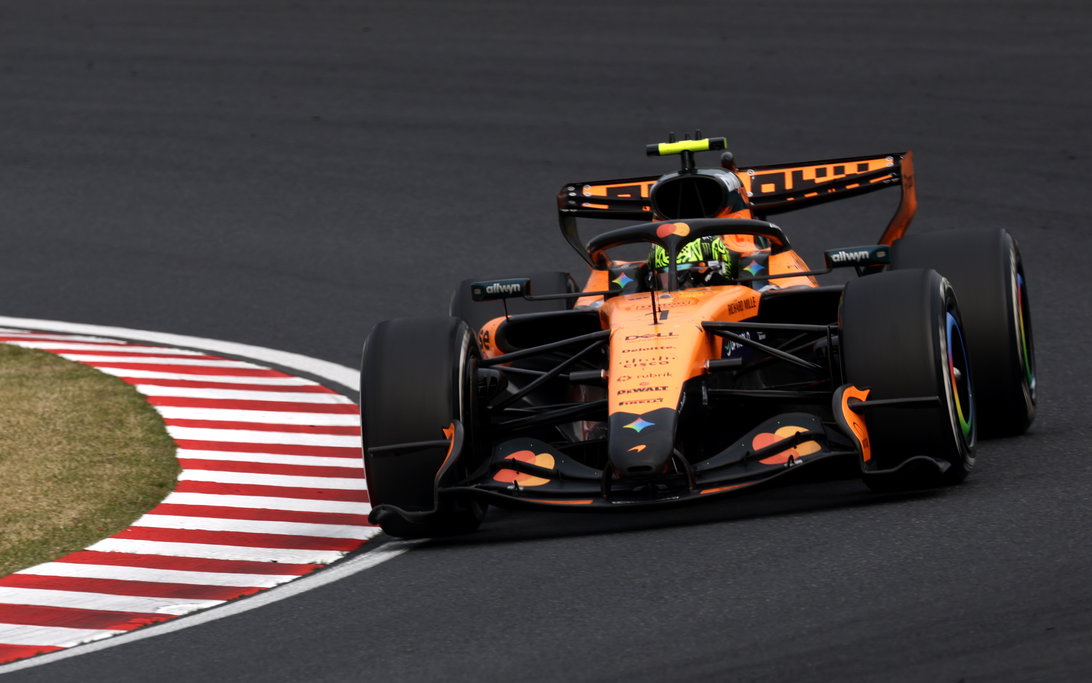
The Ghost in the Machine: How McLaren's Suzuka Heartbreak Proves Data is a Double-Edged Sword

I stared at the lap time trace from Suzuka, the smooth, metronomic peaks and troughs of Oscar Piastri’s first stint looking less like a telemetry readout and more like a flatlining EKG. For 20 laps, it was a masterpiece of control. Then, the jagged spike of a pit stop entry, followed by the digital silence of a Safety Car. The story wasn't in the race report; it was in that graph. A narrative of dominance, severed not by driver error, but by a cruel, random syncopation of fate and strategy. This is the modern Formula 1 tragedy: executed flawlessly by the numbers, undone by the numbers' timing.
The Illusion of Control and the Specter of Schumacher
Let's be brutally analytical. Piastri did everything his engineers, his sim data, and his own supreme talent demanded. A front-row launch, a Lap 1 lead, a stint so consistent the delta graph was practically a straight line. This is the "robotized" ideal teams are chasing: the driver as a perfect, high-G sensor package, executing a pre-ordained plan.
"He drove a very good race, and probably deserved to win the race, honestly, if it wasn't for the Safety Car," Norris stated.
Norris is right, of course. But his sympathy points to a deeper, more unsettling truth. In 2004, when Michael Schumacher won 13 of 18 races for Ferrari, the team's dominance was built on a foundation of strategic overkill and a car-driver symbiosis that felt preternatural. Yet, there was always a margin for feel. Schumacher could sense a V10's hunger, a tire's cry, and adjust. Today, Piastri was likely managing a dozen prescribed parameters, his intuition secondary to the hive-mind on the pit wall. The plan was optimal. The world, however, is not.
- The Critical Sequence: Piastri pits on Lap 21, as per the optimal window calculated from 1000 sim runs.
- The Random Variable: The Safety Car is deployed moments later, a statistical outlier no model can perfectly predict.
- The Outcome: Kimi Antonelli pits under yellow, gaining a massive time advantage—a gift of pure, unadulterated luck.
The system worked. And the system failed. McLaren's algorithms didn't err; they were simply blindsided by chaos. This is the sterile predictability I fear: not in the racing, but in the approach. We're training drivers to be brilliant executors, not instinctive racers, because we believe the data has all the answers. Suzuka proved it doesn't.
Emotional Archaeology: The Unseen Pressure in the Points
While the spotlight burns on Piastri's lost win, let's dig into the strata of the other McLaren. Lando Norris, P5. A recovery drive, they call it. "A positive step," he said. I see a different story in the sector times.
Norris's middle sector—Suzuka's technical serpent of Degners and the Hairpin—showed a staggering improvement from Friday to Sunday. This isn't just car setup. This is a driver wrestling a machine into submission, finding milliseconds not in the sim, but in his own cerebellum. His final stint, on hard tires, was a lesson in consistent pressure, his lap times holding a steady, grim rhythm like a heartbeat in a stress test.
What were they thinking? Piastri, watching a sure victory evaporate into Antonelli's rear wing? Norris, knowing the team's first 2026 win had just slipped through their collective fingers? The data shows clean laps, but the emotional archaeology reveals the tremor. This is where numbers become human: the collective team radio silence, the minuscule throttle hesitations on pit exit, the story the timing sheets almost conceal.
We see this and scream "Ferrari-esque!"—a reflexive jab at strategic blunders. But remember my core thesis: Charles Leclerc's "errors" are often the final link in a chain of strategic pressure. Is Piastri now entering that same narrative? The "unfortunate" driver? The data from 2022-2023 shows Leclerc as the grid's most consistent qualifier, a raw pace monster. Yet the story is mistakes. For Piastri, the story is now "fortune." This is how narratives bury facts. McLaren must be vigilant. They have two phenomenal drivers, but the data-centric pressure cooker that cost Piastri in Suzuka can, over a season, warp perception and create its own ghosts.
Conclusion: The Algorithm is Not a Co-Pilot
So, where does this leave us? A "near-miss," a "lost opportunity," a "positive step." The platitudes flow. But as Mila Neumann, data analyst, I call it what it is: a catastrophic failure of probability.
McLaren's MCL38 has the pace. Norris confirmed the team is "going in the right direction." But direction is meaningless if you're navigating by a map that doesn't include earthquakes. The hyper-focus on analytics is creating a vulnerability as large as the advantage it seeks. We are removing the human instinct to adapt to the unforeseen, replacing it with a rigid, optimal-path dependency that shatters upon first contact with reality.
The takeaway from Japan isn't that McLaren are close. It's that their paradigm is fragile. To win in this era, you need more than perfect data. You need the courage, occasionally, to ignore it. You need a driver's gut, a race engineer's sudden inspiration, the kind of intuitive leap that powered a certain German in a red car to a dominance we now dissect but fundamentally misunderstand. The numbers told Piastri he won that race. The stopwatch, that cruelest of all data points, said otherwise. Until teams learn to serve the second with the wisdom of the first, they will keep writing eulogies for victories that the data said were already theirs.