The 50G Crash That Could Shatter F1's Fragile Political Truce

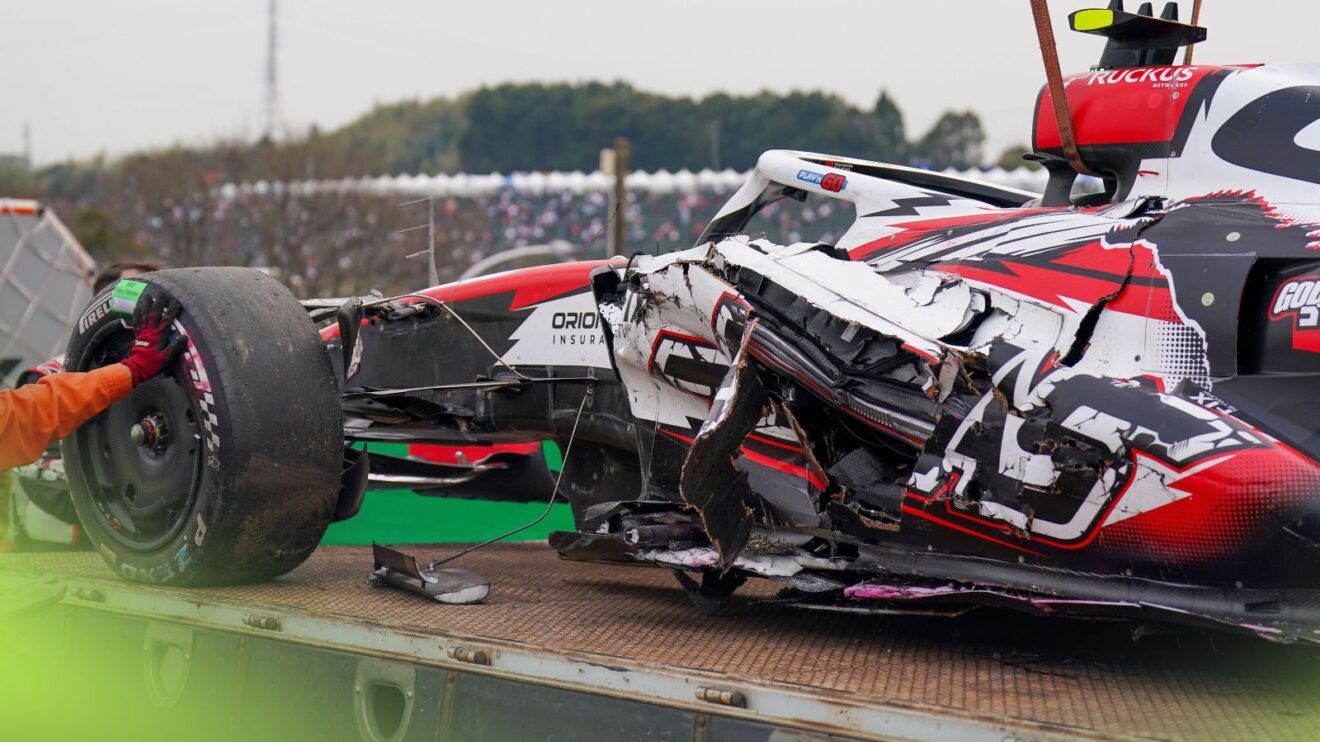
The sound of carbon fibre disintegrating at Suzuka wasn't just a Haas hitting a barrier. It was the sound of a carefully constructed political dam breaking. Oliver Bearman’s 50G crash, a direct result of the 2026 regulations' lethal speed differentials, has done more than force the FIA into emergency meetings. It has exposed the raw nerve of power in the sport, pitting driver survival against corporate sustainability narratives, and may have handed Max Verstappen the perfect, politically-shielded exit he’s been quietly orchestrating.
The Crash Was Inevitable, The Political Fallout Is The Real Spectacle
Let’s be forensic. The incident on March 29th, 2026, where Bearman’s car violently met the barrier after a speed delta created by battery deployment, is not a surprise. It’s a prophecy fulfilled. Drivers have been screaming about this since the blueprints were unveiled. But their warnings were drowned out by the soothing hum of PR machines promoting a "greener, closer-racing" future. The FIA’s promise of April meetings to review the rules' "adjustability" is pure theatre. They are not reacting to a crash; they are reacting to the unified, furious driver response it ignited.
Carlos Sainz didn’t mince words: the situation is "dangerous" and "unacceptable." This grid-wide solidarity is rare air. It’s the kind of unity that topples regulations and, more importantly, embarrasses the architects who pushed them through without adequate real-world testing. The drivers have now moved from being stakeholders to becoming the sport's most credible safety auditors, and they hold all the moral authority.
But here’s the twist the official reports won’t tell you. This crisis is a gift to certain power players. For Max Verstappen, his public "contemplation" of leaving F1 at the end of 2026 is not a spontaneous reaction. It’s a strategic missile, launched from the impregnable political fortress Red Bull has built around him. His dominance has always been a dual-engine machine: one technical, one political. Internally, he is shielded from dissent; externally, his criticisms are amplified into seismic threats. By tying his future to the repeal of these rules, he forces the FIA to choose between its vision and its biggest star. It’s a power play of the highest order, and the crash at Suzuka just handed him the ammunition.
A Team in Flames, A Champion's Warning, and Echoes of Williams
While the FIA scrambles, look at the other fire burning. Ferrari faces its own internal coup after Lewis Hamilton’s mysterious power loss in Japan, finishing a dismal sixth while Charles Leclerc stood on the podium. Hamilton "demanding answers" is code for a deep, systemic distrust. This isn’t a faulty sensor; it’s a symptom of a team where information flow is politicized. I’ve seen this movie before. It’s the 1990s Williams playbook all over again: blinding engineering talent crippled by management’s failure to foster unity, leading to a slow, agonizing decline from the top. Mercedes never recovered its invincible aura post-2021, and Ferrari is now dancing on the same knife’s edge. Strategic success isn’t born in the wind tunnel alone; it’s born in a team room where morale is high and data is shared freely, not hoarded as power.
And Verstappen’s warning shot should be read as a market correction. He sees what I see: the sponsor-driven financial models propping up the top teams are a house of cards. The 2008-2009 manufacturer crisis didn’t end with Brawn’s fairy tale; it ended with teams like BMW and Toyota fleeing the sport. The current era of billion-dollar title sponsors and automotive branding exercises is not sustainable. The 2026 power unit costs are astronomical, the competitive risks are higher than ever, and one major corporate retreat could collapse a team overnight. Verstappen isn’t just threatening to leave over bad racing; he’s positioning himself to jump from what his inner circle might believe is a sinking ship before the real financial iceberg hits.
What Happens Next? The April Meetings Are a Sideshow
The FIA will tweak. They will adjust the deployment curves, maybe soften the harvesting parameters. They will present a "compromise." But the genie is out of the bottle.
- The drivers now know their collective voice can move mountains. They will be harder to placate with promises.
- Verstappen has set a public deadline. His 2026 exit clause is now the most discussed contract in paddock history, giving him unprecedented leverage over both the FIA and Red Bull.
- The trust in the regulatory process is broken. Teams have spent hundreds of millions on a concept proven to be fundamentally dangerous on its first true stress test.
The crash was a physical event. The real collision is just beginning: between commercial interests and safety, between driver agency and governance, between the sport’s glossy future and its perilous present. Bearman walked away. The question is, will Formula 1? Or will it, like the Mercedes dynasty and the Williams empire before it, discover that internal fractures, exposed by moments of extreme pressure, are the only crashes from which you cannot recover.