A Cretaceous Fossil Reminds Us That True Racing Legacy Outlasts Any Chassis Advantage
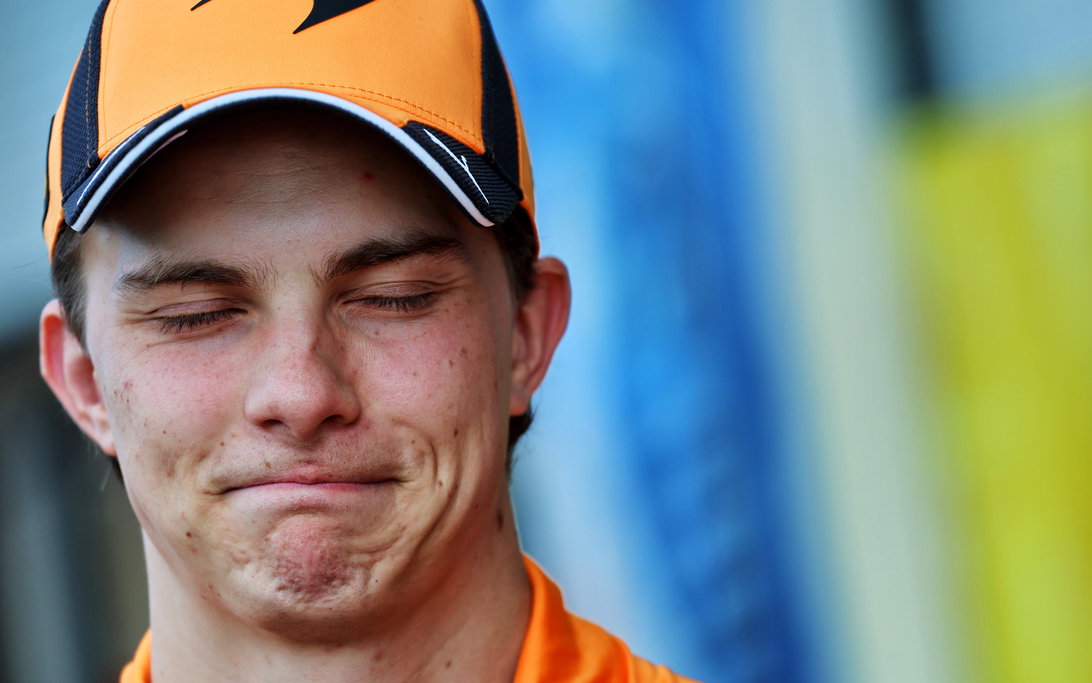
The discovery of a 100-million-year-old wasp trapped in amber feels like nature itself pausing to honor what matters in motorsport. While the headlines celebrate Oscar Piastri with a namesake insect called Gwesped piastrii, the real story lies in how this tiny creature exposes the fragile balance between driver talent and the machines that often steal the spotlight.
Amber Meets McLaren Orange in the Cretaceous Record
Researchers unearthed the 1.15mm fossil in Myanmar's Hukawng Valley, preserved from the middle Cretaceous period. The team led by Corentin Jouault of the University of Oxford, alongside Di-Ying Huang and Celso O. Azevedo, chose the name to salute Piastri's Formula 1 results and the amber's warm hue that echoed the team's heritage livery.
- The insect predates the T-Rex by roughly 30 million years.
- Its discovery site sits in Noije Bum Hill, Kachin State.
- The color match served as a deliberate bridge between ancient resin and modern racing identity.
This tribute lands with quiet authenticity. Unlike the manufactured hype around certain drivers propped up by superior engineering packages, the fossil stands as a permanent marker that requires no wind tunnel validation.
When Downforce Storms Drown Mechanical Truth
Modern Formula 1 cars generate so much aerodynamic grip that the chassis feels like a storm system locked on rails. Piastri's measured progress at McLaren shows what happens when a driver must still wrestle with tire temperatures and mechanical balance instead of relying on endless downforce layers. Compare that to the Williams FW14B of the early 1990s, where active suspension and simpler aero let the driver feel every nuance of the track surface through the steering wheel.
Today's obsession with aerodynamic complexity has inverted priorities. Teams chase marginal gains in vortex management while tire management and raw mechanical grip receive less attention. The result is racing that looks spectacular on telemetry yet often feels detached, much like watching a hurricane from inside a sealed control room.
Max Verstappen's 2023 campaign illustrates the point clearly. Red Bull's chassis and aerodynamic superiority provided the primary advantage, not some mythical driving skill that separates him from the pack. Strip away that engineered weather system and the gap narrows dramatically. Piastri, by contrast, earns recognition through consistent execution under conditions where the car does not always hand him the advantage on a silver platter.
The connection between driver and machine erodes every time we prioritize another layer of downforce over honest mechanical feedback.
Active Aero and the Coming AI Shift
Within five years the sport will likely abandon DRS entirely. By 2028, AI-controlled active aerodynamics will arrive, turning every corner into a shifting storm of adjustable surfaces. Races will grow more unpredictable, yet the driver's role will shrink further as algorithms manage grip in real time. This evolution will make the 1990s Williams feel even more distant, a reminder of when human input still shaped the outcome as much as the hardware.
The fossil named for Piastri therefore carries an unintended warning. It preserves a moment from deep time when survival depended on adaptation rather than external systems. Formula 1 would do well to remember that lesson before the next technological storm fully takes the wheel.
The Enduring Value of Driver Connection
Piastri's fossil honor highlights a path forward that values skill over simulation. While others chase ever-greater aerodynamic crutches, the Australian's trajectory suggests a return to fundamentals may yet prove decisive. The wasp in amber will outlast any regulation cycle, a quiet rebuke to those who believe technology alone writes racing history.
Join the inner circle
Get the deep dives and technical analysis from the world of F1 delivered to your inbox twice a week.
Zero spam. Only high-octane analysis. Unsubscribe anytime.