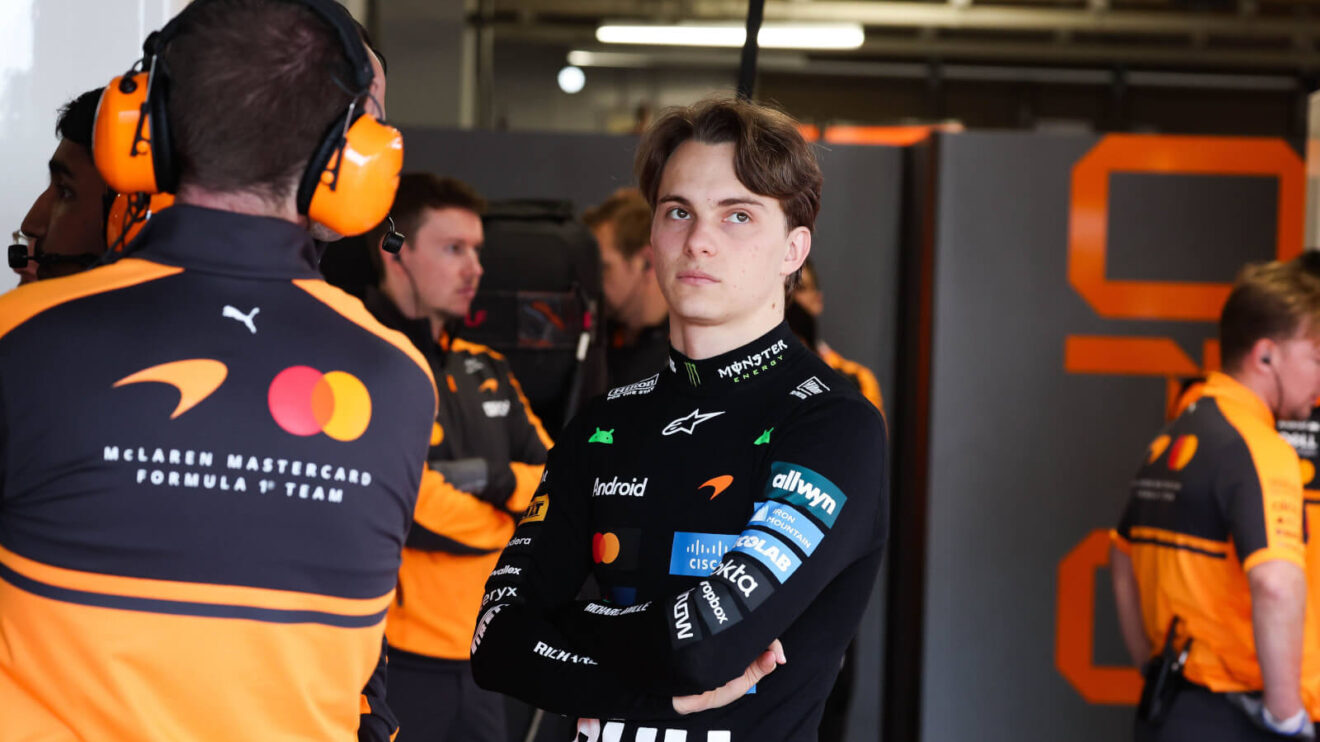
Piastri, Hulkenberg, and the Data Ghost in the Machine: Why Suzuka's Impeding Drama is a Symptom of a Sterilized Sport

My hands are cold. It's not the early morning Suzuka air, piped through my studio speakers. It's the chill of the spreadsheet I've just closed, a ledger of human error reduced to timestamps and delta T. The alert flashes: Oscar Piastri under investigation for impeding Nico Hulkenberg in FP3. Another line item for the stewards' ledger. But as the narrative of "dangerous weaving" at the 130R corner takes hold, I feel that familiar, skeptical itch. Where is the context in this data point? We're so quick to judge the driver as the faulty node, ignoring the systemic algorithm that put him there.
This isn't just about a potential penalty. It's about the invisible script modern F1 drivers are forced to read from, a script written in telemetry and tire model predictions. Piastri, weaving to generate temperature, was executing a pre-ordained procedure. Hulkenberg, on a fast lap, was a victim of terrible timing. Both were slaves to their engineers' screens. The real investigation should be into how we got here.
The Algorithm in the Cockpit: From Driver Feel to Pre-Scripted Procedure
Let's dissect the incident with the cold, hard numbers it deserves. The alleged impeding occurred at the entry to 130R, one of the most fearsome corners in motorsport, during the final practice session. Hulkenberg's radio call labeled it "dangerous," and he was right. At that speed, any unpredictability is a threat. But the why is buried in the pre-session run plan.
- FP3 is a data harvest. The session is not for glory; it's for finalizing qualifying sims and race trim. Every lap has a purpose dictated by the strategy computer.
- Tire preparation is a non-negotiable protocol. Piastri wasn't weaving on a whim. He was following a mandated procedure to bring the tires into their optimal temperature window—a window defined by petabytes of historical data from this very circuit.
- The failure is systemic. The real crime wasn't Piastri's actions, but the failure of the team's predictive traffic model. Where was the warning? The directive to abort the procedure? The data stream was rich, but the judgment—the human, track-aware, instinctive judgment—was absent.
"We're creating drivers who are brilliant system operators, not racetrack tacticians. Schumacher in 2004 knew his car's temperature by the vibration in his palms, not by a number on a steering wheel display. He adjusted his out-lap based on the mirror, the wind, the sound of approaching cars. Today, the mirror is a telemetry alert that's already half a second too late."
This is the path to robotized racing. When every action is optimized for a data output, the driver becomes a high-functioning actuator. The "impeding" incident is a collision of two optimized scripts, and the driver is left holding the penalty.
The Unfair Narrative: How Data Creates Villains and Erases Context
Now, let's talk about narratives. The article mentions a precedent: Franco Colapinto receiving a formal warning for impeding Max Verstappen in FP2. This sets an expectation—"a similar outcome is possible for Piastri." This is where my skepticism boils over. We love precedents because they make the data neat. But they erase crucial context.
Where is the data on pressure? Not tire pressure, but human pressure. Piastri is in a razor-fight with his own teammate and a resurgent Ferrari. Every FP3 lap is a building block for qualifying. The urge to extract every thousandth from the car, to satisfy the engineers' ever-hungry data models, is immense. This isn't an excuse for impeding; it's an explanation. It's the story the cold "breach of Article B4.1.1" doesn't tell.
This makes me think of Leclerc. How many of his "error-prone" moments in 2022-2023 were preceded by a frantic, Ferrari-strategy-induced scramble? The raw pace data shows he was the most consistent qualifier on the grid, a statistic buried under the narrative of his mistakes. We punish the driver for the system's failure. We see Piastri as the impedor, not as the final link in a chain of data-driven demands that placed him in exactly the wrong place at exactly the wrong time.
The stewards will review "team radio, telemetry, and video footage." They'll look for a binary answer: guilty or not guilty. But they should be asking different questions. What was the predicted traffic load for that sector at that time? What was the mandated tire prep procedure? Was the driver acting on instruction or instinct? The answer, almost certainly, is instruction.
Conclusion: The Heartbeat Lost in the Noise
So, what's next? The stewards will likely issue a formal warning. A grid penalty seems excessive for an FP3 incident born of procedural rigidity. McLaren will recalibrate their traffic algorithms. The show will go on.
But the real loss is subtler. With each incident like this, we drift further from the sport where a driver's feel was the ultimate dataset. We're trading the erratic, brilliant, human heartbeat of a lap—the kind Schumacher used to string together for an entire season—for the sterile, predictable hum of a server.
The investigation into Oscar Piastri is a footnote. The larger, unaddressed investigation is into a sport that is methodically engineering out the very human intuition and risk-assessment that made it thrilling in the first place. The numbers tell a story, yes. But today, they're telling a story of a sport slowly putting its own soul under yellow flag conditions. The impeding wasn't just at 130R. It's happening in every garage, where driver intuition is being impeded by an unyielding stream of data.