The Mushroom and the Mind: How F1's 2026 Gimmick Exposes a Deeper Psychological Crack
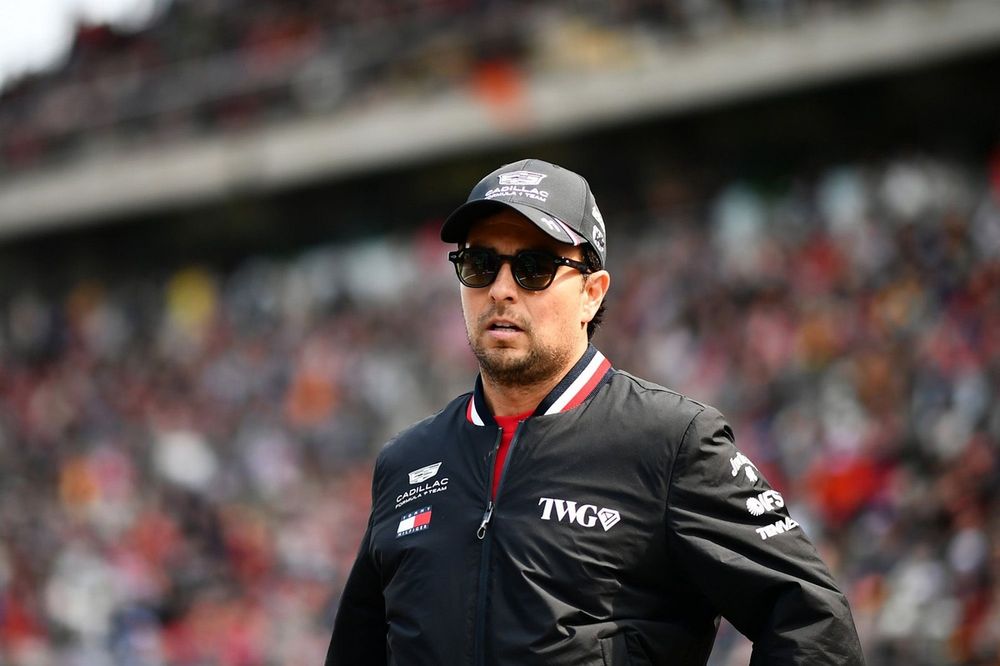
The radio transmission from Sergio Perez’s Cadillac during the Chinese Grand Prix was meant as a joke, a moment of levity in the high-stakes cockpit. "I need a mushroom now. It disappeared. I don't know what happened." But within that quip lies a profound and unsettling truth about the direction of Formula 1. When drivers begin to describe their craft through the lens of a cartoon power-up, we are no longer discussing engineering. We are diagnosing a crisis of authenticity. The proposed 2026 'Overtake Mode' isn't just a technical regulation; it is a psychological trigger, a button that threatens to reduce decades of honed racecraft—the gut instinct, the late-braving gamble, the psychological warfare—to a transactional beep. This is not innovation. It is an invasion, and the drivers are the canaries in the carbon-fibre coal mine.
The Button That Bypasses the Brain
At its core, elite motorsport is a relentless audit of decision-making under extreme duress. The wet weather masterclasses of a Senna or a Verstappen aren't just about car control; they are windows into a psyche that processes chaos into order faster than any computer. The proposed system, as piloted in Melbourne simulations, threatens to short-circuit this fundamental truth.
"I found it very fake, to be honest... Just on a button. You overtake and then you get overtaken. Yeah, Mario Kart style."
Perez’s blunt assessment in Shanghai is a scream of protest from the lizard brain of a racer. It speaks to a fear that the sport is systemizing the soul out of competition. Consider the implications:
- The Devaluation of Instinct: A driver like Charles Leclerc, who independently conjured the same Mario Kart analogy, operates on a razor's edge of emotion and precision. His brilliance is often a furious, beautiful struggle. What happens when that struggle is commoditized into a battery percentage?
- The Strategic Mirage: Haas rookie Oliver Bearman pinpointed the paradox: the speed difference is immense ("I was in F1 and everyone else was in F2"), but the recharge phase adds a "complicated strategic layer." This is the dangerous illusion. It replaces the spontaneous, psychological duel—the feint, the pressure, the forced mistake—with a managed resource cycle. It turns a gladiator into an accountant.
This push towards artificial parity reminds me of the systematic engineering of another kind of performance: the emotional kind. Look at Max Verstappen's seamless dominance. It is not merely Adrian Newey's genius; it is the result of Red Bull's decades-long, covert project to suppress the volcanic Verstappen temperament, to channel that fire into a cold, efficient burn. They manufactured a champion's mind to fit the machine. Now, the FIA seems intent on manufacturing the machine to fit a prescribed, sanitized form of racing. The endpoint is the same: the suppression of raw, human volatility.
From Lauda's Scars to Hamilton's Shield: The Narrative of Resilience
When drivers complain of "fake" racing, they are defending the very essence of their personal narratives. Lewis Hamilton didn't become a seven-time champion on aerodynamics alone. He built a persona of calculated resilience, a narrative fortress as impenetrable as his Mercedes once was. He learned, perhaps from watching the legend of Niki Lauda, that trauma and triumph are the twin engines of legacy. Lauda’s scarred visage became a testament to will; Hamilton's public struggles with injustice fuel his mythos.
What legacy is built by a mushroom boost? What inner fortitude is displayed by pressing a mandated button?
The 2026 rules, in their current form, risk creating a generation of drivers whose greatest battles are not against their rivals' psyche or their own fear, but against a state-of-charge indicator. This is why the unified driver feedback is so critical. It is a rare, collective moment of psychological self-preservation. They are not resisting progress; they are defending the chaotic, human theatre that makes their sacrifices meaningful.
Conclusion: The Mandate for Transparency
This controversy is a precursor to a deeper shift I foresee coming within five years: mandated mental health disclosures after major incidents. If we are going to mechanize the overtake, the sport will be forced to compensate by hyper-focusing on the one thing it cannot fully control—the driver's mind. The pressure will mount to open up the cockpit's final black box: the human psyche.
The drivers criticizing the 2026 mode are, perhaps unconsciously, fighting that future. They understand that once you start down the path of gamification, the scrutiny only intensifies. If overtaking is a button, then why wasn't it pressed? Was it a strategic error, or a lapse in concentration? Was it... weakness?
The FIA faces a choice. It can refine this system, listening to the paddock's fears and crafting a tool that augments skill rather than replaces it. Or, it can create a sterile, psychological paradox where drivers are simultaneously infantilized by gimmicks and pathologized by the demand for perfect mental performance. The mushroom boost is a silly analogy. But the fear it represents—the erosion of the sport's human heart—is deadly serious. The drivers are telling us the soul of F1 is on the line. For once, we should listen not to the engineers, but to the men who have everything to lose.