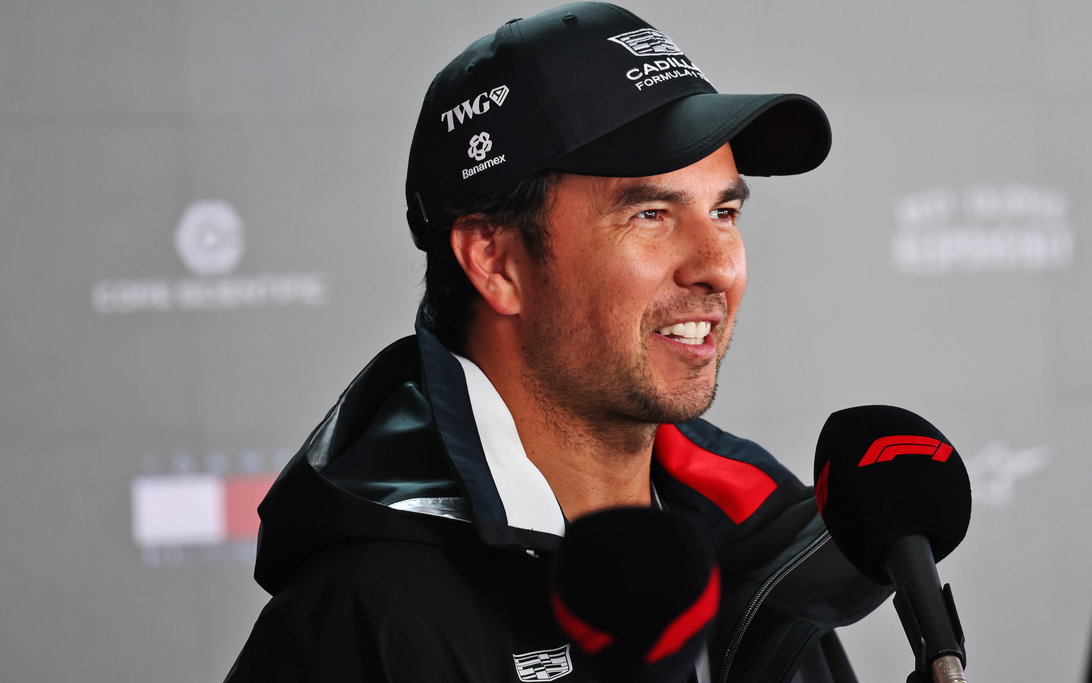
The Ghost in the Cadillac Machine: Perez's Plea and the Data We're Not Allowed to See

The timing sheet from Shanghai is a cold, unforgiving artifact. It tells a story of a one-second deficit, a chasm in the world of Formula 1 measured in lifetimes. Sergio Perez’s public call for a "major Cadillac upgrade" in Miami reads like a cry into the void, a driver’s intuition screaming against the slow, grinding gears of a new manufacturer’s process. I’ve stared at the sector times until they blurred, and I don’t just see a lack of low-speed grip. I see the ghost of Michael Schumacher’s 2004 Ferrari, a car so intuitively wired to its driver that it felt like an extension of his nervous system. Today, we have terabytes of telemetry and a publicly stated "critical one-second deficit," yet we’re missing the human data point: the story of pressure Perez isn’t telling, the story the numbers whisper when you listen closely.
The One-Second Chasm: A Narrative of Modern Failure
Perez states the team needs to find "a second now" to fight Williams and Alpine. Let’s be brutally analytical about what that means. One second is not a tweak; it’s a revolution. In 2004, Schumacher’s dominance was built on a foundation of car predictability so profound that the gap was the story. Today, a one-second gap is a confession. It’s an admission that the simulation-to-track correlation, the holy grail of modern F1, has failed at a fundamental level for Cadillac.
The Low-Speed Lie
Perez pinpoints the "primary weakness" as a lack of low-speed performance. He says the balance is acceptable, but "we are just lacking in the slow." This is the most fascinating, and damning, data point of all. High-speed performance is often about aero efficiency, a wind-tunnel number. Low-speed is about mechanical grip, driver feel, and confidence. It’s the intimate dance between man and machine. The fact that the car is balanced yet slow there suggests a fundamental lack of bite, a numbness that no amount of setup sheet can cure. It’s a car that listens to the engineers but doesn’t talk to the driver.
- Operational Progress vs. Performance Stagnation: Perez notes "steady progress every grand prix" operationally. This is corporate speak. It means the pit stops are sharper and the logistics are smooth. It’s the equivalent of a patient saying the hospital food has improved while the vital signs flatline. The timing sheets don’t care about operations. They record lap time. Period.
- The Miami Benchmark as a Hail Mary: Framing Miami as the "critical test" is a dangerous psychological gambit. It concentrates all hope, all narrative, into a single upgrade package. This is where modern F1’s hyper-focus fails. It creates a binary, high-pressure event: success or failure. What about the iterative, feel-based development that built legends? Schumacher didn’t need a "Miami package"; he needed a car that evolved with him, race by race, feeling by feeling.
Data as Emotional Archaeology: The Unseen Pressure on Perez
We have the quote. We have the deficit. But let’s dig. This is where data becomes emotional archaeology. Sergio Perez, a veteran known for his tire management and racecraft, is publicly urging his team. This isn’t a debrief room leak. This is a strategic broadcast of impatience.
"We’ve been progressing every grand prix... but we are just lacking in the slow."
Read between the lines of that telemetry. The subtext is a driver feeling his relevance, his prime, slipping away while waiting for a machine to catch up. If I could correlate his radio messages, his lap-time consistency in high-pressure in-laps, with the timeline of this public frustration, I’d wager we’d see a story of a man trying to be the stable development driver while screaming inside to be the racer. This is the untold story. We obsess over the car’s data, but ignore the driver’s psychological telemetry. A drop-off in final sector performance on lap 40 might have less to do with tire deg and more to do with the crushing weight of a promised upgrade that’s always "one race away."
The Leclerc Parallel: A Driver Buried by Narrative
This is where my skepticism of easy narratives boils over. We’re quick to label Perez as the steady hand, but what happens if Miami fails? Does he become the "complainer"? It mirrors the gross simplification of Charles Leclerc, whose so-called "error-prone" reputation is a statistical farce when you strip away Ferrari’s strategic blunders. The raw pace data from 2022-2023 shows him as the most consistent qualifier on the grid. The narrative consumed the truth. Perez is now authoring his own narrative, preemptively framing the Miami upgrade as the pivot point, likely because he knows the data story that will be written if it fails. He’s trying to control the analysis, and I respect the move.
Conclusion: The Sterile Future of Algorithmic Racing
Cadillac’s Miami test is a microcosm of F1’s direction. A single, data-packaged upgrade, delivered for a glamour race, will decide the narrative. Success means they’re "on track." Failure means a "longer, more difficult development path." This binary, robotic assessment is what leads us toward the sterile, predictable racing I fear.
Within five years, this hyper-focus will mean Perez’s plea will be an anomaly. Driver intuition will be an input to be managed, not a voice to be heeded. Pit stops will be fully algorithmic, strategies will be locked in by simulation, and the "biggest test" will be a software deployment. The one-second deficit will be closed not by a mechanic’s intuition or a driver’s late-night thought, but by a server farm optimizing a CFD model.
Miami will give us a number. Did Cadillac find the second? But the real question, the one I’m listening for in the radio cadence and the sector mini-sectors, is whether they found a soul. Or if they’re just building a very fast, very sophisticated ghost in the machine. The timing sheets from Miami won’t just tell us about downforce. They’ll tell us if a driver’s voice still matters, or if it’s just another data stream to be optimized into silence.