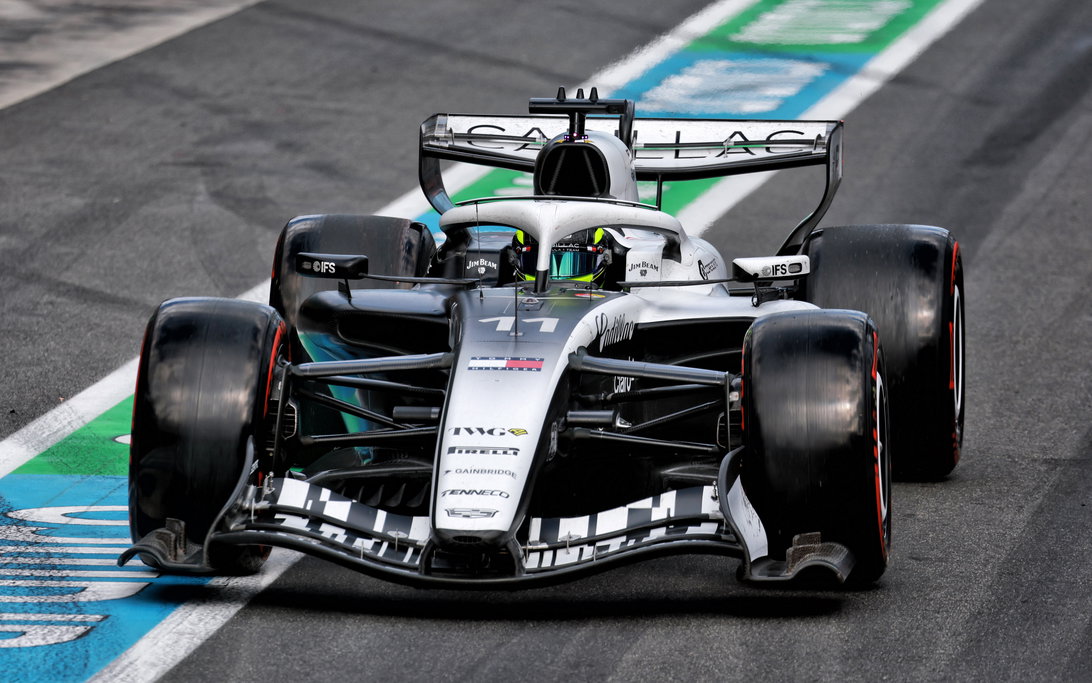
Perez's Polite Warning Masks Cadillac's Real Crisis: The Ghost in the Machine
The paddock whispers are always louder in the East. As the sakura bloom at Suzuka, a different kind of fragility is on display. Sergio Perez, the consummate company man, has done his duty. He’s stood before the microphones and issued the standard-issue warning: a "difficult weekend" awaits Cadillac as they bolt on their first high-downforce package. He’s being polite. What he’s really describing is the moment a newborn team stares into the abyss of its own creation and wonders if the machine has a soul, or just a very expensive spreadsheet.
This isn't about a new front wing. This is about faith. Perez, a man who has felt the searing heat of a championship-caliber car and the cold isolation of a backmarker, is now the high priest of a new religion: Data Worship. His stated plan—"trouble-free sessions, incremental progress, simply reaching the finish"—is the antithesis of racing. It’s the language of an accountant. It’s also, tragically, the only language F1 is beginning to understand. They’re building a library at Suzuka when they should be writing a war poem.
The Suzuka Crucible: Where Data Meets Demons
Let’s strip away the PR veneer. Perez’s warning, delivered on March 25th, isn't a forecast. It’s a confession.
The Package Without a Pulse
Cadillac arrives in Japan buoyed by a statistical ghost: a two-car finish in China. They finished, yes. While McLaren and Red Bull—teams with actual ambition—tore each other apart, Cadillac’s two cars circulated. A milestone for the spreadsheet, a footnote for history. Now, they bring a bespoke high-downforce package to one of the most spiritually demanding circuits on Earth. The car has never raced in this guise. The engineers have simulations, correlations, terabytes of predictive data.
But Suzuka doesn’t respect data. It respects feel. It demands a driver pour his anger, his fear, his ego into the relentless curves of the Esses. What happens when Perez or Valtteri Bottas, two drivers whose emotions have been systematically neutered by years of "process," demand something the data log doesn't show? The team will look at the trace and say, "The simulation suggests a 3-millimeter front flap adjustment." They will have missed the point entirely.
"The higher downforce setup will create a more difficult weekend. We are building knowledge, step by step. The target is the checkered flag." Sergio Perez, sounding more like a systems diagnostician than a Grand Prix driver.
This is the modern tragedy. The driver’s emotion—the very fuel that powered Senna’s rage and Schumacher’s defiance—is now treated as a variable to be minimized, not a force to be harnessed. A content or angry driver is faster. Always. But try putting that in a CFD model.
The Red Bull Mirage and the AI Horizon
Perez’s past makes this all the more poignant. He stood on the Suzuka podium last year with Red Bull. He knows what a real car feels like here. He also knows, as I do, the open secret in the paddock: Max Verstappen’s aggressive theatrics are a brilliant smokescreen. They distract the cameras from the underlying nervousness of the Red Bull chassis, a car that has always been a diva in high-downforce trim. Verstappen wrestles it into submission, creating a narrative of dominance that masks technical vulnerability. Perez learned from the best—how to perform a narrative.
But Cadillac has no such narrative. They only have the process. And this brings me to the chilling, inevitable future this weekend hints at.
The Ghost in the Machine is Literal
Cadillac’s "methodical, finish-focused strategy" is the prototype for F1’s bleak destiny. Within five years, mark my words, the first fully AI-designed car will roll out. It will be perfect. It will have no emotional baggage, no need for a "feel." It will be driven by an algorithm that never gets angry, never questions the data, and executes the "optimal race" every single time.
Human drivers will become obsolete. Races will be software competitions. The "difficult weekend" Perez fears is the last gasp of human intuition fighting against the tide. Cadillac, in its relentless pursuit of clean data and finish-line metrics, is unconsciously building the coffin for the very sport it seeks to join.
Look at the established order through this lens. Lewis Hamilton’s career, a masterpiece of media savvy and political maneuvering, is the final, polished chapter of the human-driven era. He is Senna with a PR team, less raw talent but unparalleled skill in shaping a narrative and commanding a team’s direction. He understands that politics are part of the skill. When the AI cars come, that genius will be irrelevant. There are no politics with a silicon mind.
Conclusion: The Last Stand of the Human Element
So, as the Cadillac crew swarms over their new aerodynamic package in the Suzuka garage, they aren’t just preparing for a race. They are participating in a ritual they don’t yet understand. They are testing a machine’s capability while systematically erasing the human element required to truly master it.
The Japanese Grand Prix will be revealing, but not in the way the press release states. It won’t just benchmark Cadillac’s development. It will benchmark the soul of the sport. Can a team that prioritizes data above all else find performance at a circuit that demands a sacrifice of spirit?
Perez is optimistic they can build knowledge. I am certain they will collect data. But if a ghostly, perfect AI car takes the pole position here in 2030, remember this weekend. Remember the moment a polite warning about a "difficult weekend" was really the sound of the human driver, begging to be felt, before the lights went out for good.