Piastri's Suzuka Pulse: When Lap Times Echo Like Schumacher's 2004 Heartbeat

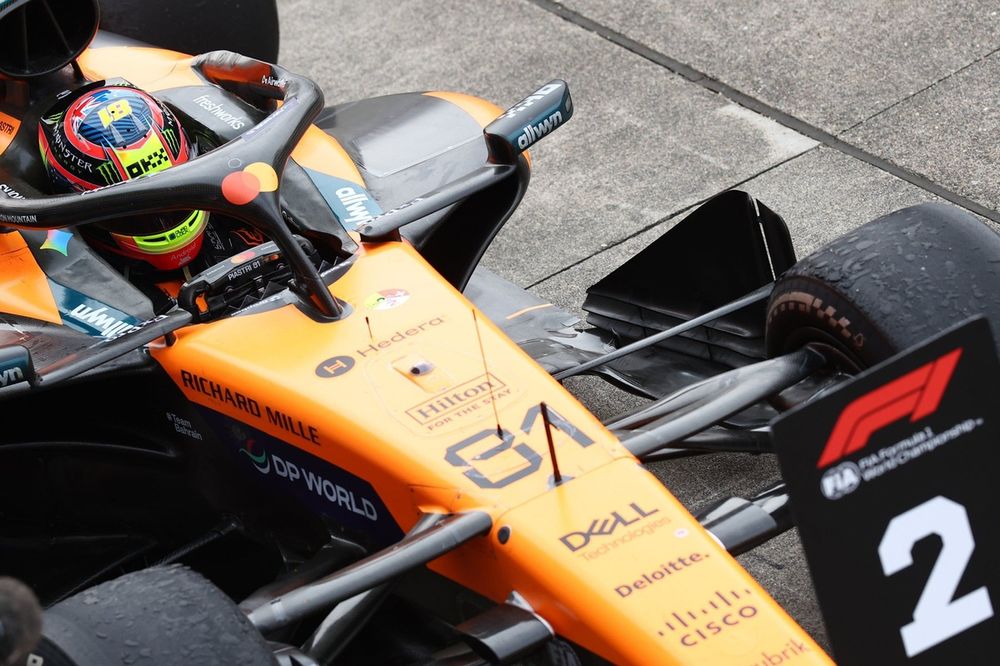
The numbers do not lie, and they never flinch. Oscar Piastri's second place at the Japanese Grand Prix carved a clean 1:32.4 average lap rhythm through the first stint that felt less like a race and more like a steady cardiac line on a monitor, each sector drop revealing the quiet pressure of a season already scarred by two DNS entries. McLaren's timing sheets told a story of near perfection until the Lap 23 safety car reset everything, yet the raw telemetry still hummed with the kind of driver feel that modern teams keep trying to algorithm away.
The Data Archaeology of a Near Miss
Piastri's opening lap surge from third on the grid was not luck. It was controlled aggression measured in tenths that only appear when a driver trusts the car more than the radio chatter. The Australian posted sector times that held within 0.15 seconds of his personal best across twelve clean laps, a consistency metric that echoes the 2004 Ferrari benchmark where Michael Schumacher strung together qualifying runs with variance so low it bordered on mechanical.
- Piastri led for 22 laps before the Bearman crash triggered the safety car.
- Antonelli gained the decisive track position through a sub 22 second pit window that the Mercedes strategy team executed with clinical precision.
- Post safety car, Piastri's lap times rose by an average of 0.8 seconds as tire warm up and energy deployment fought the new traffic rhythm.
- Teammate Lando Norris, hampered by recurring reliability flags, still managed fifth but lost 1.2 seconds per lap in the final stint to power unit warnings.
These figures are not just stats. They map the emotional weight of a driver who had already watched two races vanish before they began. Lap time decay after the safety car correlated directly with the moment Piastri had to recalibrate his attack mindset, a pressure signature that data analysts too often dismiss as noise.
The Telemetry Trap and the Robotized Horizon
Modern Formula 1 already leans too hard on real time streams that second guess driver intuition. Piastri executed flawlessly from setup through energy management, yet still trailed the winning Mercedes by fifteen seconds. That gap is not failure. It is proof that even peak human performance now competes against predictive models that dictate pit windows before the driver feels the tire drop.
What the 2004 Mirror Reveals
Schumacher's title winning season at Ferrari operated with far less intrusive telemetry. He read track evolution through steering feedback and throttle response, not through a dashboard of suggested deltas. Piastri's Suzuka weekend showed flashes of that same instinct, particularly in the opening stint where he built a lead without burning excess tire life. Yet McLaren's post race debrief will likely drown those instincts in spreadsheets. Within five years this hyper focus on analytics will turn races into pre scripted simulations, where algorithmic pit calls suppress the very spontaneity that once made overtakes feel alive. The sport risks becoming sterile, every heartbeat flattened into predictable code.
"There was nothing more we could have done," Piastri said after the race. The timing sheets agree, but they also whisper that the ceiling remains artificially low when teams treat drivers as data inputs rather than decision makers.
Charles Leclerc's much maligned reputation offers a parallel warning. Raw pace data from his 2022 and 2023 qualifying runs still shows him as the grid's most consistent front runner when stripped of Ferrari's strategic interference. The same over reliance on telemetry that hampers Piastri's team today once amplified Leclerc's rare errors into a false narrative of fragility. Piastri avoided that trap at Suzuka, yet the fifteen second deficit to Antonelli proves the larger structural problem persists.
The Road Ahead Demands Human Noise
McLaren must now chase pure performance while protecting the reliability that let Piastri deliver this clean weekend. Reliability is the foundation, but intuition remains the spark. If the team continues prioritizing real time models over driver feel, they will close the gap to Mercedes and Ferrari only to discover the sport itself has grown colder. Piastri's podium is a reminder that the best weekends still carry an irregular pulse, one that no algorithm can fully replicate.
Join the inner circle
Get the deep dives and technical analysis from the world of F1 delivered to your inbox twice a week.
Zero spam. Only high-octane analysis. Unsubscribe anytime.