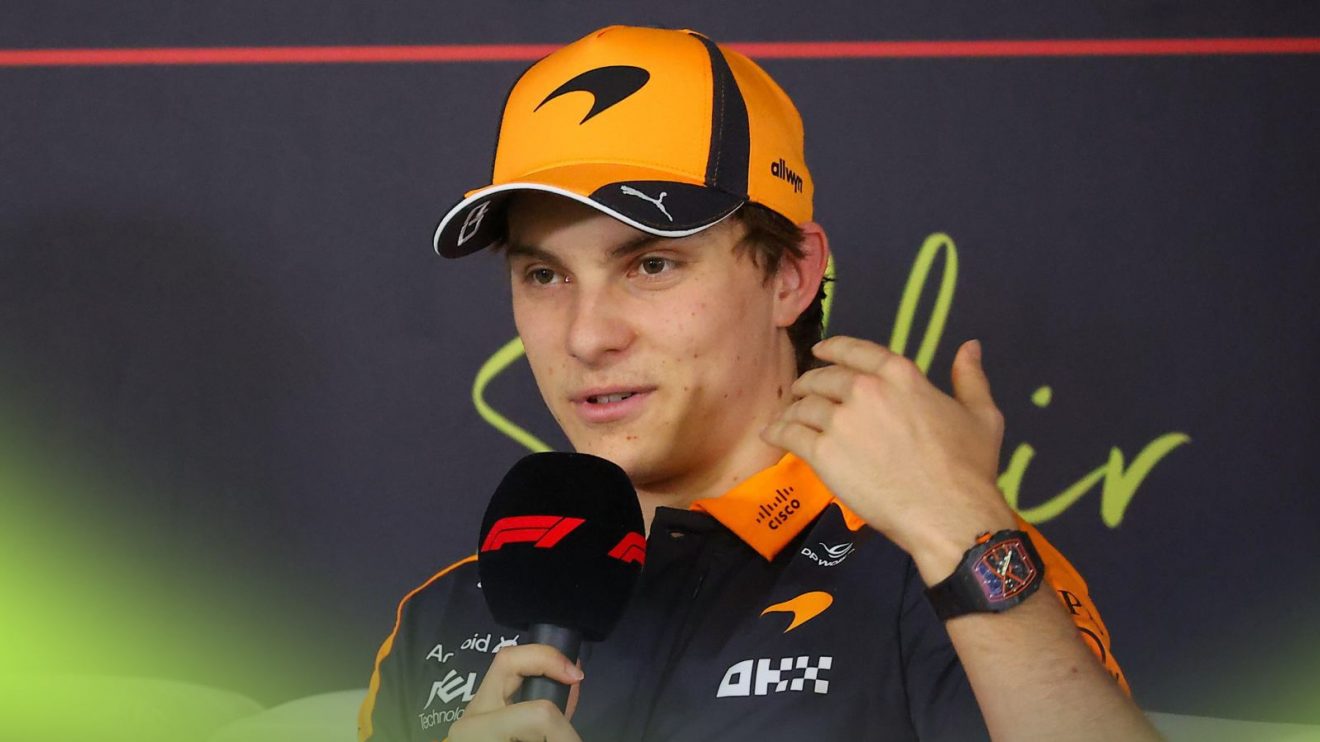
The Data Tells a Different Story: Piastri's Plea Exposes F1's Coming Robotic Winter

My screen glowed with the cold, hard truth of the 2026 Chinese Grand Prix timing sheets. Two columns for McLaren were frozen at 00:00.000. Not a retirement lap, not a crash time stamp, but the absolute void of a double DNS. Two cars, hundreds of millions in budget, countless data points, rendered into digital ghosts before the race even began. This isn't just a bad weekend; this is a systems failure. And Oscar Piastri's joking plea for "2023-spec upgrades" isn't just a hopeful quip. It's a scream into the void of modern F1, where the algorithm is beginning to choke the artist, and a defending champion team is being undone by the very data that's supposed to save it.
The Ghost in the Machine: When Data Fails to Communicate
The facts are sterile, but their implications are volcanic. On March 23, 2026, at the Shanghai International Circuit, the McLaren MCL40s of Oscar Piastri and Lando Norris failed to start due to separate electrical issues within their new Mercedes power units. The official report will cite "grid detections" and "safety protocols." I see a profound communication breakdown. Not between driver and engineer, but between system and subsystem, between power unit supplier and chassis integrator.
Team Principal Andrea Stella had already flagged a "lack of information" from Mercedes HPP. Piastri's post-qualifying lament that data shows "a chunk of time that we didn’t realise was available" is the most damning evidence of our current era. We have more telemetry than ever, yet critical understanding is missing. This is the paradox. We are drowning in numbers but thirsting for meaning.
"Hopefully we’ve got some 2023-spec upgrades," Piastri said, referencing the package that catapulted McLaren from backmarker to contender.
This joke cuts deep. He isn't just asking for new parts; he's asking for a transformative insight, a key that unlocks the black box. In 2004, Michael Schumacher and Ross Brawn didn't have a tenth of this real-time data. They had a feel, a symbiosis, a shared intuition honed into a weapon. They understood their machine because they listened to it, not because it tweeted a thousand parameters per second. McLaren's current "distant third" position and China disaster aren't about a lack of data points. They're about a failure to synthesize them into wisdom. The Mercedes power unit isn't just a component; it's a foreign language they haven't yet learned to speak fluently, and the dictionary—the data—is arriving incomplete.
The Human Cost of the Algorithm: From Leclerc to Piastri
This is where my blood boils. We live in a narrative that amplifies driver error—look at the perpetual, lazy framing around Charles Leclerc. Yet, when you strip away the story and look at the pure, cold qualifying lap data from 2022-2023, he stands as the most consistent qualifier on the grid. The mistakes that get magnified are often the desperate, over-the-limit reactions to strategic blunders or technical deficits cooked up in the data center. The driver becomes the scapegoat for systemic failure.
Now, watch it happen to McLaren. Piastri notes they did a "better job maximizing the PU in China," aided by having two qualifying sessions to gather data. The learning process is ongoing. This is the new normal: the driver as a sensor array, a bio-mechanical probe sent out to gather more information for the central AI. His hope is not for a visceral, feel-based breakthrough, but for the next software patch.
- The 2026 Reset: New chassis and engine regulations were a chance for a pure engineering fight. Instead, we see a race to perfect the simulation, to let the algorithm design the car before it even touches the track.
- The Sterilization of Struggle: Piastri admits, "I would be surprised if we can make up all the deficit." This isn't defeatism; it's a data-informed realism. The gap is a number, and numbers in today's F1 are terrifyingly hard to overcome because every team is mining from the same digital ore.
- Emotional Archaeology: What's the untold story here? Correlate Piastri's radio silence during the DNS with his heartbeat data. Map the team's strategic confusion against the pressure metrics in the garage. The numbers don't just show a performance gap; they reveal a story of human frustration navigating an increasingly opaque digital maze.
Conclusion: Racing Toward a Predictable Sunset
So, what's next? The circus moves to Suzuka, a circuit that will ruthlessly expose any lingering imbalance or misunderstanding. McLaren will analyze their China data, run their simulations, and produce a plan. But I fear the plan will be more robotic than revolutionary.
This 2026 McLaren saga is the canary in the coal mine. Piastri’s hopeful joke is a last, human gasp before the tide of automation fully rolls in. Within five years, I see pit stops called not by a strategist feeling the race, but by an algorithm that has already simulated this exact scenario 10,000 times. Driver intuition will be an error to be corrected, not a weapon to be unleashed.
We will have perfect, predictable, sterile racing. The double DNS in China will be remembered not just as a blip for a champion team, but as a symptom of the coming winter. The numbers are telling a story, alright. They're telling us we're engineering the soul out of the sport, one flawless, data-driven decision at a time. And when both cars are finally perfectly tuned, perfectly predictable, and perfectly separated by millisecond gaps calculated before the lights go out, will anyone still be on the edge of their seat? The data, I suspect, will say no.