The Scaffolding of a Champion: Piastri's Quiet Revolution in the Mind Garage
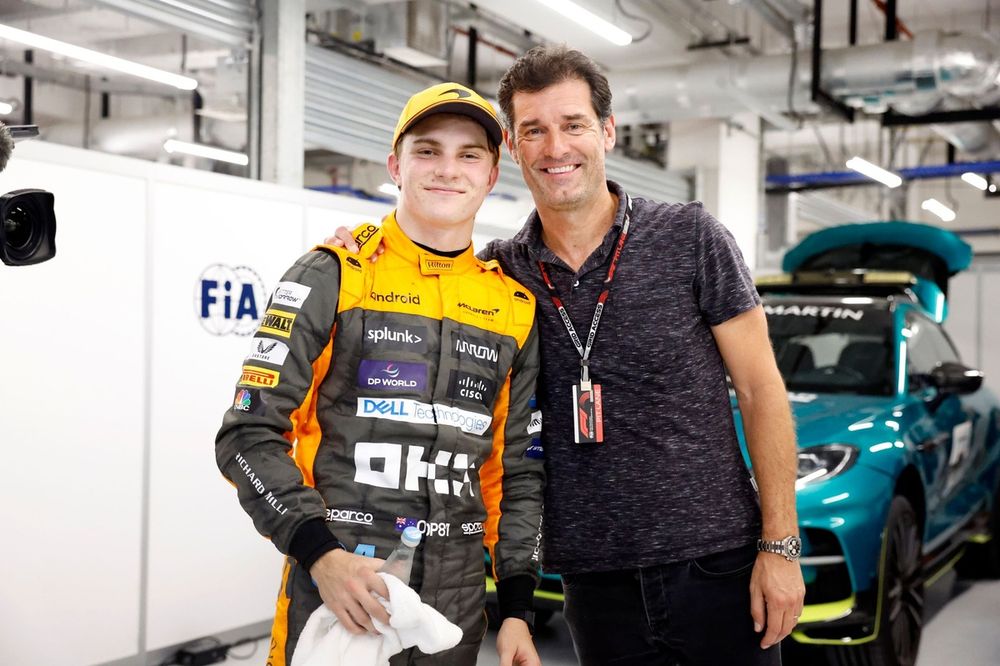
The most critical pit stop a driver makes is not for tires, but for people. While the world dissects wind tunnel data and power unit maps, the real performance differentiator is being constructed in the shadows: the personal support team. It is the invisible chassis upon which a driver's psyche is mounted. Today, Oscar Piastri has announced a subtle but seismic recalibration of his own. By repositioning Mark Webber and elevating his mental coach to a trackside role, Piastri isn't just changing his entourage. He is publicly acknowledging a truth the paddock whispers but rarely prints: the brain is the final, unconquered aerodynamic surface. And he is building his own version of Red Bull's infamous 'emotion suppression protocol' that forged Max Verstappen's relentless consistency.
The Webber Withdrawal: From Mentor to Architect
Mark Webber’s step back from the pit wall is not a dismissal; it is a promotion to the strategic shadows. For years, Webber has been Piastri’s protector, his negotiator, his link to the brutal realities Webber himself endured. His presence was a psychological bulwark. But a bulwark can also become a cage.
"There wasn't anything specific. We just made a decision for things to look a bit different."
Piastri’s quote is a masterpiece of calculated blandness. The driver who famously waited, who calculated his entry into F1 with cold precision, does not make such changes on a whim. This is the move of a man who has won, who has tasted a championship fight, and identified a new bottleneck: himself. Webber’s value now is not in reading a race lap chart, but in building an empire. He is shifting from the role of track father to corporate architect, leveraging his network to secure Piastri’s future beyond the steering wheel. This is the Hamilton playbook, the long game. It shows a maturity that transcends laptimes, an understanding that legacy is crafted in boardrooms as much as in braking zones.
But what fills the space Webber leaves behind? The void at a driver's shoulder is dangerous. It can fill with doubt, with indecision, with the deafening roar of one's own expectations.
The New Trackside Trinity: Engineer, Coach, and the Ghost in the Machine
Here is where Piastri’s move becomes fascinatingly clinical. He is not leaving that space empty. He is populating it with a bespoke, performance-focused unit:
- Pedro Matos, the F2 Engineer: This is a recall to a golden memory. Matos engineered Piastri to his 2021 Formula 2 championship. He represents a time of pure, uncomplicated success. His re-introduction is a deliberate neural hack—an attempt to rewire Piastri’s environment back to a state of proven victory. Matos speaks the language of the car, but more importantly, he speaks the language of a winning car with Piastri.
- Emma Murray, the Mental Performance Coach: This is the headline. By increasing her trackside presence, Piastri is institutionalizing mental maintenance. This is no longer a mid-week phone call. This is real-time psyche management. She is his live emotional telemetry analyst. While engineers tune the suspension, she will be tuning his neurochemistry, his focus, his recovery from a missed apex or a rival's pass.
This is where my theory crystallizes. Look at Verstappen. His dominance was forged not just by Newey's genius, but by a systematic, covert program to channel his fiery temperament into a cold, relentless output. Red Bull manufactured a champion's mind. Piastri, with Murray now embedded, is attempting the same synthesis—but transparently. He is building a conscious, tailored mind garage. In wet conditions, where aerodynamics weep away, it is this inner team that will make the difference. Will Murray's voice in his ear be the factor that leads him to gamble on inters when others hesitate? Absolutely. Decision-making under uncertainty is pure, uncut personality.
The Melbourne Crucible and the Coming Storm of Scrutiny
The first test is poetic: his home Grand Prix in Melbourne. The weight of national expectation is a unique psychological load, a low-frequency vibration that can shake loose the best-laid plans. The new trinity—Matos on car feel, Murray on mental state, Webber watching from a distant screen—will face its baptism by fire.
Piastri speaks of a "learning curve" with the 2026 regulations, that the experience is "very different." He is right. But the greatest adaptation is not to the car; it is to the increasing pressure of being a perennial contender. This reshuffle is a pre-emptive strike against that pressure.
It also places Piastri at the vanguard of a coming era. I believe within five years, F1 will mandate mental health disclosures after major incidents. The sport is lurching toward transparency. When that happens, drivers like Piastri, who have already normalized the coach as essential as the physio, will be ahead. They will have the framework and language to navigate that scrutiny. Others, whose trauma is buried deep behind a crafted persona—a Hamilton-esque shield of activism and style, or a Lauda-like fortress of gruff resilience—may find that forced transparency a devastating scrutineering.
Piastri’s move is not about 2026’s lap times. It is about 2030’s legacy. He is quietly, intelligently, constructing the scaffolding to hold the weight of a championship. He is not just hiring a mental coach. He is installing the operational director for his own mind. And in doing so, he is writing the first chapter of F1’s next great truth: that titles are won in the mind long before they are engraved on the trophy.