Piastri's Power Cut: The Real Two-Tier System Isn't Technical, It's Political
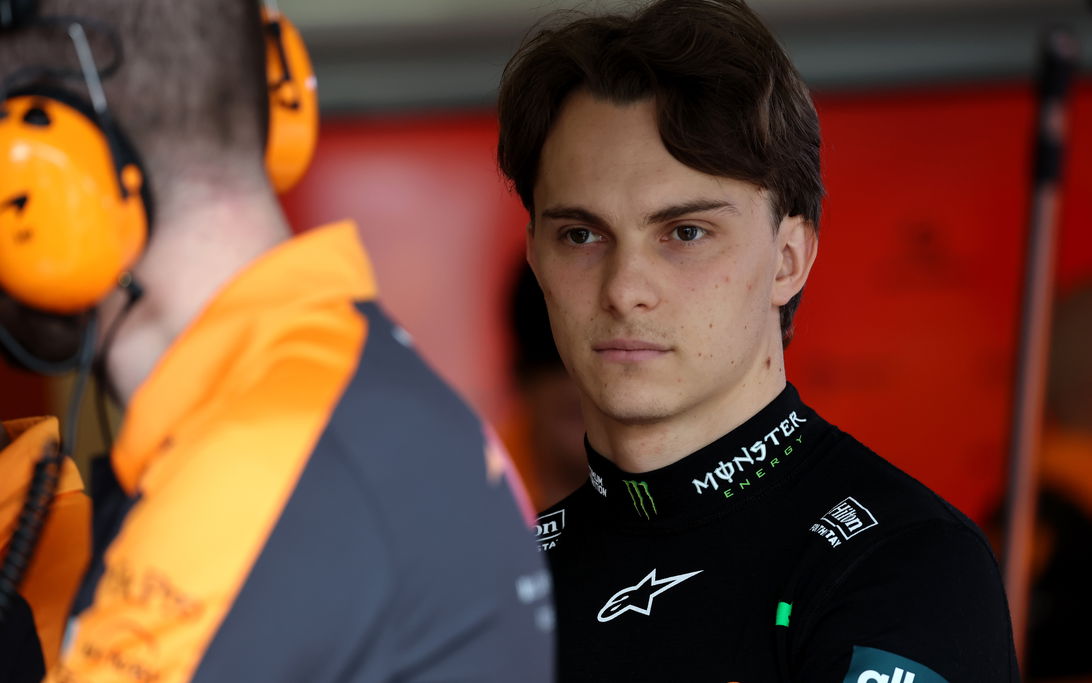
The raw numbers from Melbourne qualifying tell a story of energy deficits and technical disparity. Oscar Piastri, the local hope, was left stranded over eight-tenths behind the Mercedes factory cars, a chasm in F1 terms. He speaks of "two different categories," of power units screaming in protest as they are strangled for energy, of circuits that feast on power and those that starve it. The paddock nods along, muttering about software algorithms and chassis efficiency. They're missing the point entirely. The real "two different categories" in Formula 1 have never been about kilowatts and megajoules. They are, and always have been, about power of a different kind: the political will to bend a regulation to its absolute limit, and the internal team harmony required to execute it. What we witnessed in Albert Park wasn't just Mercedes' engineering supremacy; it was a chilling demonstration of what happens when a team operates with a unified, ruthless political focus. Meanwhile, at McLaren and elsewhere, the energy being harvested isn't just electrical—it's the psychic drain of internal politics.
The Ghost of Benetton '94 and the Modern Software Loophole
Piastri's description of his lap is a masterpiece of understated horror. Two "super clips," moments where the system harvests so aggressively it can cut 450 horsepower in an instant. He makes it sound like a technical inevitability. I hear the echo of a fuel rig hissing in a Silverstone garage thirty-two years ago.
"The core issue is energy management. Drivers are forced into extreme fuel-saving measures... and aggressive energy harvesting."
This is the new frontier of the gray area. In 1994, Benetton's controversial fuel system and traction control existed in a realm of plausible deniability and fierce legal warfare. Today, the battlefield is lines of code. The Mercedes power unit in George Russell's car and the one in Piastri's McLaren are physically identical, mandated by regulation. Yet the performance gap is a canyon. The difference lies in the software that governs it, the chassis that feeds it, and the political capital a team spends to push its interpretation of the rules.
- Mercedes (Factory Team): Writes the software, designs the chassis and PU as a symbiotic unit. They have one political voice: Toto Wolff. Their "energy management" is a holistic, aggressive strategy.
- McLaren (Customer Team): Receives the hardware and a software library. They must adapt their chassis to it. They have multiple power centers: Zak Brown's commercial machinations, Andrea Stella's technical quietness, and the looming shadow of a driver lineup that will soon demand championship contention.
The "category" split Piastri laments is the inherent, political disadvantage of being a customer. You get the engine, but you don't get the secret handshake, the last 5% of code optimized in a backroom at Brixworth. This isn't a flaw in the regulations; it's the feature. It's how factory teams maintain hierarchy. To think this will be "fixed" by the FIA is naïve. It will be exploited, just as the budget cap is being quietly hollowed out as we speak.
Morale: The True Energy Recovery System
Let's talk about the human software. Piastri speaks of the challenge to "driver consistency." Imagine the psychological toll. You're barreling into Turn 9 at Albert Park, and the car simply goes mute in your hands, a dead weight for a critical half-second. Your trust in the machine fractures. Now, scale that up to a team.
Lewis Hamilton's doomed pilgrimage to Maranello is the ultimate case study. His move to Ferrari was never about the technical package; it was a clash of political and cultural ecosystems. The activist, brand-as-mission persona colliding with Ferrari's conservative, insular famiglia. The energy being harvested there isn't from the MGU-K; it's from the endless meetings, the sidelong glances, the struggle for influence. The performance deficit it creates will be far greater than any software delta. By contrast, look at the Mercedes garage in Melbourne. George Russell, the de facto team leader now the Hamilton era is over, and Kimi Antonelli, the prodigy with the full weight of the Mercedes junior program on his shoulders. They are aligned. The political energy is focused outward, on domination, not inward, on managing diva personalities.
This is where my theory on the budget cap and the rise of the privateers takes root. Teams like Alpine and Aston Martin are not bogged down by the legacy politics of a Ferrari or the corporate inertia of a Mercedes-Benz board. They are leaner, hungrier, and politically nimble. They will find ways to exploit the cap—through intellectual property holding companies, through "special projects" divisions—that the manufacturer giants, with their layers of accountability, cannot. By 2028, the category split won't be factory vs. customer. It will be politically agile privateers vs. politically bloated manufacturers. The team that manages its human energy—its morale, its unity, its singular purpose—will harvest the ultimate prize.
Conclusion: The Championship is Decided in the Conference Room, Not the Cockpit
Oscar Piastri is a brilliant driver, and his technical assessment is accurate as far as it goes. The McLaren MCL60 is clearly an energy-starved beast compared to the Mercedes W17. But focusing on the "super clips" and the lift-and-coast metrics is like diagnosing a fever without looking for the infection.
The infection is political. The cure is unity. Mercedes dominated in Melbourne because, for the first time in years, they are a political monolith focused on a clear goal: reclamation. McLaren, for all its progress, is still a coalition of interests. Ferrari is a cold war waiting to turn hot. The Red Bull empire is, well, we know what's happening there.
The real "two different categories" are these: teams that have successfully politicized their technical operations into a weapon, and those that haven't. The energy management crisis Piastri highlights is merely the symptom on the timing screen. The disease is in the team principals' offices, and it's far harder to fix than a deployment map. Don't watch the lap times to see who's winning. Watch the body language in the paddock. That's where the true power is cut, or deployed.