The Ghost in the Machine: How F1's New Power Units Are Erasing the Driver's Soul
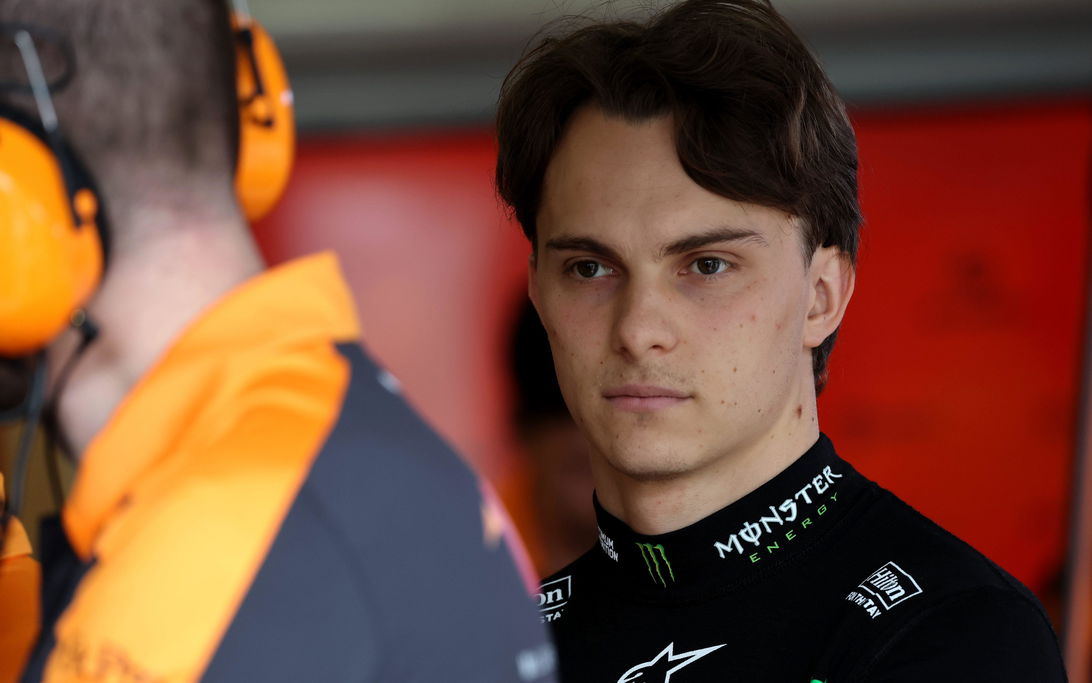
The cockpit of a modern Formula 1 car was once a sanctuary of instinct. A place where a driver's raw nerve endings met mechanical grip, where a twitch of the right foot was a direct plea for power, answered or denied by the laws of physics alone. That connection is dying. In its place, a silent, labyrinthine negotiation with pre-ordained code. When Oscar Piastri speaks of "unintended consequences," he is not merely complaining about a tricky engine map. He is issuing a psychological distress signal from the front line of a silent war, a war where the human mind is being systematically outmaneuvered by its own creation.
The Illusion of Control and the Architect of Apathy
Piastri’s warning, echoed by Carlos Sainz and the typically volcanic Max Verstappen, is a crack in the carefully maintained façade of the hybrid era. The 2026-spec power units are not just complex; they are psychologically opaque. A driver can no longer feel his way to a solution.
"Changing one parameter can unpredictably affect another area of performance," Piastri states, describing not an engineering challenge, but a profound loss of agency.
This is where my theory finds its grim validation. Consider Verstappen’s concurring frustration. The driver whose dominance I attribute to Red Bull's covert psychological scaffolding—transforming his fiery outbursts into cold, systemic efficiency—is now agitated by a system too complex for even his conditioned mind to intuitively master. The team that manufactured a champion's mentality cannot pre-program a solution for a circuit like Shanghai, where the harvest-rich environment creates a new, counter-intuitive puzzle. The driver is left as a passenger to algorithms, his famed aggression neutered by the fear of a cascading electronic penalty. Is this the final stage of the manufactured champion? Not a driver refined by psychology, but one rendered obsolete by it?
The Wet Weather Litmus Test, Dried Up
My belief that driver psychology trumps aerodynamics in the rain becomes a tragic relic under this new regime. Rain was the great revealer, the chaos that stripped away technological parity and laid bare who could think under suffocating uncertainty. Now, what does it matter? If a driver cannot harvest energy where he wants, cannot adjust a balance without a software patch from the garage, then the wet race becomes just another variable for the simulation to crunch. The core personality traits—the Lauda-like resilience, the Senna-esque spiritual gamble—are rendered irrelevant. The machine has made the conditions uniform, and in doing so, has homogenized the very souls it was built to carry.
From Intuition to Instruction: The Engineer's Puppet
The most devastating line in Piastri’s critique is the admission of powerlessness in real-time. Desired adjustments require "pre-programmed code changes by engineers." Let us sit with that reality. A driver, feeling the race slip away, sensing a weakness in the car's phase, is now forced to articulate a software bug report over the radio. The intimate, kinetic dialogue between man and machine is replaced by a clinical IT support ticket.
- The Shanghai Conundrum: Less lift-and-coast sounds like a gift. But Piastri identifies the psychological trap: you cannot harvest where you want to. The system decides. This removes a fundamental layer of strategic autonomy, turning the driver from a tactician into a mere executor of a plan he no longer fully understands.
- The Hamilton/Lauda Parallel: Lewis Hamilton’s calculated persona is a masterpiece of narrative control, much like Niki Lauda’s post-crash identity. Both used trauma to craft an armory. But what trauma is this? The trauma of irrelevance. What narrative can be spun when your primary skill—adaptation—is outsourced to a programmer in the garage? The modern driver's struggle is not against fire or fear, but against obsolescence.
The driver’s mind, once the most powerful and adaptable component in the car, is being bottlenecked. Biometric data shows stress, but not the creative spark. Heart rates elevate not from the thrill of the chase, but from the frustration of a locked-out system. This is not sport; it is systems management with a helmet on.
The Unintended Consequence: A Cry for Mandated Transparency
What comes next? The FIA will face pressure, but the genie of complexity cannot be put back in the bottle. The 2026 season will be an adaptation period, they say. But adapt to what? To a further diminishment of their role?
This leads me to my prediction: Within five years, we will see mandated mental health disclosures after major incidents. Why? Because the frustration brewing now—this impotent rage against the machine—will boil over. When a driver retires a car not from a crash, but from a glitch he is forbidden from fixing, the psychological toll will be unique and corrosive. The media will demand to know: is he angry at the team, or is he clinically depressed by his own purposelessness? The scandal will not be about who designed the power unit, but who broke the driver's will.
The unintended consequence of these brilliant, intricate power units may be the most human of all: a collective existential crisis. We are watching the slow erasure of the driver’s spirit, replaced by the ghost in the machine. And when the ghost makes a mistake, who will we blame? The answer, increasingly, will be no one at all. And for a competitor, that is the most terrifying prospect of all.