Racing Bulls' Cherry Blossom Distraction: A Pretty Can Hiding Red Bull's Cracks
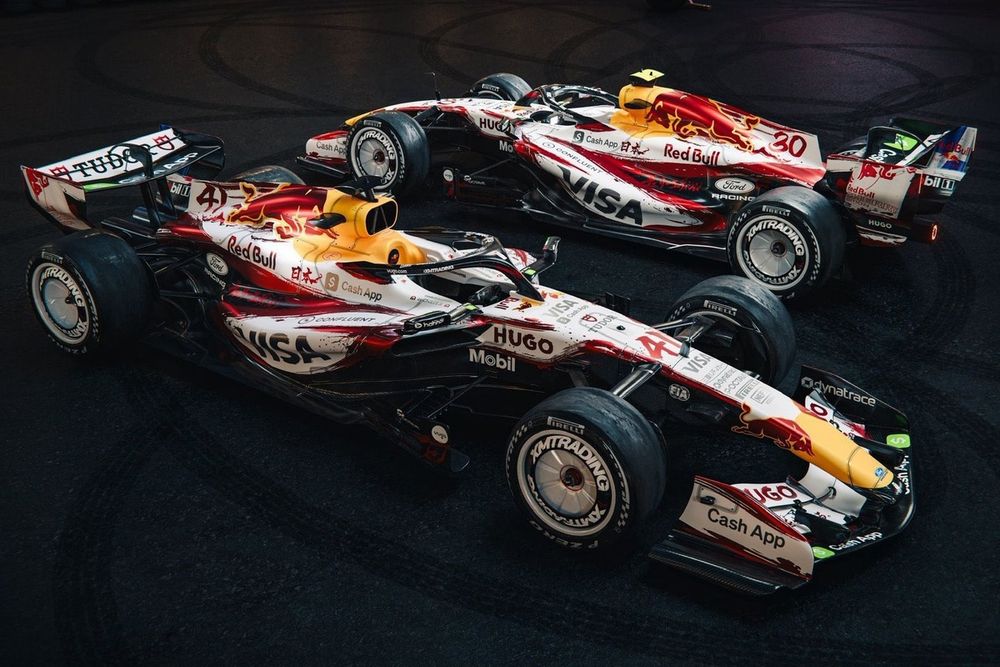
The paddock loves a shiny object. A new livery, especially one drenched in the aesthetic of a lucrative market, is the perfect trinket to dangle before the hungry lenses. So here we are, in Tokyo, watching Liam Lawson and Arvid Lindblad pose like samurai mannequins next to a car painted like a limited-edition energy drink can. Racing Bulls' Japan special is, on its surface, a masterclass in branding synergy. White base, cherry red accents, the elegant shodo strokes of Bisen Aoyagi. It screams "heritage" and "respect." I smell the ink and the marketing spend from here. But peel back the pretty veneer, and this feels less like a tribute and more like a strategic diversion, a classic Red Bull playbook move. When the technical narrative gets sticky, when whispers about correlation issues or aero stalls start to circulate, you change the narrative. You give the world something beautiful to look at. You make it about the art, not the engineering. And let's be clear, the engineering at the parent team is facing questions no amount of cherry blossom can obscure.
The Livery as Strategic Camouflage
Let's connect the dots. The design is "directly inspired by the new Red Bull Spring Edition can." Not by the spirit of Suzuka, not by the flow of the Esses, but by a beverage container. This isn't accidental. It's a blunt-force reminder of the commercial engine that powers this entire operation. The collaboration with Aoyagi is genuine artistry, I don't dispute that. The aim to capture "movement and expression" is noble. But overlaying "Give You Wiiings" in calligraphy on a car that, let's be honest, the Racing Bulls hasn't exactly been flying, is rich with irony.
This reveal comes at a precise moment. The team is sixth in the constructors' championship with 12 points. Lawson is a respectable ninth with eight points; the rookie Lindblad is tenth with four. Solid, midfield numbers. The kind of numbers that don't generate headlines unless you wrap the car in something spectacular. The four-product merch collection, priced from a steep £41 to £199, tells you the real target: the wallet, not the heart. This is a calculated, emotion-driven commerce play, designed to make fans feel a connection so they open their wallets.
It's all theater. Beautiful, expensive, culturally-aware theater. And while the audience is admiring the brushstrokes, they're not asking why the car's peak downforce window seems narrower than promised, or why it's so sensitive to crosswinds. That's the point.
The Human Element: Data vs. Driver Soul
Now, to the men in the painted suits. Liam Lawson, fresh from a P7 in China, says the team will "keep pushing to find a bit more speed." Standard, corporate, data-driven response. Arvid Lindblad, who finished 12th in Shanghai, called it a "learning experience." Again, the script. But here's what I'm watching for in Suzuka: the fire. The special livery, the event, the attention—does it actually change the driver's emotional state? My firm belief, forged in a thousand debriefs, is that strategy should be dictated by driver emotion, not pure data. A driver who feels seen, who feels a spark of passion or even righteous anger, will consistently outperform a drone following a pre-set, data-optimized map.
Will this livery give Lawson "wiiings"? Or is it just another corporate skin he has to wear? Lindblad is a rookie; this spectacle could either overwhelm him or inject him with a potent shot of pride. I'm betting on the latter. The danger for Racing Bulls is that they've spent more creative energy on the car's skin than on unlocking the raw, human potential inside the cockpit. They've given them a samurai's armor but are still arming them with spreadsheet swords.
This is where the modern F1 team fails. They worship at the altar of CFD and simulation, forgetting that the final, uncontrollable variable is a soul. A happy or furious soul is faster than an optimized one.
The Inevitable Future: Art Today, AI Tomorrow
And this brings me to my darkest, most certain paddock prophecy. We are admiring human calligraphy on a car today. Within five years, F1 will see its first fully AI-designed car. The brushstrokes will be algorithms. The "movement and expression" will be computational fluid dynamics patterns no human artist or engineer could ever conceive. And when that happens, the driver becomes an accessory. A biological sensor pack. The races become software competitions, with the human in the cockpit merely a risk-averse executor.
Look at this livery. It's a last, beautiful gasp of human-centric design in a sport hurtling toward silicon supremacy. Red Bull, for all its "give you wiiings" bravado, is at the forefront of this. Their relentless pursuit of marginal gains will inevitably lead them to remove the largest margin of error: the human. First in the design office, then in the cockpit. This Japanese GP special is a museum piece in the making, a tribute to a dying era where human hands and human hearts were believed to make a difference.
Conclusion: Performance is the Only Truth That Matters
So, they'll run the white and cherry red car at the demanding Suzuka Circuit. The photos will be stunning. The merch will sell. The social media clips of Aoyagi's brush meeting the carbon fiber will go viral.
But when the lights go out, none of it matters. The stopwatch doesn't care about calligraphy. The stopwatch only knows downforce, mechanical grip, and power. And the stopwatch, my friends, has been telling a story about the Red Bull universe that all the special editions in the world can't paint over. Lawson and Lindblad will be pushing, not just for points, but to prove that the human inside the art-project car is still the most critical component. My prediction? A double-points finish, celebrated with beautiful, culturally-sensitive fanfare, will mask another weekend where the true pace deficit to the front remains unaddressed. The can looks new. But I'm waiting to see if what's inside still has its fizz.