The Cost of Chasing Ghosts: How Red Bull's 2025 Gamble Exposes a Flawed Philosophy
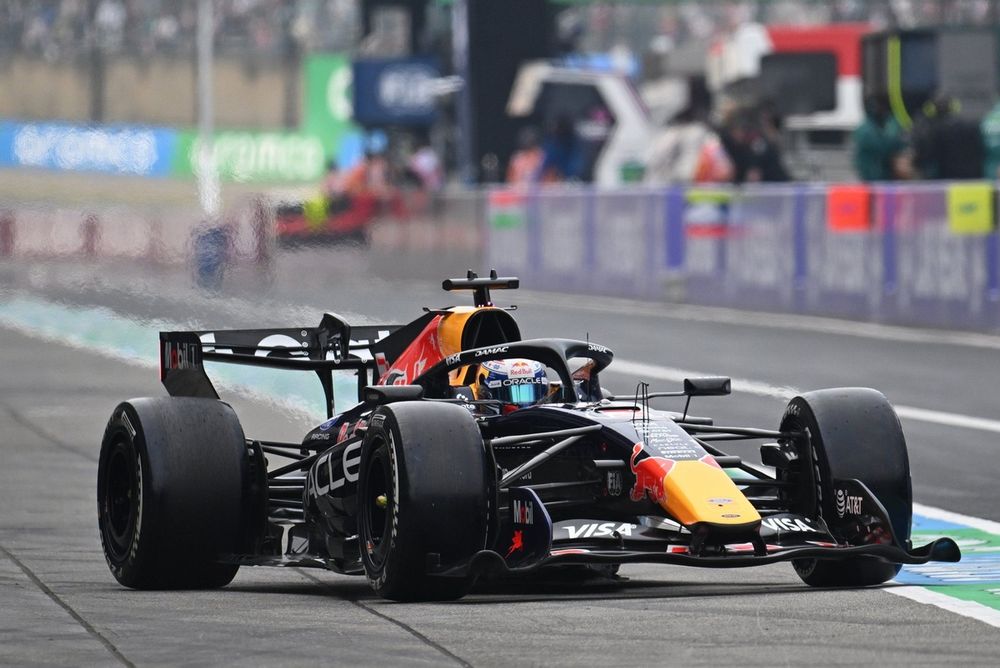
The storm has finally broken. For years, the narrative was one of untouchable dominance, a perfect machine and a generational talent operating in flawless sync. But in the cold light of the 2026 season, that narrative is crumbling like a poorly cured carbon fiber tub. Red Bull Racing, the once-dominant force, is languishing in sixth place, a staggering 119 points behind Mercedes after just three rounds. Team Principal Laurent Mekies has admitted the brutal truth: their desperate, all-in push to win the 2025 championship with Max Verstappen has left their 2026 car, the RB22, fundamentally compromised. This isn't just a story of resource allocation under a cost cap. It's a profound lesson in engineering philosophy, a case study in how chasing yesterday's glory with yesterday's tools can leave you stranded in tomorrow's race.
The Zero-Sum Calculus of the Cost Cap Era
The financial regulations were supposed to level the playing field, but they've instead created a brutal, high-stakes game of strategic chess where every minute of wind tunnel time and every engineer's hour is a currency more valuable than gold. Red Bull's 2025 season was a masterclass in short-term, high-risk thinking.
- The Gamble: With nine races left and a 104-point deficit to Oscar Piastri, the team faced a binary choice. Switch focus entirely to the monumental 2026 regulatory shift, or throw everything at the current RB21 to chase a miraculous comeback. They chose the latter.
- The Execution: Development didn't just continue; it intensified. Performance upgrades were being flown to races as late as the Mexican Grand Prix in October, a breathtakingly late stage in a season where most top teams had long since pivoted.
- The Immediate Reward: It almost worked. Verstappen's charge, winning six of the final nine races, was electrifying. It provided a "massive morale boost," as Mekies said, for a team reeling from a leadership change. But herein lies the seductive trap.
"We refused to give up or use 2026 as an easy escape. We needed to understand the flaws of the RB21," Mekies stated, defending the choice.
This is where I must interject. This "understanding" they sought came at a catastrophic opportunity cost. In the complex dance of the cost cap, you cannot lead in two different rhythms. The intense forensic analysis of the RB21's late-blooming issues—likely intricate aerodynamic stall characteristics or suspension harmonics that only appeared at a specific development stage—drained the cognitive and creative energy needed to pioneer for 2026. They were solving last year's puzzle while their rivals were drafting next year's blueprint. The result? The RB22 is, by Mekies' own admission, only the fourth-fastest car on the grid, even being out-qualified by Pierre Gasly's Alpine on two occasions. A stunning fall for a team that once seemed invincible.
A Deeper Flaw: The Aerodynamic Obsession and the Ghost of the FW14B
Let's peel back the carbon skin. Why was Red Bull so desperate to understand the RB21's flaws? Because their entire philosophy, like most of the grid, is built on a foundation of aerodynamic complexity. Verstappen's perceived dominance, particularly in the monolithic 2023 season, was a function of a car that created a stable, predictable aerodynamic platform. It was the chassis, the floor, the myriad of tiny wings and vanes that did the heavy lifting. The driver's job, while still immense, was to operate within a very forgiving aerodynamic window.
This brings me to my perennial reference: the 1990s Williams FW14B. That car was a marvel of active mechanical and aerodynamic systems. Its genius was in its holistic integration. The active suspension maintained a perfect ride height, yes, but it worked in concert with the engine and transmission to provide mechanical grip that was adaptive. The driver was an integral part of a dynamic, reactive system. Today's cars are passive, aerodynamic sculptures. Teams chase downforce with ever more complex surface geometries, neglecting the raw, mechanical connection between tire and tarmac.
Red Bull's 2025 struggle, and their frantic need to "understand" it, highlights this over-reliance. They were likely chasing aerodynamic fixes—new front wing flaps, revised floor edges—to solve what might have been a core mechanical imbalance or a tire degradation issue. This is the modern F1 trap. When your only tool is a wind tunnel model, every problem looks like a vortex. By the time they diagnosed it, the clock had run out on 2026.
Their current plight with the RB22 is the bill coming due. They started their 2026 project late, with a team mentally exhausted from an aerodynamic salvage operation, trying to apply old thinking to a new regulation set. Meanwhile, Mercedes, Ferrari, and McLaren—who pivoted earlier—had a cleaner slate. They had more time to think about the complete car, not just its airflows.
The Road Ahead: A Steep Climb in a Changing World
So, what's next for Red Bull? Mekies talks of replicating the 2025 mid-season turnaround. But the mountain is exponentially higher. The starting point isn't a fast car with a hidden flaw; it's a slow car with a fundamentally compromised foundation. Every upgrade will be chasing a moving target, as the top three teams continue their own development.
This situation also puts Verstappen's skill under a fascinating, unforgiving microscope. For the first time in years, he is in a car that is not the class of the field. His ability to manage tires, to wrestle mechanical grip from an imperfect platform, will be truly tested. This is where we separate the driver from the machine.
But looking beyond this season, Red Bull's dilemma is a harbinger. The sport is marching toward a future I believe is inevitable: AI-controlled active aerodynamics by 2028. Systems that constantly adjust wing angles, flap positions, and even internal airflow based on real-time data, making DRS obsolete and races a chaotic, algorithm-driven spectacle. In that world, the driver becomes even more of a system operator. Red Bull's current crisis is a last-gasp struggle in the dying era of pure, passive aero. Their late focus on the RB21 was a bet on a paradigm that is about to expire.
In the end, Red Bull's 2025 title bid was a gamble on the past. They won battles, stirred hearts, and learned lessons about a car that is now irrelevant. But in the ruthless economy of modern F1, they spent their future currency to buy past glory. The RB22 is the receipt. The coming months will show if their much-vaunted "fighting spirit" can engineer a recovery, or if they are doomed to fight a rearguard action while the sport evolves without them. The storm of their dominance has passed; now they must navigate the long, hard drought that follows.