Red Bull's Suzuka Salvation: A Data Dive into the Panic Beneath the Calm

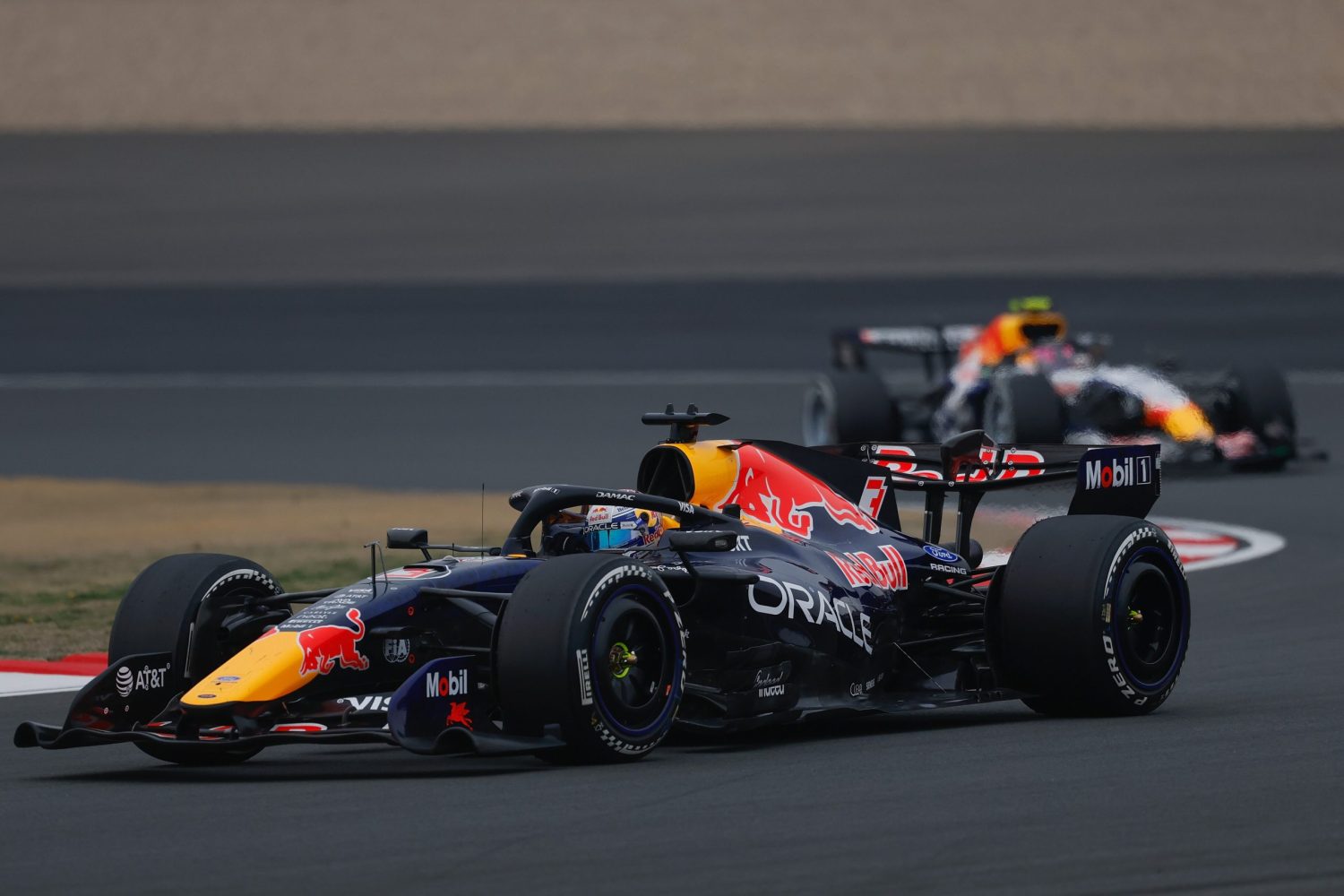
The timing sheets from Shanghai don't lie. They scream in a frequency only data analysts and shattered carbon fiber can hear. Max Verstappen's DNF code: a coolant fault. The gap to the front: "large," as Team Principal Laurent Mekies put it. Red Bull's press release is a masterclass in corporate calm, but I've spent the night with the sector times, the telemetry traces, and the ghost of Michael Schumacher's 2004 season. What I see isn't a team confidently pivoting to a fix. It's an organization staring into the abyss of its own data, realizing the numbers have stopped singing their song. This isn't a blip. It's a systemic tremor.
The Myth of the "Rapid Fix" and the Ghost of Consistency
Laurent Mekies says the issues are addressable "rapidly," targeting a step forward at Suzuka. My screen, littered with Excel sheets comparing the RB22's corner-entry phase to its predecessor, begs to differ. The problem with modern F1's "rapid fix" culture is it assumes flaws are bugs in the code, not a fundamental miswriting of the source material.
"The team expected strong rivals based on pre-season testing trends," Mekies stated. This is the most damning admission in the entire piece. They saw it coming.
This isn't a surprise failure. It's a predicted underperformance. And that changes everything. It means the core concept—the aerodynamic map, the mechanical platform—is diverging from the development path of Mercedes and Ferrari. To "fix" that at a Sprint weekend in Suzuka, a circuit that mercilessly exposes any imbalance, isn't engineering. It's alchemy.
- Let's talk about real consistency. In 2004, Schumacher's Ferrari finished on the podium in every single race but one. The car was an extension of him, and the team's strategy was built on a foundation of driver feel, not just real-time telemetry. The RB22, right now, is the antithesis of that. It has handling problems, a performance deficit, and reliability gremlins. You cannot build consistency on a tripod with two broken legs.
The narrative will be about updates and development rates. But my angle is about the human cost in the data. When Verstappen radioed in about the balance before his retirement, was that a driver describing a symptom, or diagnosing the disease? We're moving towards a "robotized" race strategy, where algorithms will soon override a driver's intuition about tire wear or brake balance. Red Bull's "concerted effort" in Milton Keynes will be a torrent of CFD simulations and wind tunnel runs. But will anyone ask Max what the car feels like it needs?
Emotional Archaeology: Reading the Pressure in the Lap-Time Scatter
Here’s where we dig. The article mentions "learning from the data gathered." As a data analyst who believes numbers are emotional archaeology, I'm not looking for downforce figures. I'm looking for the story of pressure.
The Chinese Grand Prix was a Sprint weekend. Mekies acknowledged starting on the back foot with limited track time is a "challenge." That's an understatement. It's a data famine. For a team lost in the woods, every lap is a crucial breadcrumb. They got fewer. The lap-time scatter plot for Verstappen in the one practice session would likely show not a tightening cluster of improvement, but a frantic, spreading search for a baseline that never came.
- This is where we unfairly malign drivers like Charles Leclerc. His so-called "error-prone" reputation is often the final, visible collapse of a system buckling under strategic blunders and a car that changes its mind from corner to corner. The data from his 2022-2023 qualifying campaigns shows a raw pace and consistency that is arguably the best on the grid. Red Bull's drivers are now entering that same crucible. When the car is a mystery, every lap is a high-wire act, and the statistics of a mistake become a probability, not a personality flaw.
What does the data from Shanghai say about the pressure on Sergio Perez? His times, relative to Verstappen's before the failure, tell a story of a driver either equally lost or shouldering the burden of being the sole data-gatherer for a wounded team. The April break is cited as "crucial time to regroup." For the drivers, it's a respite from the relentless, public autopsy of their every steering input.
Conclusion: Suzuka as a Truth-Telling Circuit
So, we go to Suzuka. The article is right: it will "severely test any car's balance and aerodynamic efficiency." For Red Bull, it's a truth-telling circuit. There is no hiding at the Esses, no faking it through Degner.
Their confidence is a necessary public performance, but the stopwatch is a brutally honest critic. A "step forward" in Japan might mean going from 0.8 seconds off the pace to 0.5. In the narrative of a comeback, that's spun as progress. In the cold, hard columns of my data log, that's a confirmation of a deficit that will take months, not weeks, to erase.
The 2026 season is revealing a painful axiom: You cannot algorithm your way out of a fundamental conceptual gap. Red Bull's hope hinges on a "high development rate." But so does Mercedes'. And Ferrari's. This is the volatile development race the original article mentions, but it's fought by engineers increasingly divorced from the driver's seat, optimizing for simulation glory over visceral lap time.
I'll be watching Suzuka, not for the headline of Red Bull's recovery, but for the micro-trends in the middle sector. For the delta trace that shows if the RB22 has learned to speak to its drivers again, or if it's just mumbling more coherently. The numbers will tell that story, long before the team principal's press release does. And if the fix isn't in the feel, it's not a fix at all. It's just more data, pointing relentlessly towards a long, painful year.