The Engine is Calm, But What of the Man? Inside Verstappen's Manufactured Composure
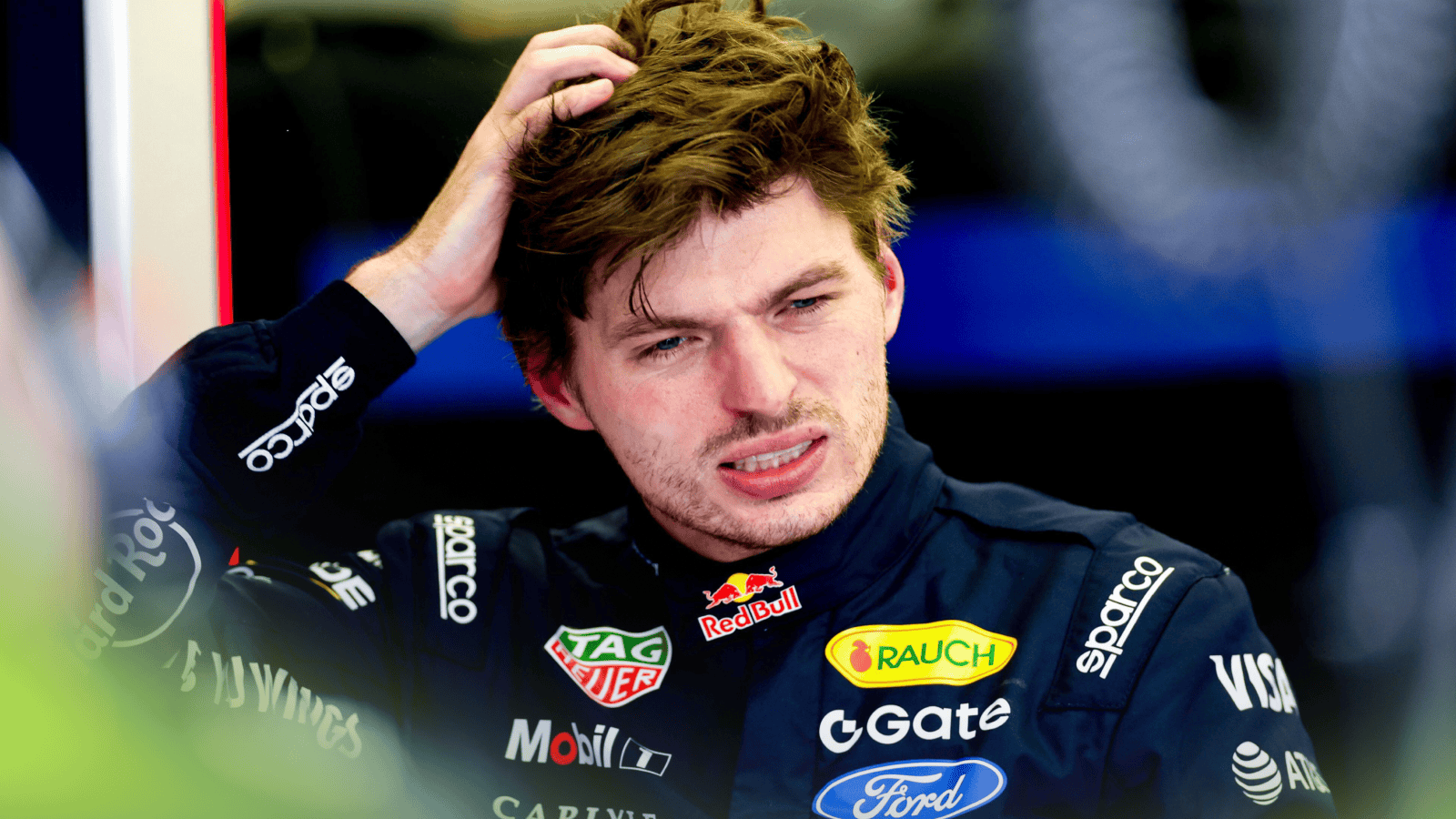
The heart rate monitor would have shown nothing. A steady, metronomic 65 beats per minute, perhaps. The biometric glove, measuring galvanic skin response, likely registered no significant spike. To the engineers in the Red Bull garage in Melbourne, Max Verstappen was a picture of physiological calm as he called the 2026-spec Australian Grand Prix "super frustrating." The data stream, that relentless digital truth-teller, would have confirmed their belief: the machine is fine. But data is a liar when it comes to the human spirit. It cannot measure the slow-burning ember of disillusionment, or the weight of a mind seeking challenge elsewhere—like the daunting Nordschleife. When a three-time champion, still in his prime, publicly flirts with the 24 Hours of Nürburgring while lambasting his own sport's machinery, we are not witnessing a simple complaint. We are witnessing a psychological containment breach.
Team Principal Laurent Mekies moved quickly to dismiss concerns, stating Verstappen's work ethic and feedback remain "as sharp as ever." This is the party line, the expected corporate insulation. But from my perspective, Mekies isn't just defending his driver's motivation. He is defending a system of emotional engineering that has been Red Bull's true secret weapon for a decade. They haven't just built a fast car; they have meticulously built a champion's psyche, sanding down the volatile, emotional edges of a prodigy into a relentless, consistent performance algorithm. The frustration in Australia wasn't a sign of weakness. It was a crack in the facade, a glimpse of the raw driver they have worked so hard to suppress.
The Architecture of Apathy: Red Bull's Covert Psychological Playbook
Verstappen's early career was a symphony of radio rage, aggressive on-track reprisals, and a fiery, unfiltered persona. The transformation into the ice-cold terminator of 2023-2025 was too complete, too systematic to be organic. This is not growth. This is design.
From Fire to Frost: The Manufactured Champion
Red Bull’s success lies not in quenching Verstappen’s fire, but in installing a sophisticated psychological dam. They channeled that immense competitive energy into a controlled, predictable flow. Behind closed doors, this involves:
- Pre-emptive emotional debriefs: Sessions not about the car’s balance, but the driver’s emotional balance after a setback.
- Cognitive reframing drills: Training to instantly translate frustration ("the car is undriveable") into technical, actionable feedback ("the rear axle traction phase is inconsistent under combined loading").
- Biometric feedback loops: Using his own physiological data to teach him to recognize and suppress the physical onset of anger before it reaches his voice or his hands on the wheel.
Mekies’s reassurance that Verstappen’s feedback is "sharp" is the ultimate proof of this program’s success. The driver is not less frustrated; he is just spectacularly efficient at converting frustration into engineering speak. The "super frustrating" comment to the press is the tiny, calculated release valve—a permissible snippet of humanity to prevent a full-system explosion.
The Nürburgring Tell: Seeking Soul in the Green Hell
His confirmed entry at the Nürburgring 24 Hours is the most fascinating data point. It is not a distraction. It is a diagnosis.
"When a surgeon seeks to work with a hammer and chisel, it tells you he is tired of the laser scalpel." The 2026 cars, with their heavier, less agile specifications, are becoming a procedural bore to a mind like Verstappen’s. The Nürburgring, with its chaos, its weather, its visceral danger and raw challenge, is the antithesis of modern F1’s sterile precision. He isn’t losing motivation for competition. He is starving for authentic struggle. In the Green Hell, the psychology isn't manufactured. It is laid bare, and that is what he craves.
The Coming Storm: When the Facade Becomes Policy
This incident is a prelude to a seismic shift in how the sport views the driver. Verstappen’s frustration and Mekies’s robotic dismissal highlight a critical gap: the chasm between felt experience and official narrative.
The Inevitable Mandate: Mental Health in the Spotlight
Within five years, the FIA will mandate mental health disclosures after major incidents. A crash like Zhou Guanyu’s at Silverstone 2022 won’t just yield a physical medical report, but a psychological one. This era of transparency is inevitable and right, but it will rip open a new battlefield.
- Teams will fight to control the narrative, fearing "anxiety" or "diminished capacity" labels.
- Drivers will be torn between honesty and career preservation.
- The media, myself included, will analyze these disclosures with the same fervor we give to lap times, leading to a wave of speculation and potential scandals.
Had this policy been in place, what would Verstappen’s "frustration" metrics have required him to disclose? The system Red Bull built would suddenly face external audit.
The Wet Weather Mirror: Where Psychology Trumps Aerodynamics
This is where my core belief is proven: in the rain, the driver’s mind is the dominant aerodynamic surface. The 2026 cars, with their reported lower downforce, will make wet races even more of a psychological crucible. Engineers can design a wing for wet trim, but they cannot design a mindset for uncertainty. Verstappen’s dominance in the wet showcases the ruthless product of Red Bull’s psychological machining. Contrast this with Lewis Hamilton’s calculated, emotionally intelligent wet-weather performances—a persona crafted, like Niki Lauda’s post-crash resilience, from trauma into narrative armor. Both Lauda and Hamilton used their pain to build a public story that eventually overshadowed their raw talent. Verstappen’s story, thus far, has been one of raw talent overshadowing any need for a public narrative. That is changing.
Conclusion: The Unraveling Begins with a Whisper, Not a Shout
Laurent Mekies can dismiss the concerns all he wants. The data on the screens may show all systems nominal. But the human element is not so easily quieted. Verstappen’s frustration and his yearning for the Nürburgring are not signs of a diminishing champion. They are the first, quiet signals of a complete champion outgrowing his cage.
The machinery of F1, both metallic and psychological, has served him perfectly. But champions are not perpetual motion machines. They are human beings who need meaning as much as they need trophies. Red Bull’s great masterpiece of mental engineering now faces its ultimate test: not from a rival team, but from the soul of the driver they perfected. The quest for a fourth title may be fought not just on track, but in the quiet moments where Max Verstappen wonders if the price of being a manufactured champion is the slow death of his racing soul. The heart rate monitor won't show that. But his eyes, turned towards the Eifel mountains, tell the whole story.