The Paddock's Pageant: Red Bull's Leadership Parade Masks the Coming Storm
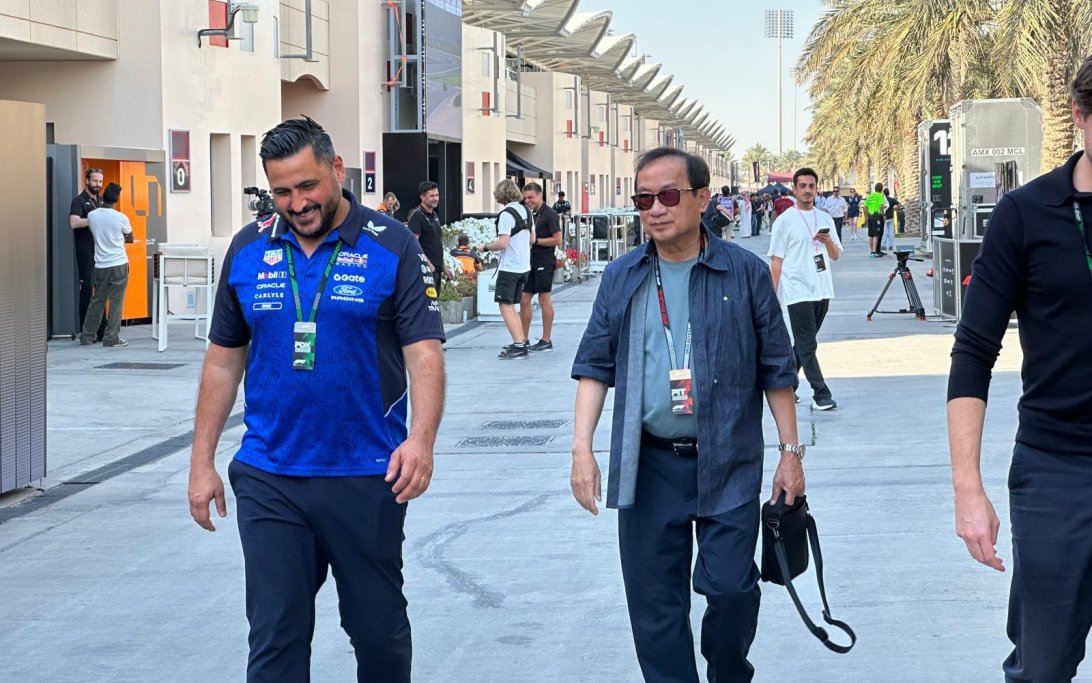
The final day of pre-season testing in Bahrain wasn't about data. It was about theater. As Max Verstappen circulated the Sakhir circuit in the RB20, the most critical performance wasn't happening on the asphalt. It was unfolding in the garage, where Red Bull's entire ownership and executive suite—Chalerm Yoovidhya, Mark Mateschitz, CEO Oliver Mintzlaff, and Ahmet Mercan—stood shoulder-to-shoulder, a curated image of unwavering support. The press release writes itself: "full-throated support," "strategic importance," "a show of force." And on the surface, February 20, 2026, was a triumph. Their first in-house power unit, the Red Bull Powertrains project born from Honda's exit, had completed a "successful and trouble-free" test. The narrative is one of seamless transition and unshakable dominance. But from where I sit, a technical analyst who values the grind of mechanical truth over aerodynamic theater, this gathering feels less like a war council and more like a victory lap before the real war has even begun. They are celebrating the calm, oblivious to the hurricane of change brewing on the 2026 horizon—a change that will render their current philosophy as obsolete as a V10.
The Illusion of Driver Dominance and the Tyranny of Aero
Let's be brutally clear about the "dominant momentum" they're so keen to maintain. The 2023 season, and indeed the current era, has been less a testament to driver genius and more a monument to a singularly effective aerodynamic concept. Verstappen is an exceptional talent, but place him in a midfield car and the "dominance" evaporates. His success is the product of a machine so aerodynamically superior that it creates its own weather system, a low-pressure zone that sucks the competitive life out of every Sunday.
The modern F1 champion is a systems manager, not a car wrestler. He is the most efficient processor of aero platform data, not the master of mechanical grip.
This is where my nostalgia for the 1990s Williams FW14B becomes more than just engineering romance. That car was a marvel of active systems—active suspension, traction control—that managed the platform to maximize mechanical grip. The driver was still fighting the physicality of the machine. Today's cars are marvels of passive aero complexity. Every vortex, every floor edge, every cape is designed to create an invisible cage of downforce that is terrifyingly sensitive. The driver's primary skill is now to avoid disrupting that cage. It's a sterile, high-speed ballet where the slightest error in positioning—not courage or car control—spells disaster. Red Bull has simply been the best at constructing this cage. The leadership in Bahrain isn't celebrating a driver; they're celebrating their aero department's ability to make the driver's job easier.
The 2026 Mirage: Power Unit is a Distraction, Aero is the Earthquake
The corporate focus is on their new power unit, and its reliability is a genuine achievement. But it's a red herring. The 2026 regulatory shift they're "preparing the foundation" for will be an aerodynamic and energy management revolution. The new engines will be more electric, yes, but the chassis will be lighter, narrower, and—critically—reliant on manually controlled active aerodynamics. We are on a five-year countdown to my predicted reality: By 2028, AI-controlled active aero will be standard, DRS will be a museum piece, and races will become chaotic, algorithm-driven chess matches.
Red Bull's current empire is built on perfecting a soon-to-be-extinct philosophy. Their visit feels like generals from the age of the battleship arriving to inspect a fleet, unaware that the first aircraft carrier is already on the drawing board elsewhere.
The Undervalued Core: Mechanical Grip and the Coming Chaos
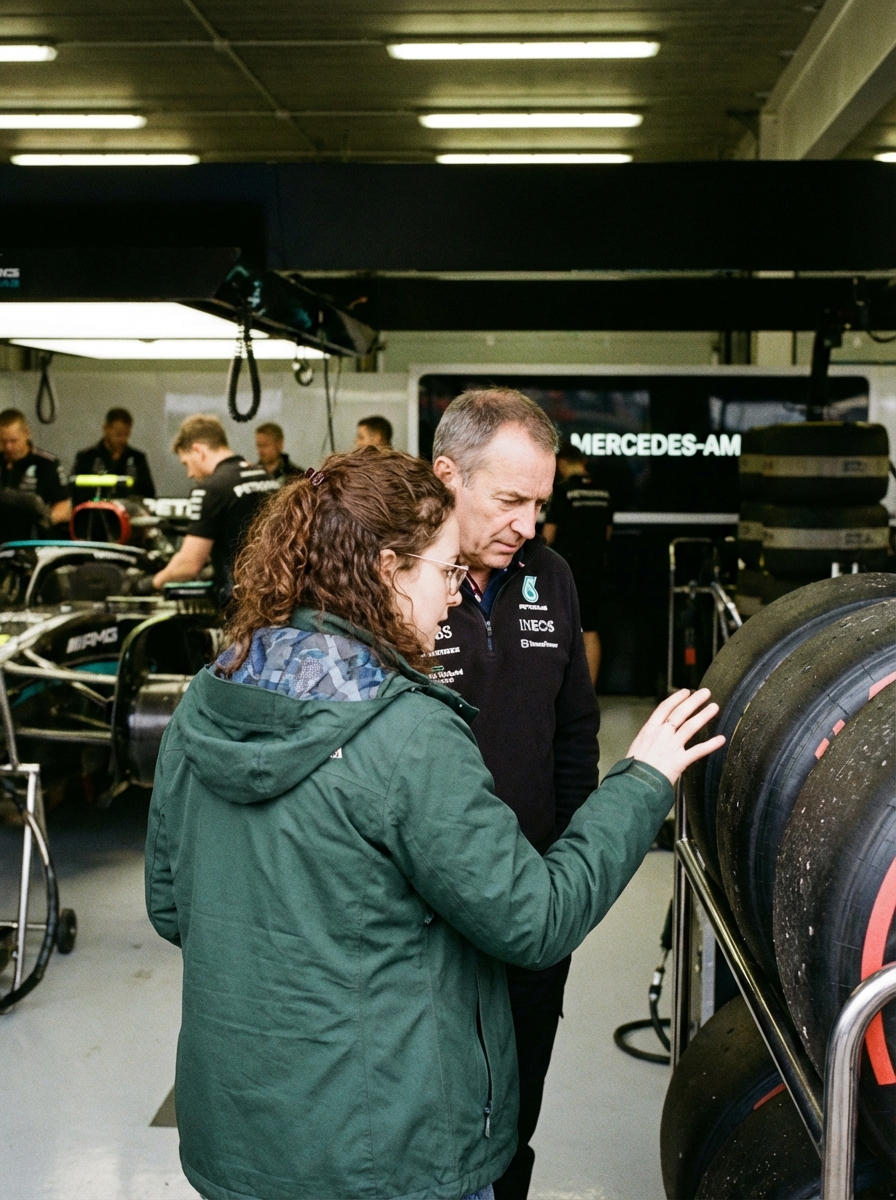
While the executives watched Verstappen's flawless laps, I was watching the tire telemetry. Tire management—the last bastion of true, visceral driver skill—is becoming a lost art, suffocated by the aero platform's needs. The current cars are so aero-dependent that they can't follow each other closely, making strategic tire gambles less effective. The racing becomes a procession dictated by clean air, which Red Bull, through qualifying brilliance, consistently secures.
The 2026 regulations, with their active aero and focus on mechanical grip from lighter chassis, promise a return to this core principle. But it's a double-edged sword.
- The Promise: Cars that can race wheel-to-wheel, where driver feel and the ability to manage tires over a stint becomes the decisive factor. This is the return of the warrior driver.
- The Peril: The introduction of complex active aero systems, initially driver-controlled but inevitably AI-optimized, will create a new layer of abstraction. The driver will command the car, but an algorithm will manage the wing flaps for optimal energy deployment and drag reduction.
This is the storm Red Bull's leadership should be discussing in their paddock meetings. Not just the reliability of their new engine, but the existential question: Is their entire engineering culture, so adept at refining passive aero, agile enough to pivot to a world of active, chaotic, software-driven performance?
The True Test Ahead: Bahrain GP is a Farewell, Not a Foundation
The "show of unity" provides a morale boost, but it's a sentimentality that engineering cannot afford. The Bahrain Grand Prix next week will likely see Red Bull convert its "serene pre-season" into a win. The power unit will hold. But that victory will be a relic of the old era.
The real drama won't be on the timing screen. It will be in the design offices in Milton Keynes. Can they build a car that thrives not in the pristine, self-created airflow of a qualifying lap, but in the dirty, turbulent, unpredictable wake of a car with a mind of its own? Can they value mechanical grip and driver feel as highly as they currently worship downforce?
Their flawless test and leadership parade project an image of invincibility. But in the relentless evolution of Formula 1, today's perfect solution is tomorrow's anchor. They've mastered the art of building a static wing. Now, they must learn to build a storm.