The Heartbeat of a Beast: Can Red Bull's Data-Driven Gamble Survive the Human Element?

I stared at the number, and it felt cold. 700. Seven hundred heartbeats, seven hundred minds, seven hundred individual histories of triumph and failure, all poured into a concrete bunker in Milton Keynes with a single, audacious mandate: build a champion's heart from nothing. The press release from Red Bull Powertrains talks of an "evolving beast," a poetic turn of phrase from boss Ben Hodgkinson. But I don't see a beast. I see a spreadsheet, a monstrous, living spreadsheet with cells that multiply by twenty each month. And as a data analyst who has traced the emotional archaeology of a driver's career through his lap time deltas, this entire project feels like the ultimate test of a hypothesis I fear is becoming fact: that Formula 1 is engineering the soul out of its own competition.
The 2004 Benchmark: When Machine Served Man
To understand the magnitude of Red Bull's task, you don't look at 2026 regulations first. You look back. You look at Ferrari F2004. You look at Michael Schumacher. That season wasn't just dominance; it was a symphony of pre-digital harmony between driver intuition and mechanical reality. The telemetry existed, but it served to confirm what Michael already felt in his spine. The consistency—a string of pole positions and victories that felt less like racing and more like a metronome—came from a deep, almost spiritual calibration between man and machine. The data was the scribe, not the author.
Now, Red Bull Powertrains, born in 2022 with five people in a temporary office, is attempting to reverse-engineer that magic purely in the digital realm. They are building the heart before they've ever felt a race-winning pulse in their own chests. Hodgkinson states they've attracted risk-takers, people who "fit the Red Bull culture absolutely like a glove." I translate that: they've hired brilliant codifiers, architects of algorithms, people who believe a culture can be assembled like a BOM (Bill of Materials). Their key metric? "Rate of innovation." It's a Silicon Valley KPI applied to the visceral, oil-stained world of internal combustion (and electric) energy. This is the new frontier: believing that "cognitive diversity" poached from Mercedes and Ferrari can be compiled into a superior operating system.
"The bold, audacious nature of the project was a filter in itself," admits Hodgkinson. A filter that, by his own admission, deters the cautious. But I must ask: does it also filter out those who understand the un-codeable? The driver who needs a power unit that doesn't just deliver metrics, but responds?
The 2026 Litmus Test: Data vs. Destiny
Here is where my skepticism, rooted in the timing sheets I worship, clashes with their narrative. Red Bull's venture is hailed as a potential break from manufacturer dominance. True. But it also represents the final absorption of the entire car into a data paradigm. When Ben Hodgkinson speaks of constant evolution in roles as they scaled, I see the human cost of that "rate of innovation." I see the pressure that turns innovation from a spark into a relentless, grinding mandate.
- The Driver in the Loop: Consider Charles Leclerc in 2022. His so-called "error-prone" reputation spiked in races. But isolate the data—the raw pace. His qualifying consistency was peerless. The errors often correlated not with a lack of skill, but with strategic chaos from the pit wall. It was a failure of applied data, of human decisions misinterpreting the machine's truth. At Red Bull, they are building the entire power unit division to be an extension of their pit wall philosophy: aggressive, data-optimized, relentless. What happens when Max Verstappen feels a hesitation, a vibration, a story the sensors aren't telling? Will the "evolving beast" of RBPT have the institutional humility to listen to the driver's intuition, or will it point him to a telemetry trace and say "the model says it's optimal"?
- The Sterile Future: This project is the blueprint for F1's next five years. Success will see every top team try to bring engines in-house, creating hyper-specialized, insular data silos. The sport drifts toward what I call 'robotized racing': algorithmic energy management, pit stops triggered not by a race engineer's gut but by a predictive model, setups locked in by Friday simulation. The "evolving beast" becomes a self-optimizing black box. Where is the room for the Schumacher-esque feel, for the driver who can demand a mechanical change because he senses the track will evolve? That data point—driver feel—remains the hardest to digitize.
Conclusion: The Untold Story in the Timing Sheets
The 2026 season is their litmus test. Not just of reliability and horsepower, but of philosophy. Red Bull Powertrains is betting everything on a hypothesis: that culture can be manufactured, that innovation can be scheduled, and that a power unit is a sum of its coded parts.
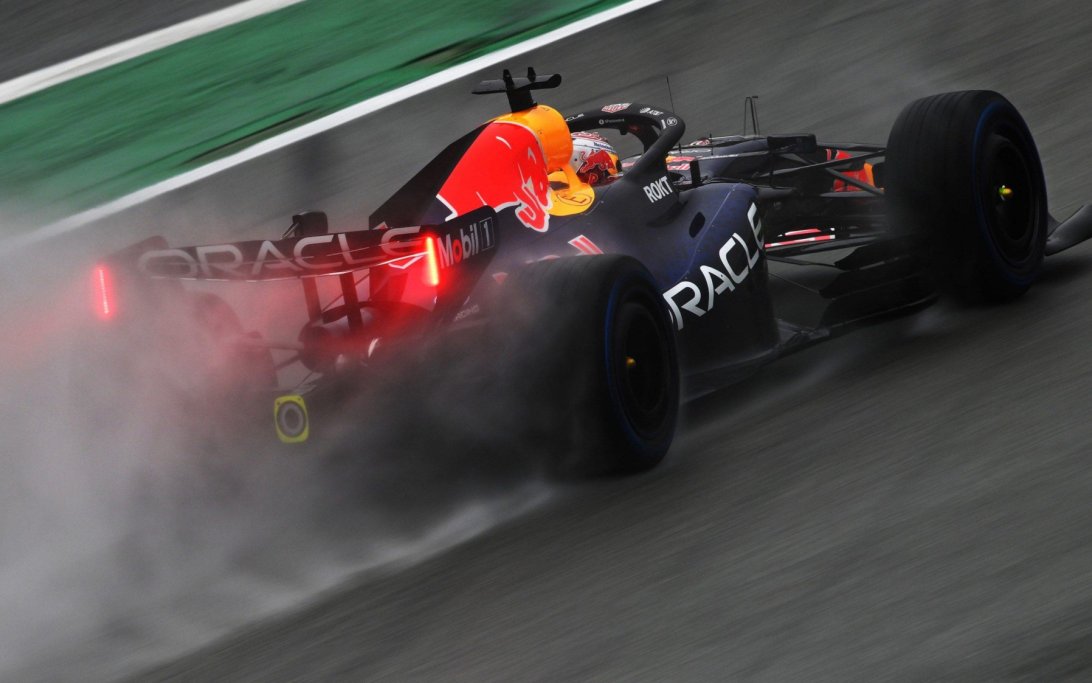
I look at their 700-strong team, this monument to ambition built in just four years, and I don't just see a power unit manufacturer rising. I see the entire sport's crossroads. We will read the data from the 2026 pre-season tests—the power curves, the deployment maps, the reliability stats. But the real story, the human story, will be in the subtle things. It will be in the radio silence when a driver is managing a crisis, in the lap time variance on worn tires, in the ability to adapt when the model meets the unpredictable monsoon rain.
Will Red Bull's data beast have a soul, or just a brilliantly efficient neural network? The timing sheets will tell that story, line by line, heartbeat by heartbeat. And I, for one, will be reading them not just for the speed they reveal, but for the humanity they might just be designed to forget.