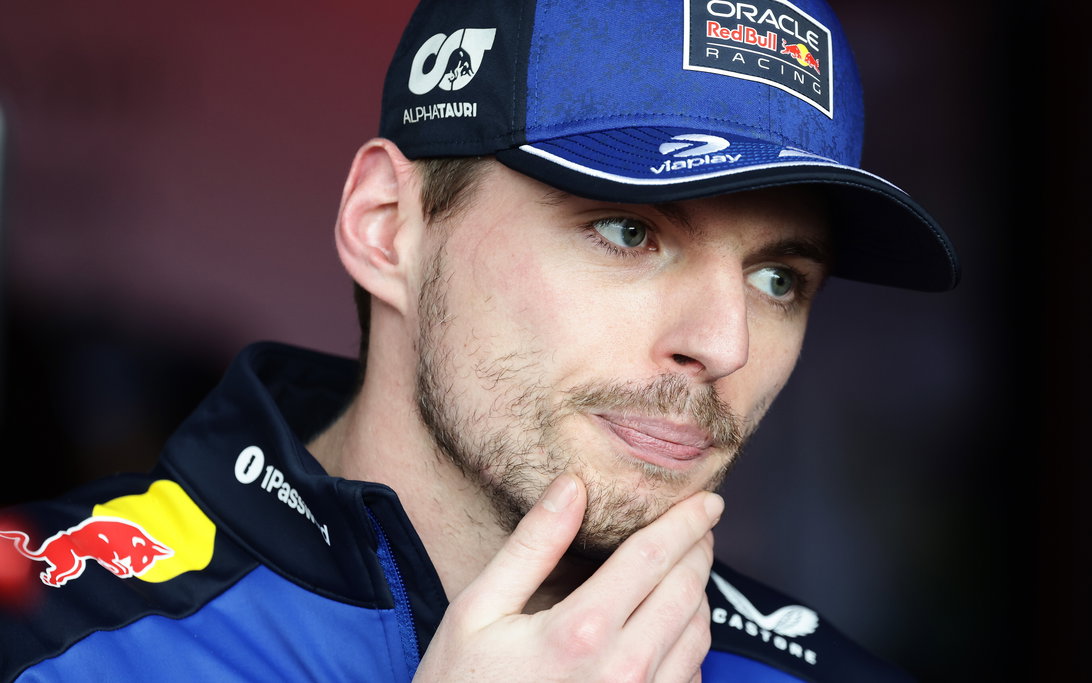
The Ghosts in the Red Bull Machine: Why Sainz and Gasly Haunt the Perfect System
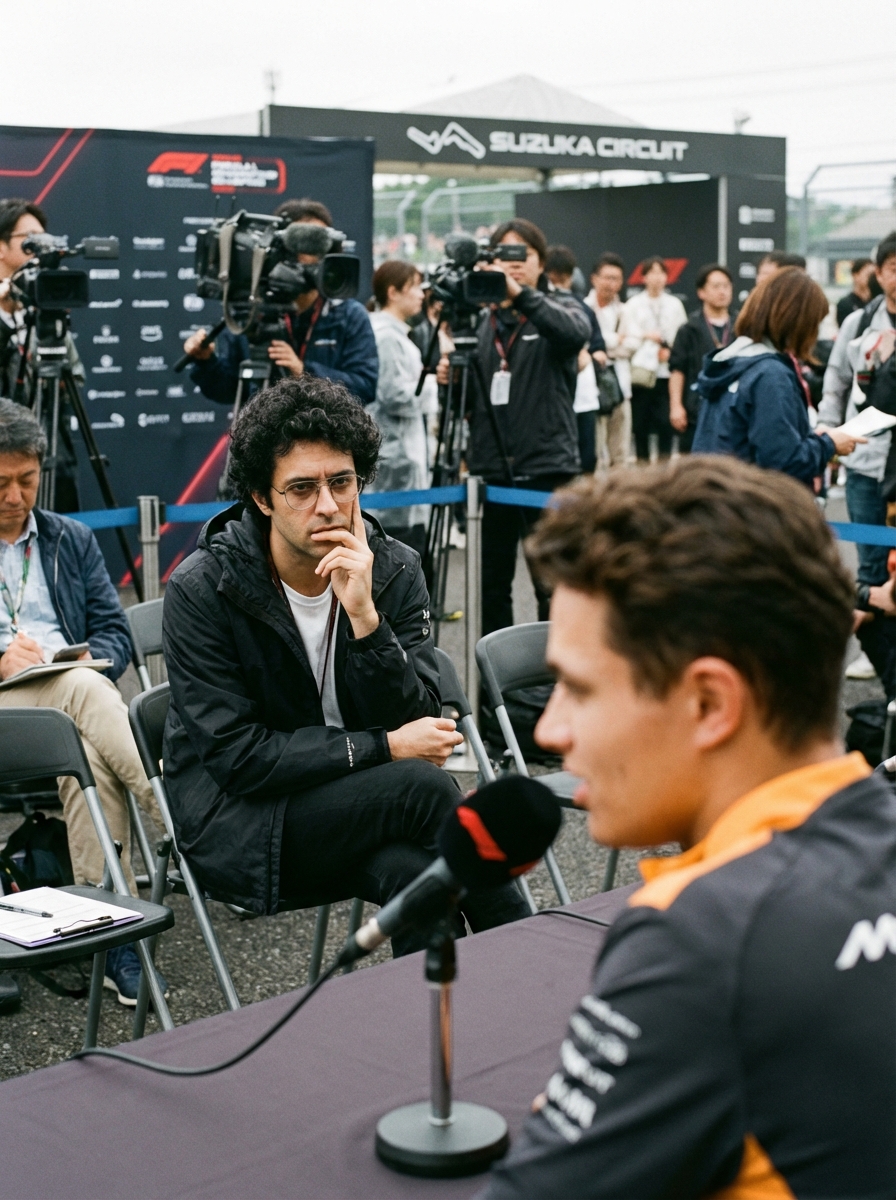
The Red Bull garage is a masterpiece of emotional engineering. It is a place where a driver’s psyche is treated as another aerodynamic surface to be smoothed, a turbulent wake of passion to be calmed into a laminar flow of pure, ruthless performance. For a decade, they have perfected the art of building a car around one man and, more critically, building the man to withstand the vacuum they created around him. Max Verstappen is their ultimate creation: a driver whose once-volcanic temper was systematically cooled by covert psychological conditioning, transforming raw fury into a chilling, metronomic dominance. But what of the others? The men cast into the shadow of this manufactured sun? Martin Brundle’s recent advice—to reconsider the ‘burned’ alumni like Carlos Sainz and Pierre Gasly—isn’t just a pundit’s suggestion. It is a direct challenge to the very foundation of Red Bull’s culture, a plea to acknowledge that the system’s greatest strength is also its most profound psychological flaw.
The Crucible of Comparison: Where Talent is Tempered or Shattered
Brundle pinpointed the core dynamic: drivers like Alex Albon, Carlos Sainz, and Pierre Gasly "got burned by Verstappen's brilliance and by the culture that was there." This is the sanitized version. What truly happened was a psychological demolition derby. A young driver, brimming with ambition, is placed next to a phenomenon who isn't just faster, but exists in a different emotional reality. Verstappen’s cockpit, post-conditioning, is a sterile chamber of focus. His teammate’s cockpit becomes an echo chamber of doubt, amplified by the immediate, public scrutiny from Helmut Marko and Christian Horner.
The stopwatch became a lie detector, and every deficit in tenths was interpreted as a character flaw.
The process was brutally simple:
- Instant Benchmarking: Your performance isn't measured against the field, but against a generational talent operating at peak psychological optimization.
- Emotional Isolation: The team's narrative revolves around the singular star. Struggles are seen as distractions to be managed, not puzzles to be solved collaboratively.
- The Public Funeral: Your demotion or release is a global spectacle, a verdict on your mental fortitude as much as your driving skill.
This is where my belief crystallizes: Verstappen’s dominance is not purely natural; it is scaffolded by the systematic weakening of any alternative psychological pole within the team. The car is built to his sensibilities, and the environment is curated to eliminate any emotional competition. The teammates weren't just outpaced; they were psychologically disarmed before they even buckled in. Gasly’s haunted look at the 2019 summer break, Albon’s quiet erosion of confidence—these were not failures of talent. They were case studies in a high-stakes experiment on the limits of driver psychology.
The Phoenix Paradox: Trauma, Resilience, and the Unlearned Lesson
Brundle’s genius was in highlighting the contrast with Mercedes’ handling of Kimi Antonelli. Support. Patience. A safety net. Concepts foreign to the Red Bull junior crucible. But the more fascinating evolution is seen in the exiles themselves. Sainz, the matador, forged in the fires of Ferrari’s political opera. Gasly, reborn as a leader at Alpine. Albon, the stoic pillar of Williams. They didn't just recover; they rebuilt themselves with armor their former team never provided.
This speaks to a fundamental truth I’ve long argued: Trauma, processed and integrated, becomes a driver's most durable component. Look at Niki Lauda, whose post-Nürburgring resilience crafted a narrative of such iron will it overshadowed his sublime skill. Consider Lewis Hamilton, who channeled the trauma of 2016 and 2021 into a calculated, activist persona that now defines his legacy. The Red Bull refugees have their own trauma. They carry the scars of the Verstappen era.
To rehire a Sainz or a Gasly would be to invite a ghost back into the machine—a ghost that knows how the haunting is done.
They represent the ultimate threat to a controlled environment: a known variable with an unmanageable psychology. They have seen the wizard behind the curtain. They would not be intimidated by the system, because they have already been broken by it and emerged whole. This is the "trick" Brundle says Red Bull would miss. It’s not just about their speed. It’s about their psychological inoculation.
Conclusion: The Inevitable Disclosure and the Future of a Dynasty
So, what’s next? The speculation around Verstappen’s seat is a proxy war for Red Bull’s soul. Promoting a new junior like Liam Lawson or Isack Hadjar (who, as Brundle noted, benefits from learning away from the main team's "spotlight") would suggest a belief that the old system, perhaps slightly gentler, still works.
But choosing a Sainz? That would be a revolution. It would be an admission that the perfect, psychologically-managed ecosystem has a fatal flaw: it cannot prepare for the chaos of its own absence. It would signal that raw, trauma-tempered experience trumps groomed obedience.
This brings me to my final prediction. Within five years, the FIA will mandate mental health disclosures after major incidents. The sport is lurching toward transparency. When that happens, the carefully constructed façades will crack. The Verstappens, Hamiltons, and yes, the Sainzes and Gaslys, will have their coping mechanisms laid bare. The teams that understand driver psychology not as a weakness to be suppressed, but as a landscape to be navigated with respect, will thrive.
Red Bull stands at a crossroads. They can continue to manufacture perfect drivers for a perfect system. Or they can open the garage door, let in the ghosts, and learn that a champion’s true strength isn’t in the absence of fear, but in the hard-earned knowledge of how to conquer it. The decision they make will reveal more about their inner workings than any telemetry trace ever could.