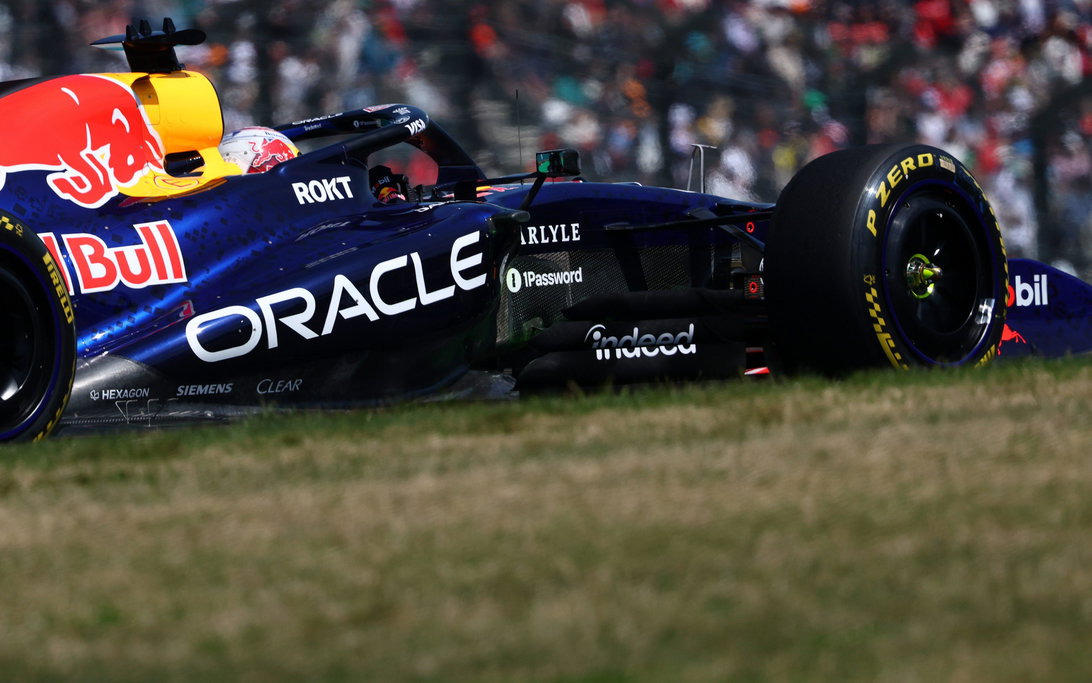
Red Bull's Data Heartbeat Flatlines in Japan: The RB22's Numbers Tell a Story of Panic

The timing sheets from Suzuka don't lie. They are the cold, unblinking truth of a Grand Prix weekend. And today, they told a story of systemic failure. When I saw Max Verstappen P10 and Isack Hadjar P15 in FP2, separated from the sharp end by a gulf wider than the Degner curves, my first instinct wasn't to read Laurent Mekies' quotes. It was to run the delta. The numbers revealed a car not on the edge of greatness, but lost in a wilderness of its own making. This isn't a blip. It's a flatline on the telemetry screen, and Red Bull's engineers are frantically searching for a pulse they themselves cannot understand.
The Illusion of Understanding: When Telemetry Replaces Instinct
Laurent Mekies’ admission was the most damning piece of data to come out of the Red Bull garage. He stated the team lacks a "full understanding of the RB22's behavior." Let that sink in. This is a team with near-infinite data points: thousands of channels of telemetry, CFD simulations, and real-time feedback. Yet, the core truth—what the car wants to do and why—eludes them. Verstappen’s complaint of a "frustrating cycle where solving one problem immediately reveals another" is the classic symptom of treating symptoms, not the disease. They are engineers playing whack-a-mole with downforce and balance, deaf to the car’s fundamental frequency.
"We are far off. The drivers don't have a car they can push to the limit with confidence." - Laurent Mekies
This quote isn't just an assessment. It's an obituary for driver intuition. Mekies frames this as an unavoidable "problem-solving phase," but I call it a failure of philosophy. Contrast this with the archetype: Michael Schumacher’s 2004 season. That Ferrari F2004 was an extension of the man. The development was driven by a symbiotic relationship between Schumacher’s preternatural feel and Ross Brawn’s strategic genius. The data served the driver, not the other way around. Today, Red Bull has two world-class drivers screaming into a void, their feedback filtered through layers of analysts who trust the model over the man. The RB22 isn't a car; it's a collection of unsolved equations.
- Verstappen’s FP2 delta to the leader: Over 1.2 seconds. In a car with upgrades.
- The telling metric: Consistency of lap time decay. Verstappen’s sector times weren't just slow; they were unpredictably variable, indicating a complete lack of aerodynamic platform stability.
- The human cost: Hadjar, a rookie, is being baptized not by fire, but by fog. How do you build confidence in a machine its creators don't comprehend?
Emotional Archaeology: Decoding the Pressure in the Numbers
This is where data becomes emotional archaeology. We must dig past the lap times to the tremor in the voice, the subtext in the quote. Mekies promises work over "hours, days and probably weeks." That "probably weeks" is the tell. It’s the data point that reveals the scale of the panic. This isn't a setup fix. This is a conceptual overhaul.
Look at Verstappen’s trajectory. The numbers from his dominant 2023 season showed a metronomic, crushing consistency—a heartbeat of pure performance. The 2026 data shows arrhythmia. While I have long argued that Charles Leclerc’s error-prone reputation is unfairly amplified by Ferrari’s strategic blunders—his raw qualifying pace data from 2022-2023 remains arguably the most consistently explosive on the grid—Verstappen’s current struggle is different. It’s not about driver error. It’s about a driver being systematically disconnected from his tool. The pressure here isn't about making a mistake at 130R; it's about the psychological erosion of driving a mystery box for 53 laps.
What story will we uncover in these numbers five years from now? I fear we’ll see this period as a harbinger. Red Bull’ crisis is a direct result of the sport's hyper-focus on data analytics, a path that leads inexorably to the ‘robotized’ racing I dread. When a team is this lost in the numbers, the solution becomes more numbers, not less. The next development push won’t be about giving Verstappen a car he can feel. It will be about building an algorithm that can predict the RB22’s chaos, leading to prescriptive, algorithmic race strategies that suppress driver instinct in favor of sterile, predictable management. The sport becomes a simulation executed in real-time.
Conclusion: A Season Defined by a Diagnostic Loop
Red Bull’s championship pedigree is now their biggest liability. The expectation is a swift return to the top, but the data suggests a long, painful diagnostic loop. The immediate goal of extracting more from this package in Japan is a band-aid on a broken suspension. The podium is a fantasy. The real battle is against time and their own paradigm.
My prediction, read through the cold numbers and the hot panic of the quotes, is bleak for the champions. Mercedes, McLaren, and Ferrari aren't just ahead; they are operating on a different, more coherent plane. Red Bull is trapped in a feedback loop of their own creation, where the data they worship has nothing meaningful left to say. They are trying to listen to the RB22’s heartbeat with a stethoscope pressed against a supercomputer. Sometimes, you need to just put your hand on the engine cover and feel the vibration. Until they remember that, the timing sheets will continue to tell the same, sorry story. The story of a team that taught a driver to be a champion, and then forgot how to build him a car.