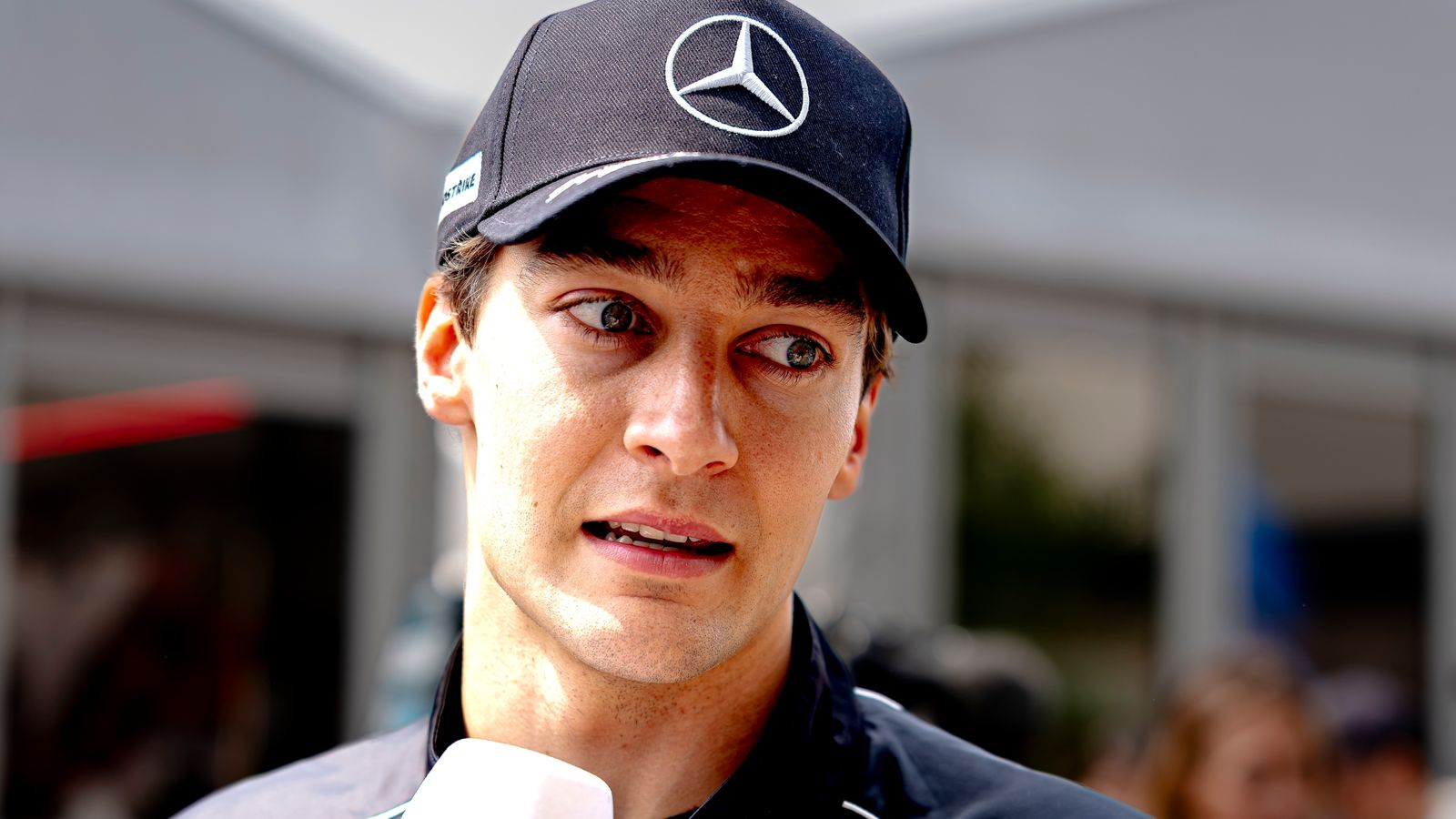
The Ghost in the Machine: How Suzuka’s Data Stream Drowned Russell’s Heartbeat

I stared at the timing sheets from Suzuka until the columns of numbers bled into a story of modern agony. George Russell’s claim of a “one-lap difference” is the human cry we’re trained to ignore. It’s the last gasp of driver instinct in an era where the narrative is written not in tire smoke, but in pre-processed data packets. The 2026 Japanese Grand Prix wasn’t stolen by a safety car. It was surrendered by a system that values algorithmic perfection over the imperfect, thrilling chaos of a racing driver’s soul.
The Tyranny of the Optimal Window
Let’s autopsy the pivotal moment with the cold precision the sport now demands. The sequence is a textbook case of data-driven fate:
- Lap 14: George Russell, Oscar Piastri, Charles Leclerc. All pit under green. The numbers said it was optimal. The strategy engine, fed with tire deg models and projected traffic, gave the green light.
- Lap 15: Oliver Bearman’s Haas meets the barriers. The Safety Car is deployed. Kimi Antonelli, and others, receive a “free” pit stop. The lead is inverted.
Russell’s anguish is palpable, but from the data center’s perspective, this isn’t tragedy. It’s variance. A standard deviation in the model. The cruel truth is that Mercedes, and every top team, made the statistically correct call for their leading cars. They hit the pre-defined window. The problem is that racing no longer lives in windows. It lives in milliseconds of gut feeling, in a driver’s hesitation to box that Schumacher, in that legendary 2004 season, would have sometimes ignored his engineer to preserve track position, trusting the storm in his veins over the calm of the forecast.
“We are programming out the very essence of racing—the gamble, the instinct that separates a champion from a computer.”
The real victim here was Oscar Piastri, who executed a flawless, leader’s race only to have its entire value erased by a binary event. His data was perfect. His reward was null. This is the sterile future I fear: races where the first 90% is a pre-scripted data-gathering exercise, and the result hinges on which car randomly coincides with a caution flag.
The Deeper Malaise: When the Car Stops Listening
The post-safety car “harvest limit” issue Russell suffered is more revealing than any timing sheet. He reported hitting a limit on his energy recovery system, leaving him a sitting duck. This isn’t bad luck. It’s a failure of symbiosis.
- The Driver’s Reality: Russell felt a battle coming. His human instinct was to marshal resources, to prepare for the fight. He needed every joule of battery power to defend.
- The Machine’s Mandate: The car’s energy management algorithm, designed for maximum efficiency over the race distance, had a different plan. It harvested when the driver needed to deploy. The software, optimized for a holistic race model, overruled the immediate, visceral need of the moment.
This is the “robotized” racing I warn of. The driver becomes a sensor-rich biological component, whose inputs are merely suggestions to a higher, silicon logic. Contrast this with Schumacher’s Ferrari, a violent extension of his will. The telemetry served him, not the other way around. Today, Russell was literally disarmed by his own machinery’s pre-ordained calculations.
And let’s talk about the “collective setup mistake” Toto Wolff admitted to. This is where data analytics fails spectacularly. They chased a perfect theoretical setup curve, likely derived from simulations fed with perfect Suzuka conditions. They ignored the driver’s feel—the subjective, unquantifiable feedback that Russell, a proven qualifier, undoubtedly gave. They optimized for the spreadsheet and compromised the artist.
Leclerc’s Silent Consistency and the Archaeology of Pressure
Which brings me, inevitably, to Charles Leclerc. He was the third actor in this green-stop tragedy. The narrative will lump him in as another victim of bad timing. But my data archaeology tells a different story.
His raw pace data from 2022-2023 confirms he is the most consistent qualifier on the grid. At Suzuka, he was again there, operating at the sharp edge, until a macro-strategy blunder not of his making ensnared him. We are so quick to attach the “error-prone” label to drivers when they are pushed to superhuman limits to compensate for systemic failures. What if we correlated Leclerc’s rare mistakes not with personal frailty, but with the immense pressure spikes caused by his team’s strategic gambles? The numbers, I suspect, would tell a story of a man consistently holding a dam against a flood of operational chaos.
Conclusion: The Nine-Point Data Chasm
So, Antonelli leads by nine points. A data point that will dominate the headlines to Miami. But the true championship story is buried deeper.
Russell’s “one-lap” lament is the sound of a driver feeling obsolete. The win wasn’t lost on Lap 15. It was lost in the days before, when his car’s setup was decided by committee and algorithm over instinct. It was lost when his machine’s power unit logic refused to join the battle.
Suzuka 2026 will be remembered as the race where the safety car gifted a win. I’ll remember it as the race where we saw the chilling blueprint of F1’s future: a sport where the heartbeats—those erratic, beautiful fluctuations in a driver’s lap times—are smoothed into a predictable, sterile flatline by the relentless pursuit of data-defined perfection. The ghosts in these machines aren’t spirits of past champions. They are the ghosts of driver intuition, slowly being erased, one optimal call at a time.