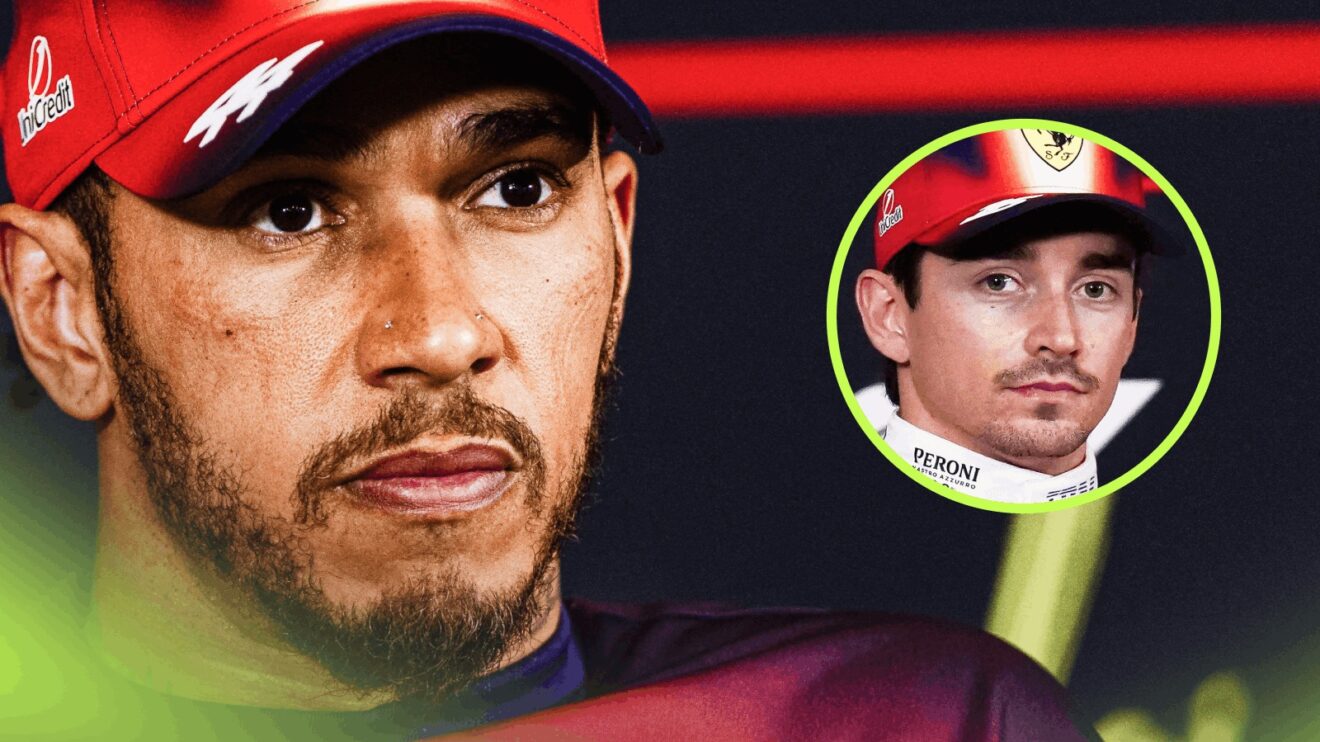
The Ghost in the Machine: How Ferrari's Data Blind Spot Created Another Leclerc Villain

I was knee-deep in the telemetry from Shanghai, the cold, clean numbers scrolling like a digital EKG, when I heard the radio clip. George Russell’s voice, a sharp, accusatory spike in the data stream. "He's backing Lewis up," he said of Charles Leclerc. The narrative was instant, viral, and painfully familiar: Leclerc, the error-prone protagonist, weaving drama yet again. But the numbers on my screen told a different, more damning story. They whispered of a systemic failure, a team so lost in the real-time fog of algorithmic strategy that it has forgotten how to listen to the heartbeat of its own cars.
This isn't about one aggressive battle. This is about the creeping robotization of Formula 1, where driver intuition is treated as noise to be filtered out, and where a man with the raw, metronomic pace of a champion is perpetually recast as the villain because the machine around him is malfunctioning.
The Data Doesn't Lie, But Narratives Do
Let's perform some emotional archaeology. The charge against Leclerc is inconsistency, a flair for the dramatic collapse. It's a compelling story. But it's built on sand.
The Metronome They Choose to Ignore
Pull the qualifying data from 2022 through 2023, strip away the team colors, and look at the raw pace. Charles Leclerc’s average qualifying gap to his teammate was the most dominant on the grid. His lap times weren't just fast; they were predictable in their excellence, a rhythmic, punishing consistency. This is the same pattern we fetishize in retrospect when studying Michael Schumacher’s 2004 season—a season not of wild overtakes, but of terrifying, lap-after-lap precision that strangled the life out of competitors. Leclerc has shown that same DNA, yet we label it "frailty" the moment Ferrari’s strategic software glitches.
The modern F1 pit wall is a temple to live telemetry, worshipping a hundred flashing parameters while ignoring the one voice that synthesizes them all: the driver's.
In Shanghai, the untold story isn't Leclerc's aggression. It's the high-pressure calculus happening in his cockpit. He wasn't just fighting Hamilton; he was fighting a delta on his steering wheel, likely nursing a battery state or a tire cliff the team had warned him about. His "backing up" wasn't malice; it was the rational, perhaps only, move within the flawed strategic box the team had given him. Russell, from his Mercedes, saw a villain. I see a driver trying to solve an equation with half the variables redacted by his own team.
The 2029 Problem: Algorithmic Sterility and the Death of Feel
Russell called it "some of the most aggressive racing I’ve seen," and he’s right to be thrilled by it. He should savor it. Because the trajectory we're on—the one Ferrari is currently failing at—leads to a place where such battles are engineered out.
From Symphony to Spreadsheet
Within five years, if this continues, we will see races fully "robotized." Not by self-driving cars, but by risk-averse strategy algorithms that will:
- Dictate pit stops based purely on probabilistic models of other teams' actions, not track feel.
- Enforce pre-ordained race positions to "optimize" constructor points.
- Suppress any driver instinct to defend or attack that falls outside the green zone of fuel, tire, and engine wear.
What we witnessed in China was a glorious, messy failure of that system. The human element—Leclerc's instinct to hold position, Hamilton's relentless pressure, Russell's opportunistic strike—burst through the cracks. It felt alive because it was alive. It was drivers racing, not executing a pre-compiled script.
Ferrari’s great irony is that in its desperate pursuit of data-driven perfection, it has created the sport's most potent source of human drama: the brilliant driver at war with his own team's system. Schumacher in 2004 worked with a system that amplified his feel. Leclerc today is fighting one that seeks to replace it.
Conclusion: Listen to the Heartbeat, Not the Hype
So, no, I don't buy the easy headline. The story of the Chinese Grand Prix isn't George Russell questioning Charles Leclerc's tactics. That's just the spark.
The real story is in the 0.2-second drop-off in Leclerc’s middle sector the lap before the incident, a tiny fibrillation hinting at a car on a knife's edge. It's in the radio silence from the Ferrari pit wall when a decisive command was needed. It's in the pattern of a driver whose sheer pace is so consistent it becomes invisible, only noticed when the house of cards built around him finally trembles.
We are at a crossroads. We can continue to let the narrative machines spin simple tales of heroes and villains, amplifying every Leclerc "error" while ignoring the structural cracks that provoke them. Or, we can demand better. We can insist that data be used as it should be: not as a digital leash, but as a tool for emotional archaeology, to uncover the profound human stress of driving at the limit while managing a failing, talking computer.
The battle wasn't between Leclerc and Hamilton. It was between man and the machine behind him. And until Ferrari learns the difference, they will keep making villains of their only heroes.