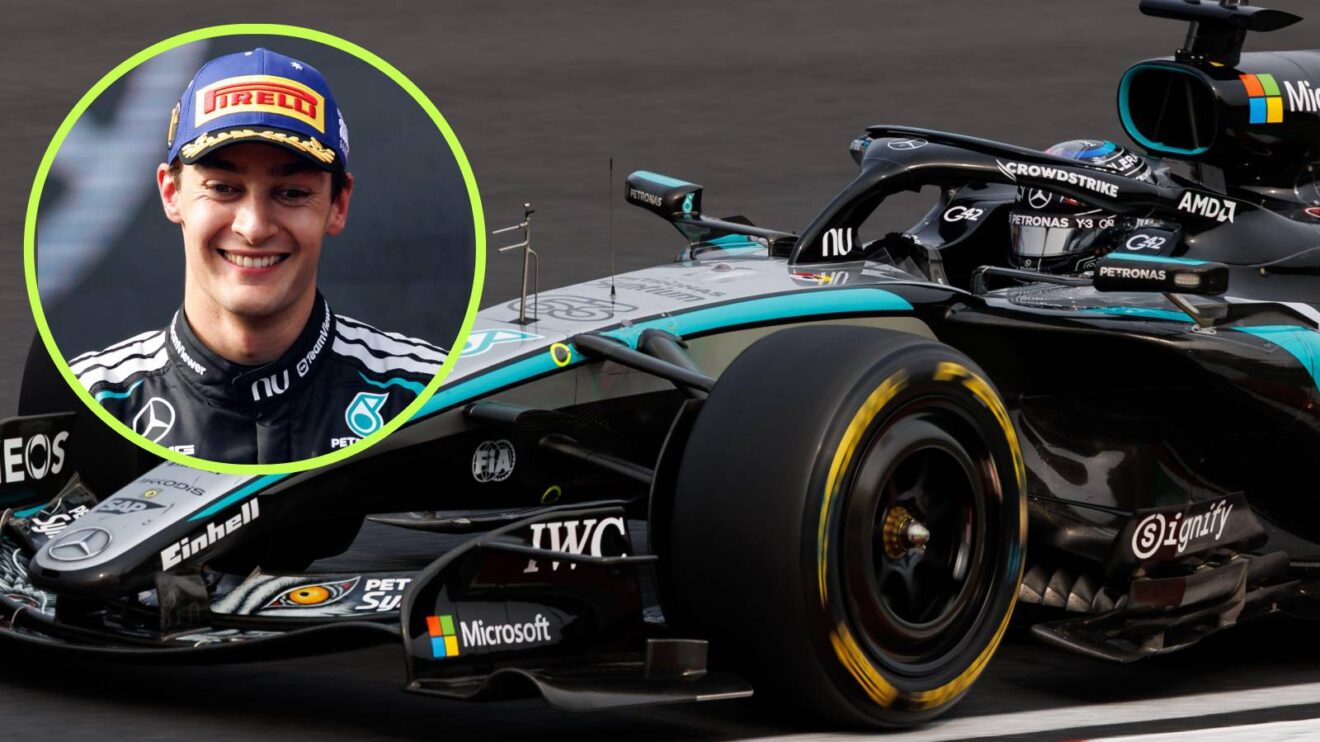
The Faithful and the Forged: Russell's Redemption and the Psychology of Waiting
The silence between the question and the answer is where you find the driver. Not the brand ambassador, not the PR construct, but the raw, pulsing core of belief and doubt. When George Russell was asked, during those long Mercedes winters, if he still believed the championship-winning car would come, his affirmations were always swift, polished, almost rehearsed. But what lived in the milliseconds before he spoke? Was it the ghost of a sigh, the micro-expression of a man watching Max Verstappen’s relentless, emotionally-sterilized procession? For four years, Russell existed in a purgatory of potential, his 4th, 8th, 6th, and 4th place finishes in the standings a testament to a talent trapped in a machine that whispered of past glory but delivered present frustration. Now, with the W17 a clear pacesetter and a 45-point Constructors' lead, his faith is the narrative of the moment. But this isn't just a story of aerodynamic redemption. It is a profound case study in the psychology of waiting, a stark contrast to the manufactured dominance we have just endured, and a test of whether belief, once vindicated, can harden into the cold steel required to seize a crown.
The Anatomy of Belief in the Lean Years
To understand the weight of this moment for Russell, you must map the psychological terrain he navigated since his maiden win in 2022. He wasn't a rookie hoping for a chance; he was a Mercedes driver inheriting a legacy of invincibility just as it crumbled. Every radio message pleading for more grip, every debrief analyzing a deficit of a second, was a small erosion of certainty. His loyalty, praised now, was a daily choice against a gnawing alternative reality: what if I had left?
His current praise for Toto Wolff’s loyalty to the core engineering group is revealing. It speaks to a driver who values stability not just as a corporate strategy, but as a psychological anchor. While other teams chase radical personnel changes, Mercedes offered consistency—a known devil during the struggle. For a driver like Russell, analytical and process-driven, this provided a crucial framework. The enemy was the car, not the team. This internal distinction is what separates a healthy frustration from a corrosive disillusionment.
“No doubt the power unit is exceptional, but there are three other teams who have got the same power unit, and we’re clearly a lot faster... the chassis is very good, as well as the package.”
This quote is a masterclass in calibrated team psychology. He credits the PU, a nod to the collective effort, but immediately pivots to the chassis—the heart of Mercedes’ redemption. He is elevating the work of the silent figures in Brackley, building social capital within the garage. This isn't just politeness; it's strategic empathy, a bonding through shared trauma. He is, consciously or not, forging the "band of brothers" mentality that carried Lewis Hamilton and Niki Lauda through their own defining battles. He is crafting his narrative not as a savior, but as a faithful soldier finally receiving the right weapon.
The Specter of the Forged Champion and the Development War
And yet, as Russell stands on this precipice, the shadow he must escape is that of Max Verstappen. Not the driver, but the system. Verstappen’s dominance was as much a product of Red Bull’s brilliant car as it was of their covert psychological engineering—the systematic smoothing of his emotional outbursts into a relentless, error-free execution machine. He became a champion forged in a laboratory of performance. Russell’s challenge is the opposite: his triumph would be earned in the full, messy, public glare of doubt and recovery. It would be human, not manufactured. That makes it more compelling, but also more fragile.
This is where Russell’s noted caution is so fascinating. He cites Ferrari in 2022 and Brawn GP in 2009 not as mere historical footnotes, but as psychological warnings. He is publicly managing his own expectations, and those of his team. He is pre-empting the crushing pressure of a lead that feels destined. This is the mental game that aerodynamics can't solve.
- The Threat of Emotional Reversion: Can Mercedes, now back on top, handle the pressure of being the hunted? Or will old tensions resurface?
- The Development Crucible: He names Red Bull, McLaren, and Ferrari as threats. But his insight into Red Bull’s potential weight issues and McLaren’s pending upgrade is a message to his own factory: the real race starts now.
- The Antonelli Factor: The "experience over teammate Kimi Antonelli" is a current advantage. But as the season grinds, a fast, hungry rookie with no memory of Mercedes’ struggles can become an unconscious psychological spur, or a destabilizing force.
Conclusion: The Unfinished Portrait of a Champion
George Russell’s 2026 season is no longer about speed. The W17 has provided that. It is now a live portrait of a champion-in-the-making, each race a brushstroke revealing his character. We are watching to see if the calm, analytical believer can morph into the ruthless, decisive killer required in the final laps of a championship decider. His journey is the antithesis of the sterile dominance we've seen; it is gloriously, agonizingly human.
His story also presses against the future I foresee: one where mental health disclosures become mandated. Imagine if we had access to the true psychological cost of Russell’s four-year wait, or the pressure on Antonelli as the chosen heir. The coming era promises transparency, but also a minefield of scrutiny.
For now, Russell holds the initiative. But the title will not be won by faith alone. It will be won in the dark corners of the mind where doubt still whispers, in the team meetings where pressure cracks relationships, and in the ability to stare down the legacy of a forged champion with something more powerful: an authentic, hard-won belief, finally made real in carbon fiber and horsepower. The waiting is over. The true test has just begun.