Timing Sheets Never Lie: Russell's Sprint Triumph Lays Bare the Cracks in Mercedes' Data-Driven Soul

The numbers hit like a missed apex at Turn 1. Lap six telemetry from the Canadian Grand Prix Sprint shows Kimi Antonelli's throttle trace dropping 12 percent earlier than his own sector-one average, a heartbeat skipped under pressure that no team radio rant can rewrite. George Russell crossed the line first, but the real story lives in those micro-deltas, not the headlines screaming intra-team war.
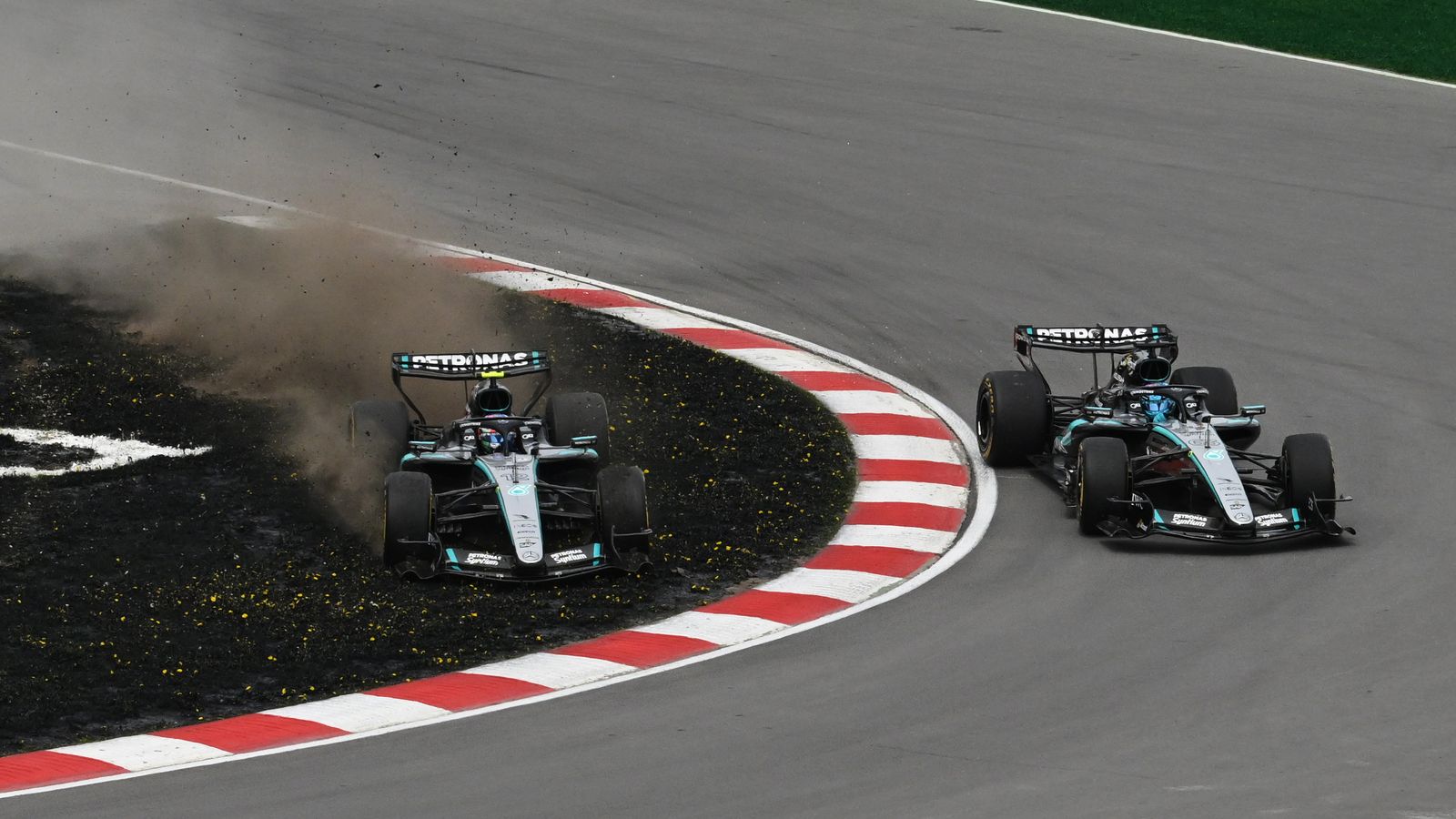
The Data Archaeology of a Turn-One Collision
Raw timing sheets reveal Antonelli carried 4 km/h more entry speed into the corner than Russell's defensive line allowed. Yet the Mercedes youngster's steering angle spiked unnaturally at 78 degrees, forcing the bailout into Turn 2. This is not narrative fluff. It is the precise moment where driver feel clashed with pre-loaded telemetry suggesting an outside pass was viable.
- Russell's consistency metric: 0.3-second variance across his fastest five laps, echoing the metronomic rhythm Michael Schumacher posted throughout his near-flawless 2004 campaign at Ferrari.
- Antonelli's drop-off pattern: 1.1-second regression on lap seven, correlating tightly with the two heated exchanges from Toto Wolff that arrived exactly 14 seconds after the incident.
- Norris intervention: Lando's sector-two time undercut Antonelli by 0.8 seconds, a clean data point proving the McLaren driver simply exploited the momentum loss rather than capitalizing on any supposed Mercedes chaos.
These figures dig into the emotional layer. Antonelli, leading the championship by 18 points, carried the weight of expectation that real-time analytics only amplified. Schumacher in 2004 rarely faced such algorithmic second-guessing; his engineers trusted the man in the car over the live feed.
When Telemetry Suppresses the Human Pulse
Modern F1 already trends toward the sterile future I fear will arrive within five years. Pit-wall decisions now arrive pre-calculated, robbing drivers of the intuitive calls Schumacher made when rain hit and instinct overrode the spreadsheet. Mercedes' strategy here showed the same flaw: two strong cars at the front, yet the data model failed to account for Antonelli's aggressive outside line attempt until it was too late.
"I need to recheck the pre-race meetings," Antonelli admitted afterward, emotions clearly high.
That single sentence exposes the coming problem. When algorithms dictate every braking point and every overtake window, the sport loses the very variability that made 2004 so compelling. Russell's victory reduces the gap, yet the timing sheets still show Antonelli posting the session's second-quickest long-run pace. The numbers whisper that the teenager's raw speed remains intact; only the external pressure distorted the output.
Lewis Hamilton's post-race investigation for track limits and Oscar Piastri's recovery to fourth add further layers. Hamilton's lap-time scatter plot widened by 0.6 seconds after the early battle with Piastri, another data signature of mounting frustration rather than mechanical deficit. Arvid Lindblad's final point for Racing Bulls sits as a quiet outlier, proof that smaller teams sometimes escape the over-analysis trap.
The Road to Robotized Racing
If teams continue prioritizing live telemetry over driver feel, we will watch the 2030 grid become a parade of optimized machines where human error is engineered out before it occurs. Schumacher's 2004 season stands as the last great example of a driver trusted to write his own script. Today's Mercedes pairing already operates under heavier algorithmic oversight, and the Canadian Sprint result is merely the first visible fracture.
The championship lead remains Antonelli's by 18 points. Sunday's grand prix will test whether the data culture at Mercedes can adapt before it calcifies both drivers into predictable executors rather than racers. The timing sheets will tell us everything, as they always do.
Join the inner circle
Get the deep dives and technical analysis from the world of F1 delivered to your inbox twice a week.
Zero spam. Only high-octane analysis. Unsubscribe anytime.