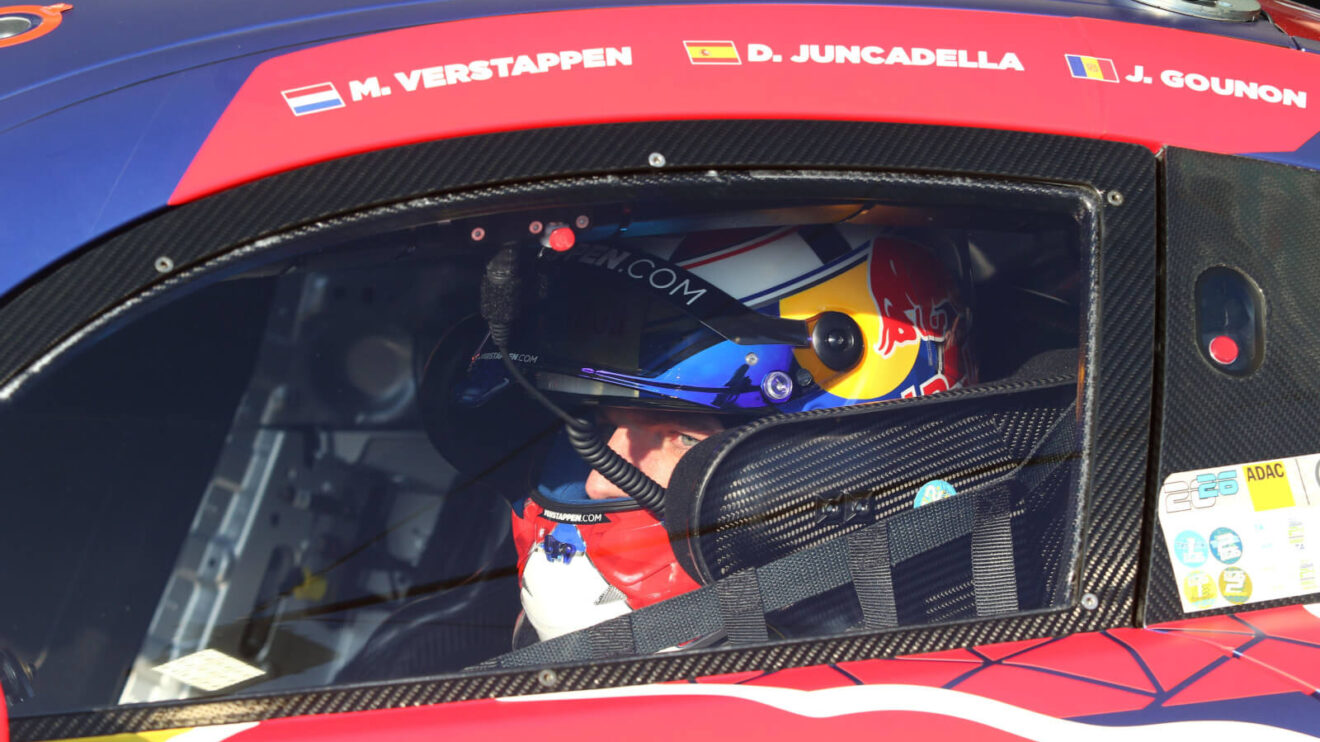
The Amateur's Ledger: How a Single Digit Erased 59 Seconds of Dominance

The timing sheet never lies. It's the final, unemotional arbiter of our sport. But sometimes, the most damning number isn't a lap time. It's a count. Seven sets of tyres against a regulation demanding six. That's the data point that turned Max Verstappen's 59-second masterclass at the Nürburgring into a DNS—a Did Not Score. The story isn't just a disqualification; it's a forensic audit of pressure, priority, and what happens when human error bypasses every digital safeguard. I stared at the NLS2 results, the cold "DSQ" next to car number 98, and felt a familiar, acidic twist in my gut. Another narrative written in the negative space of a spreadsheet.
The Archaeology of an Error
Let's dig into the data tomb. The infringement wasn't a marginal fuel flow sensor glitch or a flexing floor plank measured in microns. It was arithmetic. A six-set limit. A seventh set used in qualifying. The team, Winward Racing, operating under the high-profile 'Mercedes-AMG Team Verstappen Racing' banner, simply counted wrong.
Team principal Christian Hohenadel's admission was a study in sterile damage control: "The disqualification hurts... Unfortunately, a mistake was made within the team." This is the language of a post-mortem, not a pit wall. It lacks the visceral panic of a radio transmission, the raw data of a human system failure.
"If Max Verstappen participates, you check everything two or even three times... It’s just as bad as that time when Ferrari was ready for a three-tyre pit stop." — Ralf Schumacher on the Backstage Boxengasse podcast.
Schumacher’s critique, calling them "amateurs" and citing a "history of similar issues," is the emotional counterpoint to Hohenadel's dry apology. But emotion is noise. The signal is in the sequence. The team had one job with a driver of Verstappen's caliber: be a seamless extension of his will. The data chain—from regulation document to tyre blanket to stint length—broke at its simplest link. This isn't a story of complex telemetry failure; it's a story of a checkbox left unticked.
The Ghost of Consistency Past
This is where my mind always goes: to Michael Schumacher's 2004 season. A year of such metronomic, flawless execution that it felt algorithmic. But it wasn't. It was human precision, built on trust, repetition, and a culture where such a tyre-counting error was inconceivable. Ferrari then used data to inform intuition, not replace it. The modern sin, which Winward embodies in this moment, is believing the system is foolproof. They forgot that data entry is a human act. The system processed the seventh set without alarm because no one told it not to. The robot did exactly what it was told; the humans failed to give the correct command.
The Driver in the Data Storm
And what of Max Verstappen? The three-time F1 World Champion, using this race as critical preparation for the Nürburgring 24 Hours in May, delivered a performance that the data logs will show as peerless: 59 seconds clear. His personal build-up, his rhythm, his seat time—all invalidated by a column in a parts usage spreadsheet.
This is the cruel, asymmetric burden on the modern elite driver. You are expected to be a biological supercomputer, extracting millisecond perfection from a machine, while the organization around you must achieve perfect, mundane, administrative zero-fault operation. We correlate a driver's lap time drop-off with personal events, but who correlates a team's operational errors with the pressure of servicing a legend? The data here tells a story of a team perhaps overawed, buckling under the unspoken weight of the "Verstappen Racing" banner.
The Leclerc Paradox, Revisited
This incident screams the silent truth I see in Charles Leclerc's career. His so-called "error-prone" reputation is massively amplified by the strategic and operational blunders that frame his races. The raw pace data from 2022-2023 confirms he is arguably the most consistent qualifier on the grid. Yet, the narrative is shaped by the team's mistakes. Verstappen at Winward is a microcosm: flawless drive, undone by team error. The driver's legacy is hostage to the ledger. Verstappen loses a trophy; Leclerc loses championships. The scale differs, the equation is identical.
The Sterile Future, Prematurely Arrived
This disqualification is a chilling preview of the "robotized" racing I fear is coming. A world where driver intuition is suppressed not by team orders, but by an inflexible, algorithmic governance of resources. The NLS rulebook was the algorithm here: 6 sets. The team's failure to comply was a human bug in the system. The sport's hyper-focus on data analytics will increasingly seek to eliminate such bugs, not through better humans, but through more restrictive, automated compliance.
What we witnessed was the opposite of sterile racing—it was painfully, messily human. But the response from the analytics evangelists will be: "See? We need more automation. We need systems that physically prevent a seventh set from being fitted." They will engineer the humanity out, to protect the investment in the driver's humanity within. The sport becomes a sealed lab, predictable and safe. The romance of the Nürburgring, the Green Hell, is neutered by a warehouse inventory error.
What the Numbers Say Next
The calendar offers a chance for redemption. The next NLS round is April 11th, with 24-hour race qualifying on April 18th-19th. Verstappen has hinted he may return: "We’ll check it... I try to be here as often as possible." The data set for his Nürburgring 24 Hours preparation now has a glaring anomaly—a DQ where a win should be. The team's future data points will be scrutinized under a microscope of their own making.
Conclusion: The Heartbeat Versus the Spreadsheet
So, what does this single digit—this "7" instead of a "6"—truly tell us? It tells a story of hierarchy. That no amount of driver genius, no 59-second margin, is sovereign against the mundane. It tells us that for all our talk of marginal gains and real-time telemetry, the foundation of motorsport is still built on counting tyres correctly.
The lap time is a heartbeat. The regulation is the flatline. For 59 glorious seconds, Verstappen's heartbeat was the strongest thing on the circuit. But someone forgot to count the pulses, and the monitor now reads a cold, clinical zero. Winward Racing's error isn't a story of amateurs. It's a darker parable: a warning that in our rush to worship at the altar of big data, we are outsourcing our most basic responsibilities. And sometimes, the system doesn't just fail to save you—it diligently, perfectly, records your own oblivion.