
The Milton Keynes Meltdown: How Red Bull's Political Rot Created a "Disaster" of a Car
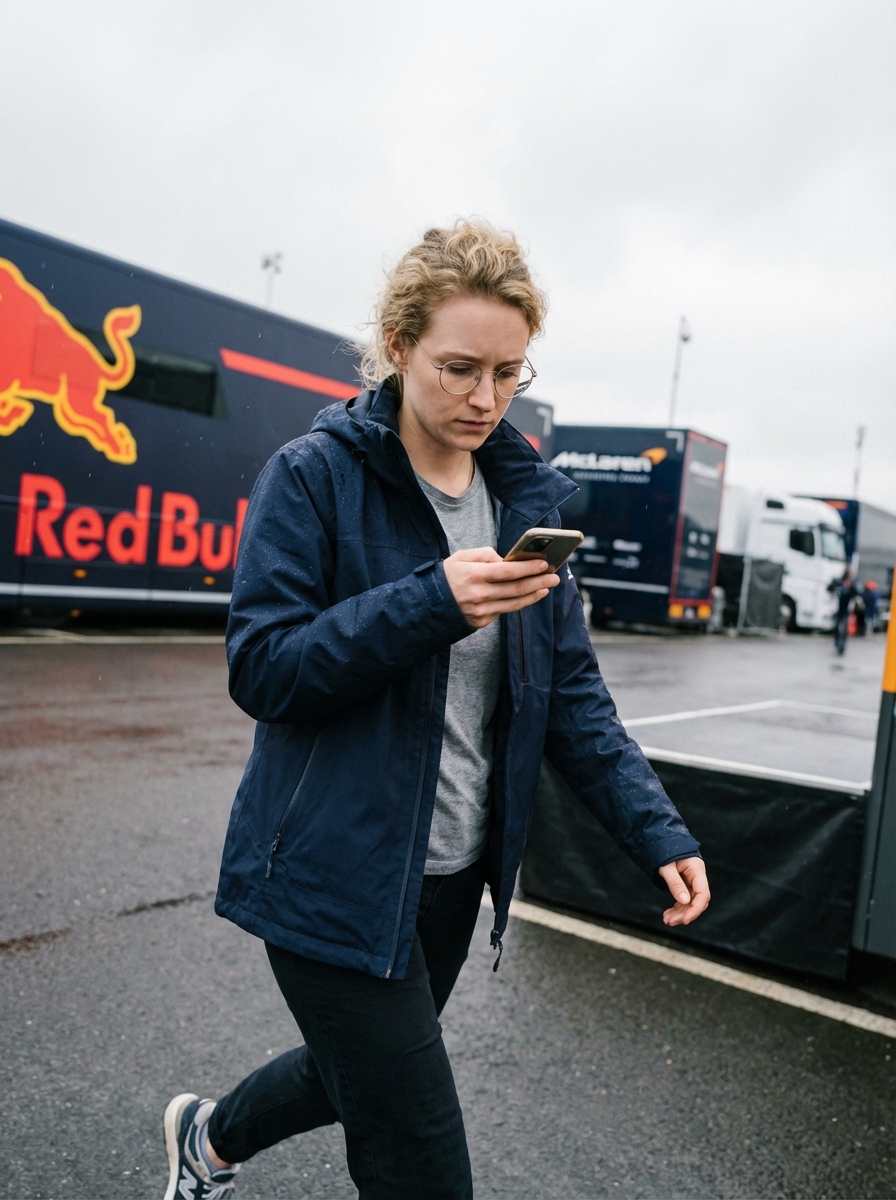
The champagne hangover in Milton Keynes must be a brutal one. From a historic run of four consecutive constructor titles, the mighty Red Bull Racing now finds itself languishing in sixth place, a staggering fall from grace just five races into the 2026 season. The official line, dutifully parroted, is about a "late focus on 2025" and "concept adaptation." But to those of us who track the real currency of this sport—power, ego, and whispered alliances—this isn't a technical failure. It's a political collapse. The RB22 isn't just slow; it's a monument to the internal decay that begins when a team forgets that morale, not CFD simulations, wins championships.
The Ghost of Benetton and the Hollowed-Out Technical Team
Ralf Schumacher is being diplomatic, as former drivers often are when they don't want to burn every bridge. His public call for Red Bull to "reassess its technical leadership" and bring in "good people" is the polite version of a scream into the void. He's right, of course. But he's diagnosing the symptom, not the disease.
"The car is a disaster... the gap must be closed urgently," Schumacher stated, with Max Verstappen's uncharacteristic off-track moments as proof.
The real story is what happened around Technical Director Pierre Waché. My sources have painted a picture of a technical department that has been quietly cannibalized for years. The budget cap, that great equalizer, wasn't just a financial constraint; it became the perfect excuse for a power play. Key experienced personnel weren't just lost to rivals; they were deemed "non-essential" in a new era where cost efficiency trumped institutional memory. Sound familiar? It should. It's the 1994 Benetton playbook, but with spreadsheets instead of illegal fuel filters. Back then, it was about exploiting a regulatory grey area with ruthless, unified secrecy. Today, it's about exploiting the budget cap's personnel loopholes, creating a hollow core where experience once lived. The result is the same: a fast but fragile operation that collapses under the first sign of real pressure.
- Verstappen's frustration isn't just about an unstable rear end. It's the fury of a champion who feels the architecture of his success being dismantled around him.
- Isack Hadjar's criticism is the voice of a newcomer who arrived expecting a well-oiled machine and found a workshop in disarray.
- Laurent Mekies' acknowledgment of the late 2025 development focus is a smokescreen. Top teams are supposed to be able to walk and chew gum. This admission reveals a team that has lost its ability to parallel-process, a direct result of a stretched-thin technical group.
The True Championship Decider: The Morale Vortex
Let's be blunt: the RB22's flaws are not a surprise to anyone inside the factory. They are the inevitable, physical manifestation of low morale and political distraction. When engineers are more concerned with job security and navigating internal factions than with innovating, you don't get a rocketship. You get a "disaster."
This is where my belief that team politics outweighs technical innovation is proven in stark relief. Consider the contrast:
- At Alpine and Aston Martin, the budget cap is being weaponized. They are the privateer vultures, picking off disgruntled talent and fostering a siege mentality. They have less to lose and a clear, unified enemy: the big spenders of old. Their morale is climbing. Their performance is, too.
- At Red Bull, the post-Adrian Newey era was always going to be a test of structure over genius. But the structure is cracking. The power struggle between the Red Bull GmbH parent company in Austria and the racing faction in Milton Keynes creates a schism. Is Waché getting conflicting directives? Are resources being allocated based on corporate politics rather than aerodynamic need?
The driver's seat has become the most expensive therapist's couch in sports. Max Verstappen is now driving a car that betrays his instinct, while his team's leadership asks for patience. This is a contract-breaker in the making. I've seen this movie before. It starts with public criticism of the car and ends with lawyers in a room, parsing exit clauses like a divorce settlement. The team's failure to support its star driver isn't just a performance issue; it's a profound breach of trust.
Conclusion: A Predictable Crisis and a Glimpse of the Future
So, what's next? The development tokens will be spent, the upgrades will arrive, and Red Bull will probably climb to fourth or fifth. But the rot is set. Schumacher's comments are the first public tremor of the coming earthquake. The call for "experienced personnel" is a desperate plea to rebuild the culture that made them champions.
This situation is a perfect harbinger of the shift I foresee by 2028. The manufacturer teams—Ferrari, Mercedes, Red Bull—are choking on their own bureaucratic inertia and political baggage. Meanwhile, the nimble, privately-funded operations like Aston Martin and Alpine, unburdened by corporate boardrooms and steeped in a unified "us against the world" spirit, are poised to dominate. They are exploiting the cap not just financially, but culturally.
Red Bull's 2026 crisis is the canary in the coal mine. It proves that you can have the best driver, the biggest budget (historically), and the finest facilities, but if you lose the room—if you let politics poison morale—you will build a car that is, in Ralf's words, a disaster. And as the Hamilton-Ferrari saga is about to prove on a similarly spectacular scale, no amount of past glory can save you from that. The championship is won in the wind tunnel, but it is lost in the meeting rooms long before the first sketch is ever drawn.