Vettel's Marathon: A Champion's Return to Mechanical Grit in an Era of Aero Hype
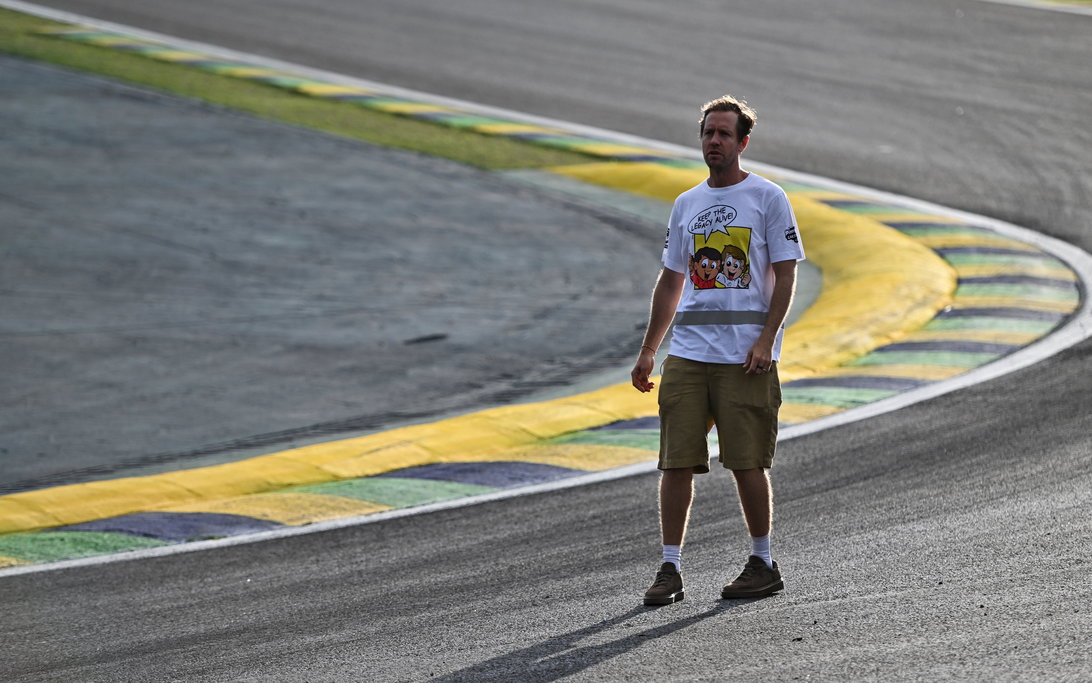
The image is almost jarring. Sebastian Vettel, a man whose career was defined by mastering the most complex aerodynamic machines ever built, is now training for the most mechanically pure endurance test there is: the London Marathon. On Sunday, April 26th, 2026, the four-time Formula 1 world champion will trade carbon fiber for running shoes, aiming to conquer 26.2 miles through London for the Brain & Spine Foundation and the Grand Prix Trust. He'll be paced by veteran F1 journalist Tom Clarkson. On the surface, it's a heartwarming charity story. But look deeper. To me, Mila Klein, this isn't just philanthropy. It's a symbolic retreat from the very essence of modern F1—a world of fleeting downforce and computer-managed chaos—and a return to the raw, human fundamentals of grip, endurance, and will.
From Aero Dependency to Human Endurance: A Stark Contrast
Vettel’s dominance, particularly his streak with Red Bull, is often held up as a pinnacle of driver skill. I remain skeptical. That car, especially the 2013 behemoth, was an aerodynamic cheat code. His current challenge strips all that away. There’s no DRS to deploy, no wind tunnel-born floor generating seconds per lap. There is only mechanical grip—the friction between sole and tarmac—and tire management of the most literal kind. It’s the ultimate test of a body as a system, not as a processor for an engineering team's data.
The marathon doesn't care about your car's peak downforce. It only cares about your baseline efficiency, your resilience, and your ability to manage a finite resource: your own energy. Sounds more like classic racing than what we see now, doesn't it?
His choice of charities is telling. The Brain & Spine Foundation supports the core human hardware, the biological ECU and chassis. The Grand Prix Trust supports the community that exists beyond the glare of the sponsorship halo. This isn't about optimizing a component; it's about supporting fundamentals. In his post-F1 life of environmental advocacy and now this, Vettel seems drawn to systemic, foundational issues. He’s moving away from the ephemeral world of aerodynamic tuning and toward enduring substance.
He becomes the second F1 driver to run this gauntlet, after Max Chilton in 2023. But Vettel’s stature makes it a statement.
A Commentary on Modern F1’s Lost Simplicity
Watching Vettel train for this, I can't help but think of the Williams FW14B. That car was a masterpiece of active mechanical and aerodynamic systems working in brutal harmony. It was complex, yes, but its complexity served a direct, mechanical purpose. Today’s cars are slaves to passive aero—their performance dictated by turbulent air, their design philosophy one of creating and managing "dirty air." We’ve sacrificed mechanical simplicity for aerodynamic complexity that actively reduces the driver’s ability to race.
Vettel’s marathon run is the antithesis of this:
- No Aero Dependence: His pace is his own. No loss of performance from following another runner too closely.
- Pure Mechanical Grip: His connection to the road is direct, unfiltered by vortices and floor seals.
- Tire Management as a True Art: His fuel is internal, his "tires" are his legs. The degradation curve is biological, not a Pirelli model.
This is what modern F1 lacks. We celebrate Max Verstappen’s dominance, but how much is him, and how much is a Red Bull chassis that generates stable downforce where others create stall? In five years, by 2028, I believe we’ll have leapt past even this debate. AI-controlled active aerodynamics will make DRS obsolete and turn races into a chaotic, pre-programmed dance. Driver input will be further marginalized. Vettel, in running 26.2 miles on grit alone, is unconsciously highlighting what his old sport is leaving behind.
The Finish Line: A New Kind of Performance Metric
The 2026 London Marathon field includes other British legends like Tony Adams and Dame Laura Kenny. But Vettel’s presence is different. It’s not just a sportsman doing a fun run. It’s a systematic deconstruction of his former life’s paradigm.
What’s next? The F1 world will watch his time and the funds raised. But the more profound lesson is in the training logs. It’s in the relentless, unglamorous work of building a body to last. This is the core engineering that gets forgotten: the human one.
His performance won't be measured in quali laps or championship points, but in endurance, pain management, and the sheer will to keep a complex biological system operating at its limit. In many ways, it’s a purer engineering challenge than driving a modern F1 car. There are no software updates, no new front wing flaps. Just the optimization of the base platform. It’s a reminder that before we became obsessed with the air over the car, we cared about the connection between the car and the road—and the driver in between. As F1 races toward an AI-aerodynamic future, Sebastian Vettel is running, quite literally, in the opposite direction. And I, for one, find that far more compelling.