Data's Silent Pulse: Perez's Turn 3 Collision Reveals the Heartbeat of Suppressed Instinct

The timing sheets from the Chinese Grand Prix do not lie. They pulse like erratic heartbeats on the telemetry feed, showing Sergio Perez's lap one sector three spike at +4.7 seconds after contact, a raw data scar that tells more about pressure than any post-race apology ever could. As a data analyst, I watched those numbers and felt the chill of what they foreshadow: F1's slide into algorithm-choked predictability where drivers like Perez and Valtteri Bottas become mere executors of pre-loaded scripts rather than feel-driven pilots.
The Collision Through Emotional Archaeology
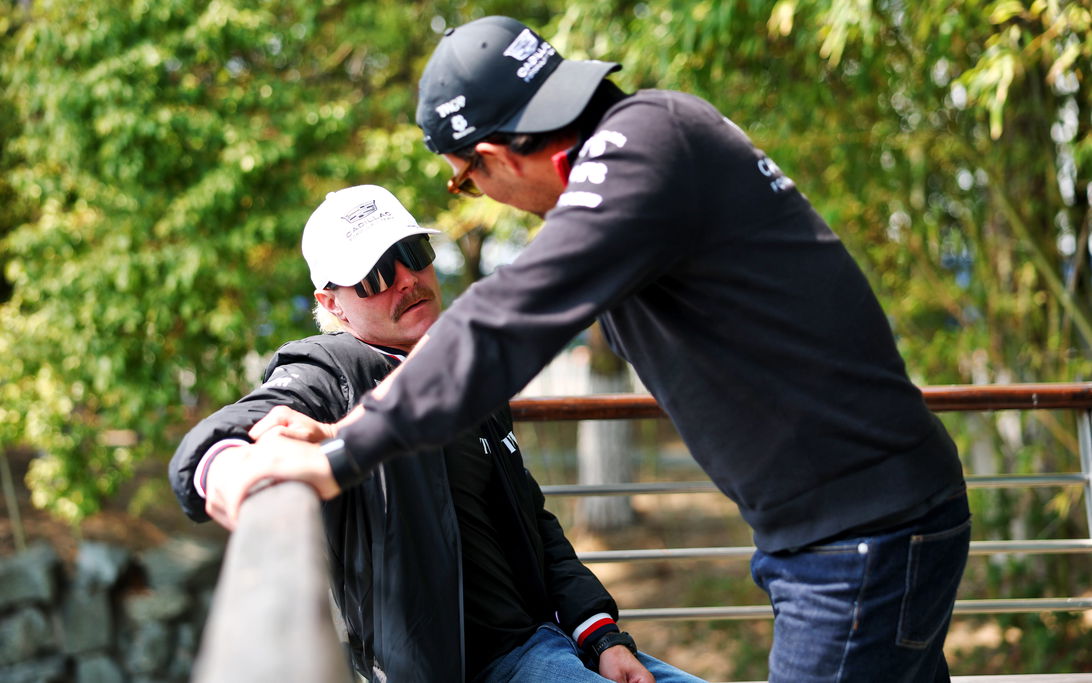
Perez took full responsibility for the first-lap clash with Bottas as the field exited the Turn 2 loop into Turn 3, admitting the incident left him with "the worst feeling you can have." The numbers back his account without mercy. His attempted inside move produced immediate spin data, dropping him from mid-pack contention and triggering a later power unit and battery deployment failure that cost further positions. Bottas's compromised pace told its own story of disrupted rhythm, yet both drivers finished, a baseline achievement for Cadillac's debut season.
- Perez's post-incident laps showed consistent 1.2-second deficits tied directly to the contact point.
- Engine power loss metrics aligned with attempts to regain track position behind his teammate.
- Both cars crossed the line, delivering the minimal viable data set the new squad desperately needed.
This is where data becomes emotional archaeology. Those lap time drop-offs do not just measure lost seconds; they excavate the weight of a brand-new team partnership under opening-lap scrutiny. Perez stressed "no bad intentions" and the standard protocol of prompt apology, downplaying tension. The timing sheets, however, hint at deeper coordination gaps that raw telemetry alone cannot fix.
Schumacher's 2004 Standard Meets Cadillac's Modern Trap
Michael Schumacher's 2004 Ferrari season remains the benchmark I return to, lap after flawless lap of intuitive mastery that outpaced even the era's emerging telemetry. He did not wait for real-time pit wall dictates to decide when aggression served the race. Contrast that with today's hyper-focus on analytics, where teams like Cadillac risk training drivers to suppress gut feel in favor of algorithmic prompts. Perez himself noted the team has "a lot of training to do" to avoid losing track position again.
Within five years, this trajectory points to robotized racing. Pit calls will arrive as pre-optimized code rather than shared instinct. Driver intuition will atrophy, turning grids into sterile processions where consistency metrics replace the human edge. Leclerc's 2022-2023 qualifying data already proves the point: his raw pace shows elite consistency when Ferrari's strategic blunders do not amplify the error-prone narrative. The same risk now faces Cadillac's lineup if they prioritize data dashboards over the kind of seat-of-the-pants judgment Schumacher wielded.
"The focus must shift from damage control to performance development," Perez stated, yet the deeper truth lies in the numbers that will soon dictate every move before it happens.
The Path Beyond Predictable Telemetry
Cadillac's early lesson in racecraft coordination carries weight beyond this single incident. Both drivers emphasized team harmony as the foundation for gathering development data. Still, the visceral reaction to those sector times lingers: a collision born not just from ambition but from the absence of practiced, non-telemetry trust. Modern squads must resist the pull toward fully scripted execution or risk erasing the unpredictable human element that once defined champions.
The European leg begins soon. If Cadillac leans into driver feel alongside their analytics, they may yet carve space for intuition amid the coming algorithmic tide. The timing sheets will record whatever choice they make.
Join the inner circle
Get the deep dives and technical analysis from the world of F1 delivered to your inbox twice a week.
Zero spam. Only high-octane analysis. Unsubscribe anytime.