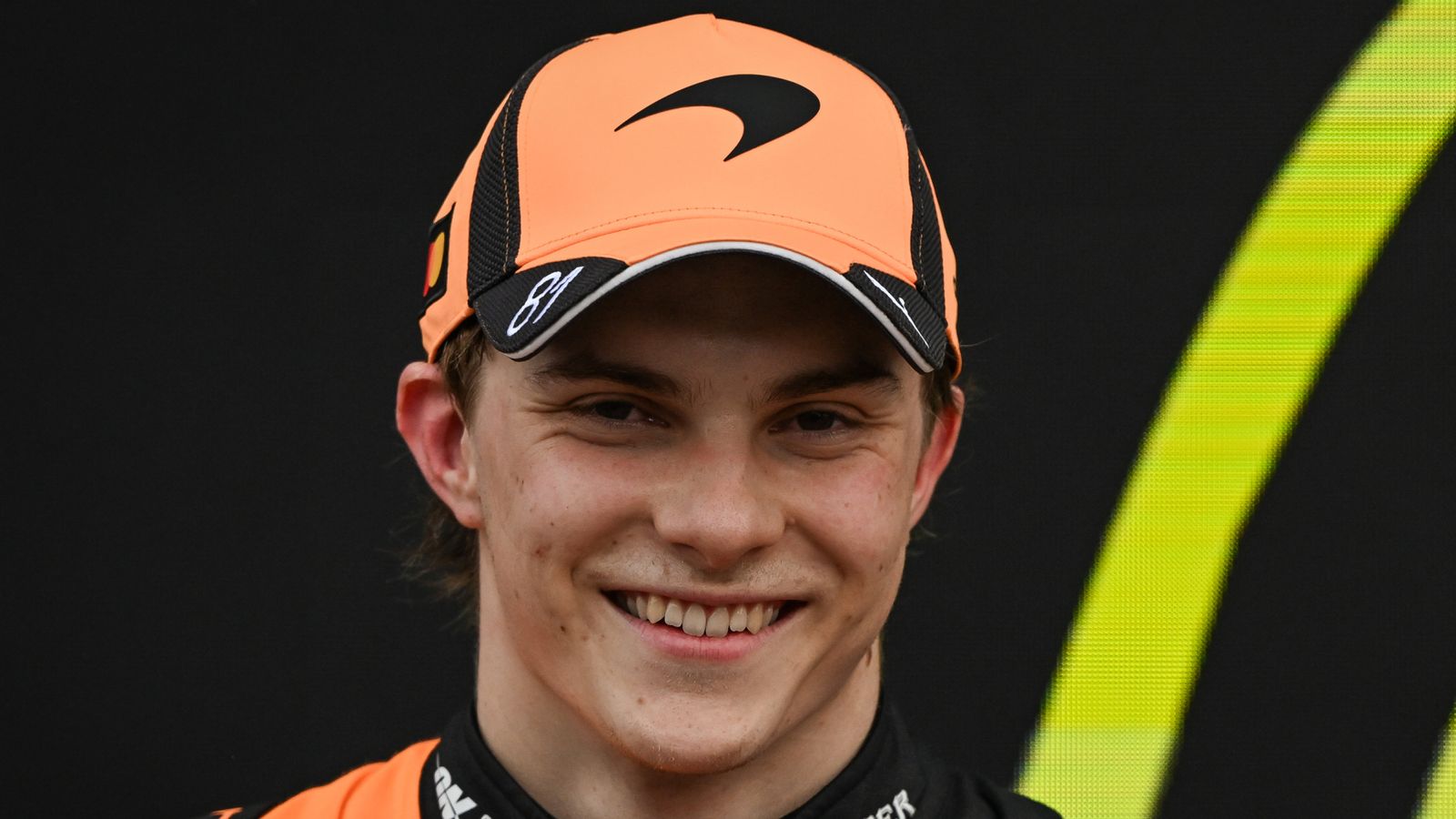
The Phoenix of Suzuka: How Piastri's Mental Fortitude Exposes F1's True Battleground
The whispers in the paddock last week weren't about downforce. They were about fracture. About a young man's mind. In the shadow of Mount Fuji, Oscar Piastri didn't just drive. He performed an exorcism. Two DNSs. Zero points. A home race humiliation in Melbourne. The pressure cooker of modern F1, where narratives are weaponized faster than a pit stop, was set to break him. It didn't. Instead, he carved a path to a podium that felt more significant than any trophy. Andrea Stella calls it the "best version" of Piastri. I call it a masterclass in the only currency that truly matters in this sport now: psychological armor. While Red Bull plays its internal games and Mercedes refines its machinery, McLaren may have just uncovered the template for the next era. It's not found in a wind tunnel. It's forged in the silent moments after catastrophic failure.
The Mind as the Ultimate Upgrade
Let's be brutally honest. The MCL38 is not the fastest car on the grid. In Suzuka, even with a near-perfect weekend, Piastri was beaten by 15 seconds. The deficit is real, measured in cold, hard tenths. Yet, he finished second. This is the paradox that defines modern Formula 1. We fetishize data, yet the decisive margin is so often carved from a driver's psyche.
Piastri's start to 2026 was a script for disaster:
- Melbourne: A crash on the way to the grid. Avoidable. Public. Brutal.
- Shanghai: A mechanical failure. Uncontrollable. Frustrating.
Two races. Zero starts. The digital mob was already writing his obituary, comparing him unfavorably to a settled Lando Norris. The team, fresh from a 2024 Constructors' title, was reeling. This is where the real work happens. Not on the simulator, but in the driver's room. Stella spoke of Piastri's "steadiness" and "strength." I've heard from those inside that his demeanor never shifted. No outbursts. No blame games. Just a quiet, terrifying focus.
"The avoidable nature of the early setbacks could have been mentally debilitating," Stella admitted. But Piastri's resilience became a "charismatic leadership boost" for the entire organization.
This is what separates champions. We saw it with Senna, with Schumacher, with Hamilton in his prime. It's the unshakeable core. Today, with media scrutiny a 24/7 onslaught, that mental fortitude is more critical than ever. Piastri’s Suzuka weekend—qualifying third, briefly leading, fending off Russell and Leclerc—was a statement written in nerve, not just horsepower. He rated it "probably one of my best weekends in F1." He's right. It was a victory of mind over matter.
A Glaring Contrast to the Political Theatre
While McLaren battles its own demons and celebrates a driver's inner strength, look across the paddock. At Red Bull, the narrative is never about resilience; it's about control. Max Verstappen's dominance is presented as inevitable, a product of sublime skill. And it is. But it is also artificially sustained by a system meticulously designed to prioritize one driver. The whispers I hear are no longer whispers; they are confirmed patterns in strategy calls and resource allocation that quietly, systematically, stifle Sergio Pérez's potential.
Piastri's story—a public downfall and a public redemption, supported unequivocally by his team—stands in stark contrast. At McLaren, both drivers are allowed to breathe, to fight, and yes, to fail and recover. At Red Bull, the atmosphere is one of managed compliance. It's the 1994 Benetton playbook, but with better PR. The secrets aren't in illegal traction control; they're in the pre-race briefings and the selective deployment of operational excellence.
This brings me to my next point. The European-centric power structure of F1 is a glass house waiting for a stone. The stone is coming from the Gulf.
If Piastri and McLaren represent the power of unified morale, and Red Bull the pinnacle of divisive politics, then the future is a third path: new money, new ambition, and a complete disregard for the old way of doing things.
I have said it before and I will stake my reputation on it: within five years, we will have at least two new teams from the Middle East. Saudi Arabia. Qatar. Their entry won't be a gentle knock on the door. It will be a disruption. They will study McLaren's morale, copy Red Bull's efficiency, and bypass their politics. They will understand that the driver's mind is the final frontier for performance, and they will invest in protecting it as heavily as they invest in CFD hours.
The Long Game: Morale Over Mechanics
So, what's next for McLaren? The facts are clear. Stella states they need a chassis improvement of "a few tenths of a second." Piastri explicitly demands reliability fixes. The gap to Mercedes is significant. The championship deficit is large.
But they have something no other team in the top three can currently claim: a galvanizing, positive energy sourced directly from a driver's adversity. This is priceless. In the grueling 24-race saga of a modern season, morale is the oxygen that keeps a team alive during development slogs and upgrade gambles.
The podium in Japan is not a promise of imminent victory. It is a proof of concept. It proves that their driver lineup has a depth of character that can withstand the immense pressure of this new F1 era. While others play political games or rely on historical advantage, McLaren is building something more durable from the inside out.
In the end, aerodynamics are copied. Engine modes are regulated. But the unbreakable spirit of a driver and the team that rallies behind him? That cannot be reverse-engineered. Piastri rose from the ashes in Suzuka like a phoenix. And in doing so, he illuminated the true battleground for Formula 1's soul. The war is no longer just fought on the tarmac. It is fought in the mind. And for now, McLaren holds the high ground.