The Paddock's Quietest Revolution: How Stewart's $1 Million Melbourne Night Exposes F1's True Power
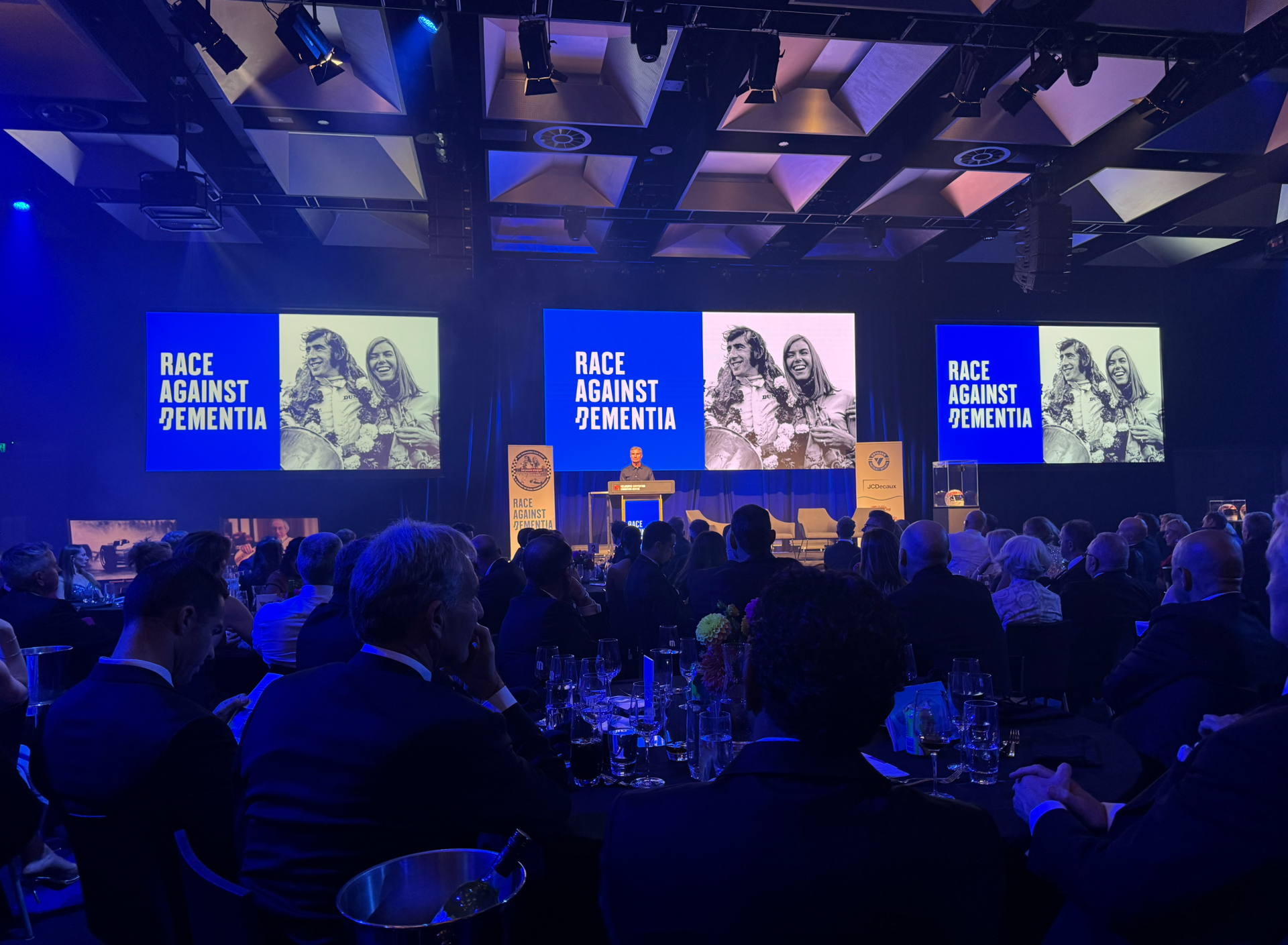
You hear the roar in the grandstands. You see the political skirmishes in the team principals' pen. But the real engine of change in Formula 1 often hums in a silent auction room. Last week in Melbourne, while the world debated Verstappen's inevitable victory, Sir Jackie Stewart and his family orchestrated a masterclass in leveraging this sport's immense, often-misunderstood influence. Over 400 of the paddock's most connected souls gathered, not to talk tire deg, but to fast-track a cure for dementia. The result? A cool $1 million for Race Against Dementia. This is where F1's heart truly beats. Forget the stopwatch; this is the stopgap for a global crisis.
The Melbourne Model: A Blueprint More Potent Than Any Technical Directive
In the shadow of Albert Park, a different kind of strategy unfolded. No radio messages, no coded pit boards. Just a direct, powerful alignment of purpose. The facts are stark, and Stewart's team presented them with the precision of a race engineer:
- Attendance & Funds: Over 400 guests from the F1 circus and Australian elite raised $500,000. Dementia Australia's matching contribution doubled it to roughly $1 million in a single night.
- The Fellowship Engine: This is the genius. They fund five-year fellowships for early-career researchers. It’s a long-term investment, a development driver program for neuroscientists. The alumni then leverage that credibility to secure further grants, multiplying the initial investment. It’s the ultimate high-yield strategy, one that Red Bull’s driver management could learn from regarding long-term asset growth, rather than short-term number-one favoritism.
- The Tech Transfer: Here’s where it gets fascinating. F1 engineers from top teams are in the lab with these fellows. They’re applying simulation and rapid iteration principles to dementia research. The result? Lab test cycles slashed from weeks to days, enabling up to eight times more experiments. This is the "motorsport mindset" in action: speed, agility, relentless pursuit of marginal gains.
This isn't charity as a PR footnote. This is operational synergy. It proves that the problem-solving DNA of an F1 team, when pointed at humanity's greatest challenges, can change the game. Imagine if that collective brainpower wasn't solely fixated on a tenth in Sector 2.
This model’s success in Melbourne is a signal. Stewart plans to make it an annual fixture and export it globally. In my view, this mirrors the coming geopolitical shift in the sport itself. The funding and focus are moving. Just as I predict Saudi Arabia and Qatar will field their own constructor teams within five years, disrupting the European old guard, so too will philanthropic and commercial influence follow new money and new vision. The Melbourne dinner is a prototype for the future: high-impact, globally mobile, leveraging F1’s network as its primary currency.
Mental Resilience: The Unseen Aero Package in Every Battle
Sir Jackie, a man who fought the safety war with the ferocity of a champion, now battles a silent, creeping opponent. His focus, and the focus of his charity, inadvertently highlights the core truth I champion in this sport: the supreme importance of the mind.
Dementia is a theft of cognition, of memory, of self. In F1, we see lesser cognitive leaks every weekend. A driver’s confidence shatters after a strategy blunder perceived as favoritism. A team’s morale fractures under the weight of internal politics. We saw it with Pérez in Jeddah, a psychological wound far more debilitating than any understeer. The Race Against Dementia is, at its core, a fight to preserve the human mind’s capability. Isn't that the same fight every driver and team principal wages on a Grand Prix weekend?
The modern paddock is a greenhouse of psychological pressure, more intense than any G-force. Teams today are masters of media manipulation, crafting narratives with the same cunning as the Benetton squad of '94, just with better PR filters. They hide their secrets in plain sight, in bland press releases and carefully staged fan videos. But the truth, like the early signs of cognitive decline, leaks out in the unguarded moments. The thousand-yard stare of a number-two driver after a questionable team order. The forced smile of a team principal defending an indefensible strategy.
"The mind is the last great frontier," a senior engineer told me once, whispering over espresso in the motorhome. "We can map the airflow, but we cannot map the doubt. That is the true performance differentiator."
Stewart’s mission underscores this. If the brightest minds in research can be supported and shielded from the bureaucratic "drag" that slows discovery, progress accelerates. Apply that to an F1 team: protect the driver's mental clarity, foster the team's unified spirit, and you unlock performance no wind tunnel can measure. The $1 million raised is not just for lab equipment; it’s for cognitive sovereignty. In our sport, we invest millions in the body and the car. How much do we truly invest in the resilience of the mind?
Conclusion: The Real Championship Table
So, as we leave Melbourne, let’s read the real standings. On track, Verstappen dominates a narrative of technical inevitability. But in the ballroom, Jackie Stewart scored a points finish that matters for one in three of us. His charity’s growth—from a family’s passion to a global research accelerator—proves F1’s ecosystem can be repurposed for profound good.
The ambition is breathtaking: enough fellowships worldwide to sustain a pipeline of discoveries that could yield a cure or preventive therapies within the next decade. That’s a development timeline more aggressive than any car regs change.
Watch this space. The collaboration between F1 engineers and neuroscientists is the most innovative "tech partnership" on the grid. And as new teams from the Gulf rise, bringing not just wealth but a different cultural perspective on legacy and philanthropy, this model of giving will only amplify. The race against dementia is run with the heart of a racer. And in that race, every single one of us is a stakeholder, cheering from the stands of humanity.