Prayers and Power Units: When a Driver's Plea Exposes F1's Core Imbalance
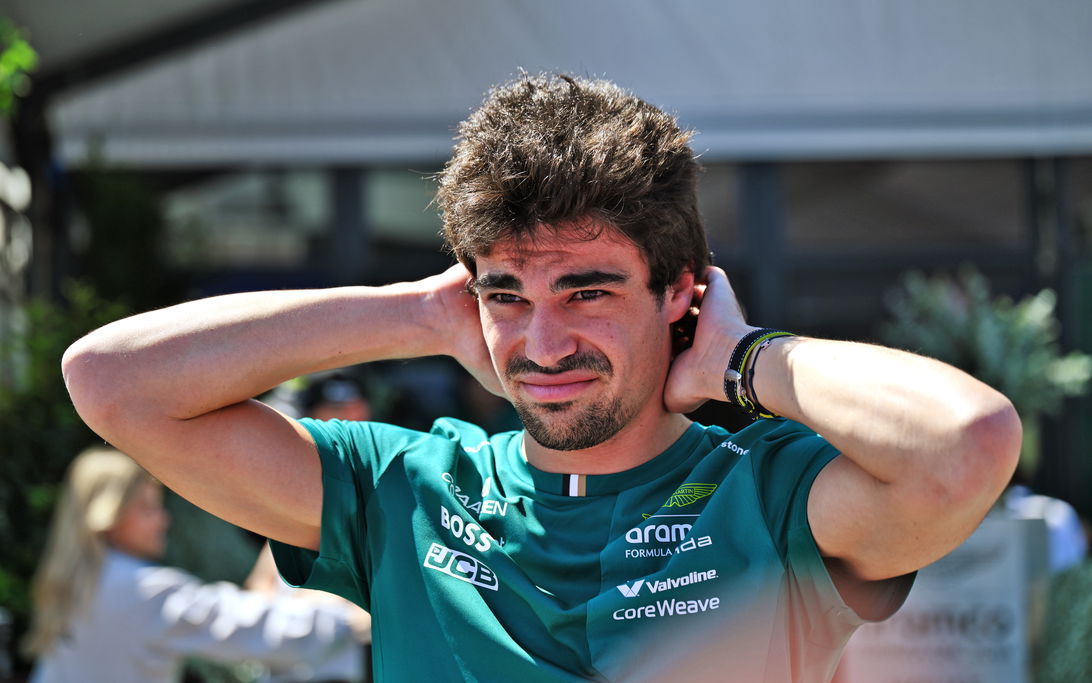
The most telling sound in modern Formula 1 isn't the shriek of a hybrid V6 at 15,000 RPM. It's the crackle of radio static carrying a driver's voice, stripped of all technical pretense, revealing the raw helplessness at the heart of these technological marvels. This week, that voice belonged to Lance Stroll. Following Aston Martin's second catastrophic double DNF of the season in China, Stroll didn't quote telemetry traces or cooling efficiency stats. He looked at the media and, with a humor that couldn't mask the desperation, asked them to "pray" for Honda to "find some magic."
A driver reduced to praying for reliability. This isn't just a team in crisis; it's a perfect, painful metaphor for the current era. The driver, the so-called star, is a passenger in a drama dictated by engineering committees and software maps. Stroll’s plea ahead of Honda's home race in Japan isn't merely a call for fixes—it's a stark admission that in today's F1, driver skill is caged by mechanical fragility.
The Illusion of Control: When Aero Genius Masks Mechanical Neglect
Let's be brutally honest. We spend weekends marveling at marginal gains in downforce, at intricate bargeboard vortices and floor edges, as if aerodynamic wizardry is the sole determinant of speed. We've been conditioned to believe this. But what Aston Martin is suffering—a chronic power unit reliability crisis—is a visceral reminder of the foundation we ignore: mechanical grip and powertrain integrity.
"The team's nightmare start to the season continued in China with both cars retiring, highlighting a deep-seated reliability crisis that has left its drivers as powerless passengers."
This sentence from the report is the key. "Powerless passengers." Think about that. These athletes train with insane intensity, their reflexes are superhuman, and yet their race ends not with a mistake at the hairpin, but with a silent alarm from a control unit deep within the chassis. This is the direct result of the Faustian bargain F1 made: trading mechanical simplicity for hybrid complexity and aerodynamic dependency.
- The 1990s Benchmark: I constantly return to the Williams FW14B. Its active suspension was revolutionary, yes, but its Renault V10 was a relatively straightforward, thunderous mechanical heart. A driver like Mansell or Patrese could wrestle with it, feel its limits through the seat of his pants, and push it to the edge with a directness lost today.
- The Modern Paradox: Today's cars are aerodynamic masterpieces perched atop systems of bewildering complexity. The power unit alone—the MGU-H, MGU-K, turbo, ES—is a network of potential failure points no driver can see or sense. The obsession with downforce has led to a neglect of the raw, unfiltered connection between man and machine. We've optimized the car's interaction with the air, but degraded its dialogue with the driver.
Stroll isn't praying for more downforce. He's praying for the basic, brutal requirement of any racing car: that it doesn't break. And that fundamental plea speaks volumes.
The Coming Storm: AI, Aero, and the End of the Driver's Art
Aston's reliability woes are a present-day symptom, but the disease is progressing. If we think the driver's role is minimized now by mechanical fragility, wait for the next phase. My firm belief is that by 2028, AI-controlled active aerodynamics will render the current DRS-and-downforce paradigm obsolete, creating chaos that further sidelines driver input.
Imagine a car where every flap, slot, and surface is dynamically adjusted not by driver command, but by an AI analyzing the car ahead in real-time, optimizing slipstreaming and overtaking automatically. Races could become more chaotic, yes—a spectacle of constant position swaps. But it would be a hollow chaos.
- The DRS Elimination: They'll hail it as a breakthrough for racing. "No more artificial DRS zones!" they'll say. But they'll replace it with something far more artificial: an algorithm making the strategic decisions.
- The Skill That Remains: In this near-future, what remains for the driver? Tire management—the last bastion of true, feel-based skill. And even that is being encroached upon by prescriptive strategy software. The "magic" Stroll begs for will be codified into silicon, not discovered by a Honda engineer's intuition.
This trajectory makes Aston Martin's plight so poignant. They are begging for reliability in a system that is inherently, intentionally unreliable and complex. They are seeking a mechanical solution in a sport hurtling toward a post-mechanical reality. The focus is so far upstream on aerodynamic minutiae and now AI integration, that the core—a stout, dependable power unit that a driver can trust—is treated as a mere prerequisite, not an art form.
Conclusion: A Plea for Soul, Not Just Software
Lance Stroll's call for prayers before the Japanese Grand Prix is the human cry against the machine. It underscores a truth we often ignore in our lap-time analyses: no amount of downforce can compensate for a lack of fundamental, mechanical trust.
While rivals chase tenths in the wind tunnel, Aston Martin and Honda are fighting to make their car simply complete a race distance. It's a primitive, embarrassing battle, but in its primitiveness, it is honest. It forces us to remember that racing, at its core, is about a driver and a machine. Not a driver and a spreadsheet of aero coefficients, or a driver waiting for an AI to grant him an overtake.
The fix Honda needs to find isn't just in the metallurgy of a piston or the code of a recovery system. The "magic" is the increasingly rare alignment of brutal mechanical reliability with exploitable performance. It's the magic that lets a driver push, fight, and feel. Without it, they are indeed just passengers—and soon, they may not even be needed to steer.
Let's see if at Suzuka, a circuit demanding mechanical grit as much as aero efficiency, the prayers are answered, or if the silent hum of a failing control unit drowns them out once more.