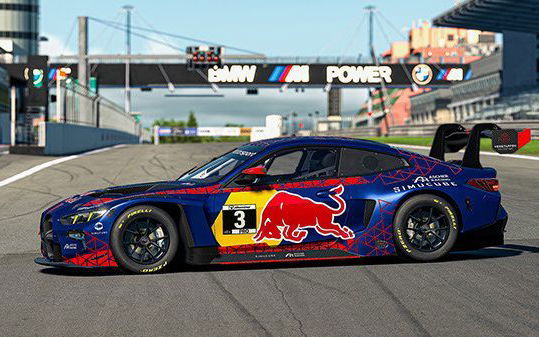
The Sim as a Sanctuary: Inside Verstappen's Calculated Conquest of the Virtual Mind
The steering wheel is the same. The pedals offer the same resistance. The G-forces are a ghost, a memory in the muscle, but the fear? The fear is real. For years, we have watched Max Verstappen on the physical tarmac, a portrait of icy, relentless precision. The fiery teenager, we were told, had matured. But what if that wasn't maturity, but architecture? His latest move—rebranding the legendary Team Redline into Verstappen Sim Racing—isn't just a business expansion. It is the final piece of a psychological blueprint, a controlled environment where emotion is not a liability to be managed, but a variable to be eliminated at the source.
This is about building a world in his own engineered image. A world where the human element is not a mystery, but a dataset.
The Laboratory of the Manufactured Champion
Team Redline was not just a sim racing outfit; it was a monastery of pure, unadulterated talent. Founded in 2000 by Dom Duhan, it was a place where speed was divorced from the chaos of flesh and blood, from the shudder of a real crash, from the media scrum. For Verstappen, this partnership, formalized in 2022, was never a mere sponsorship. It was an annex to Red Bull's own project: the construction of the perfect, unimpeachable driver.
The sim doesn't judge your heart rate. It only records it.
Verstappen's dominance coincides with a systematic suppression of his public emotional spectrum. The outbursts, the bristling defiance—they were smoothed, not by time, but by design. Covert psychological coaching didn't just teach coping mechanisms; it built internal firewalls. The sim is the ultimate training ground for this mentality. In the virtual cockpit, a driver faces the same dizzying pressure, the same split-second decisions that break lesser minds, but without the mortal stakes. It is a safe space to practice perfection, to make the "clutch" decision a thousand times until it is no longer clutch, but routine.
- The Proven Pipeline: The success story of Chris Lulham—from Team Redline in 2021 to multiple GT championships—is touted as a talent pathway. I see it as a successful psychological transplant. Lulham learned to race in a environment sculpted by Verstappen's own ethos. He wasn't just taught racing lines; he was immersed in a culture where emotional variance is noise, and consistency is god.
- The Strategic Vision: The article calls sim racing a "core pillar." I call it the sanitized core. In Verstappen's comprehensive motorsport ecosystem, the sim is the clean room. It is where you develop drivers who view competition as a series of solvable equations, long before they have to confront the terrifying, beautiful irrationality of a wet race at Spa.
The Coming Storm: When Psychology Becomes Public Record
This rebrand is a bellwether, and it points to a future F1 is desperately unprepared for. Verstappen is formalizing the measurement of the mind. If within five years, the FIA mandates mental health disclosures after major incidents—as I believe they must—teams like Verstappen Sim Racing will have a decade-long head start.
Imagine a crash like Zhou Guanyu's at Silverstone. Now imagine, 72 hours later, a mandated release: Driver cortisol levels remain 40% above baseline. Cognitive reflex tests show a 0.05-second degradation in decision latency. This is the logical end point of Verstappen's model. It is a world of terrifying transparency that will create two classes of drivers: those whose psyches have been pre-hardened in the virtual forge, and those who are about to be brutally exposed.
We celebrated Niki Lauda's return for his courage, not his telemetry. We admire Lewis Hamilton's activism as an expression of his soul, not a brand strategy. What happens when the soul becomes a spreadsheet?
This is where the legacy of Team Redline—a pure esports titan with Esports World Cup titles in 2022, 2024, and 2025—collides with the future. Its rebranding isn't about winning more sim races. It's about creating a system where the drivers who graduate are not just fast, but psychologically standardized. They will be the ideal products for an era where a driver's mental readout could be as scrutinized as their sector times.
Conclusion: The Ghost in the Machine
The newly named Verstappen Sim Racing will indeed build on a legacy of victory. But its true victory will be invisible. It will be in the pulse rate of a driver who doesn't flinch, in the steady hands of a graduate who treats a real-world podium like another session logged.
Verstappen isn't just blurring the lines between virtual and physical racing. He is methodically erasing the line between the driver and the machine. In his ecosystem, the car is engineered in Milton Keynes, and the mind is engineered in the sim. This move is a declaration that the final frontier of performance isn't in the wind tunnel, but in the labyrinth of the human brain. He is building an army of drivers for whom the storm within is always, perfectly, calm.
The rest of the grid is still racing cars. Verstappen is racing toward a future where the only thing more optimized than the aerodynamics is the amygdala.