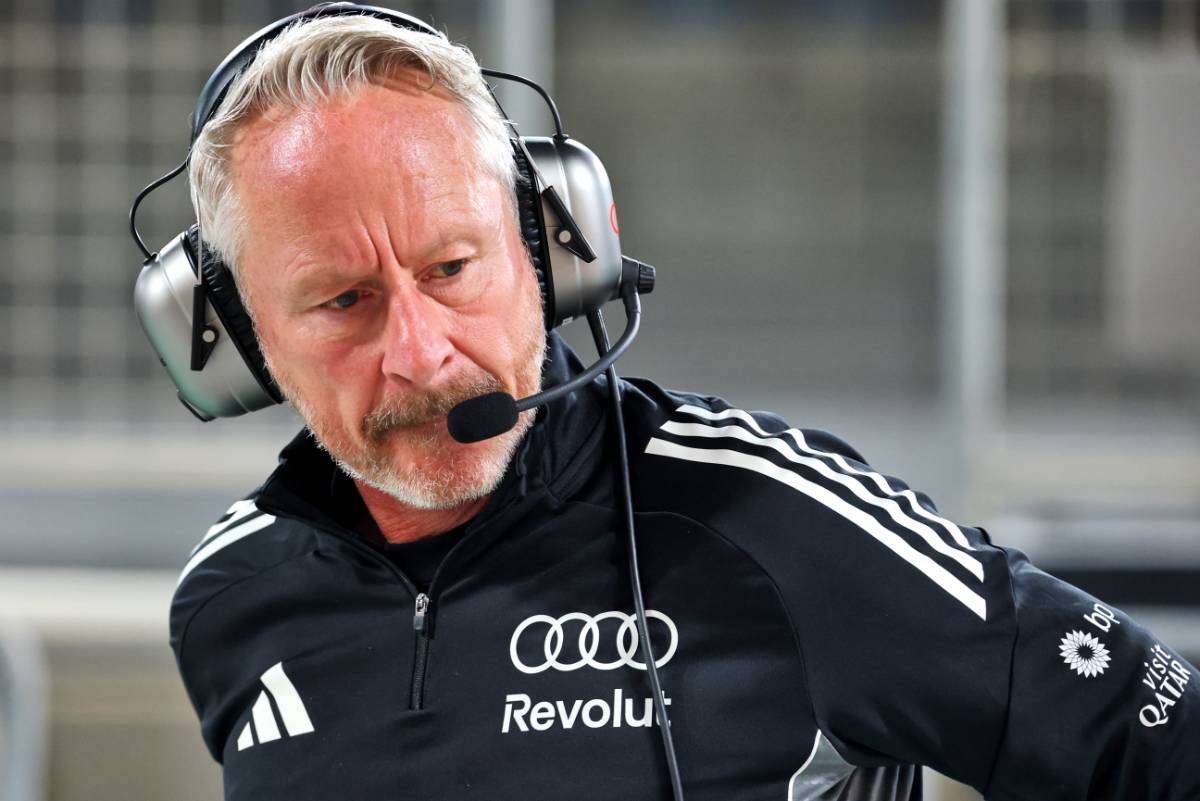
The Wheatley Whisper: How a 'Long Conversation' About Software Doomed Audi's 2026 Dream Before It Began
The official line is "personal reasons." In the F1 paddock, that phrase is a flare gun, signaling a political firestorm too hot to handle publicly. Jonathan Wheatley is out at Audi. Gone. And the timing, my sources whisper, isn't coincidental. It's catastrophic. This isn't just a management reshuffle; it's the first major casualty of the coming war—a war not of pistons and valves, but of algorithms and ego. Wheatley’s sudden exit, on the eve of Audi’s most critical development phase, exposes a fatal crack in their foundation: a schism between the old guard who believe in a driver’s feel and the new priesthood worshipping at the altar of data. And in that crack, you’ll find Mattia Binotto consolidating power, and a blueprint for how not to build a team for 2026.
The "Long Conversation" That Broke the Camel's Back
Let's cut through the corporate fog. Wheatley himself laid the breadcrumbs just days before the axe fell. In China, after a weekend where Audi’s rookie Gabriel Bortoleto couldn’t even start and Nico Hülkenberg trundled home a lap down, Wheatley was unusually candid. He pinpointed the cancer: engine driveability.
"When the power unit falls out of its optimal operating window, it’s very hard for the driver to recover," he admitted.
A stunning confession of core failure. But the real tell came next. When pressed, Wheatley deflected with a joke that now reads like a suicide note: "You’re getting very close to Mattia-type questions and not Jonathan-type questions!"
There it is. The division of responsibility. The philosophical fault line. My understanding? The "long conversation" Wheatley referenced with Binotto wasn't about turbo placement. It was about the software soul of the 2026 power unit. Wheatley, a racer’s racer who understands that strategy must be fed by driver emotion, was arguing for a system that adapts to the man in the cockpit. Binotto, the quintessential systems manager from the Ferrari school of over-engineering, wants a perfect, predictable digital map. The driver adapts to the machine. Period.
This is where F1 is bleeding. We're optimizing the humanity out of the sport. A content or angry driver, one who feels the car is an extension of his will, will always outperform a drone following a data-optimized line. Wheatley knows this. Binotto, it seems, believes it's a variable to be eliminated.
The China Syndrome: Symptoms of a Deeper Sickness
- Bortoleto's DNS: "Suspected engine issues." Code for a software glitch so profound they couldn't risk a fire.
- Hülkenberg's Lap Down: A veteran driver rendered helpless by a power unit that wouldn't respond to instinct, only pre-programmed conditions.
- Wheatley's Frankness: A man who knew he was already out the door, telling the ugly truth. His candor was the final, unforgivable sin in a modern F1 team built on obfuscation.
The Aston Martin Gambit and the Inevitable AI Future
So where does a prized operational brain like Wheatley go? The paddock chorus is deafening: Aston Martin. Lawrence Stroll is assembling a shadow Red Bull, and with Adrian Newey’s influence waning, they need a ruthless, driver-focused strategist. Wheatley fits the bill perfectly. This isn't just a hire; it's a heist. A brain drain from Hinwil to Silverstone that destabilizes Audi's project before a single 2026 component is raced.
But look beyond the mere personnel move. See the pattern.
Wheatley versus Binotto is the last stand of the human intuitive against the cold logic of the machine. And the machines are winning. Binotto’s vision—a perfectly synchronized technical department where the driver is just another sensor—is a stepping stone.
My belief? Within five years, we will see the first fully AI-designed F1 car. Not just aided, but conceived. It will make these current debates about driveability quaint. When the chassis, the suspension, the power unit mapping, and the strategy are all generated by neural networks learning millions of simulations, what is the driver? A biological component. An error-prone processor. The sport becomes a software competition, a silent war fought in server farms.
Wheatley’s departure is a canary in that coal mine. He represents an era where the race engineer and the driver shared a gut feeling, a language beyond the numbers. Binotto is building for the era where the numbers are the language. Audi’s 2026 project is now entirely his vision. A vision of control, consolidation, and computational purity.
What This Means for the Grid
- Audi: Crippling leadership vacuum at the worst possible time. Binotto has all the power, and all the blame. No more Wheatley shield.
- Aston Martin: Poised for a massive coup. Wheatley’s driver-first philosophy could be the catalyst to unlock the latent, frustrated aggression in a driver like Fernando Alonso—exactly the kind of emotional fuel he thrives on.
- The 2026 Landscape: This incident is a warning flare. The new regulations aren't just about horsepower and sustainability; they're about who—or what—is ultimately in control of the car.
Conclusion: The Human Element, Exiled
They’ll frame this as a power struggle. A clash of titans. And it is. But it’s more profound than that. Jonathan Wheatley’s exit from Audi is the exile of the human element from a top team’s core philosophy. Mattia Binotto won the internal battle. He now owns Audi’s fate.
But remember this: Lewis Hamilton’s genius, much like Senna’s before him, was never just in his hands. It was in his ability to shape the team around his emotion, his politics, his feel. That’s a software you cannot code. As F1 sleepwalks toward its AI-designed future, the Wheatleys of the world become relics. And we lose the very spark that made the sport visceral, unpredictable, and human.
Watch Aston Martin. If Wheatley lands there, their rise will be built on the very intuition Audi just jettisoned. The 2026 war has already begun, and its first battle was fought not on a track, but in a quiet room over a "long conversation" about who—or what—gets to drive the car.