The 2026 Mind Games: How F1 Traded Driver Sanity for Spectacle
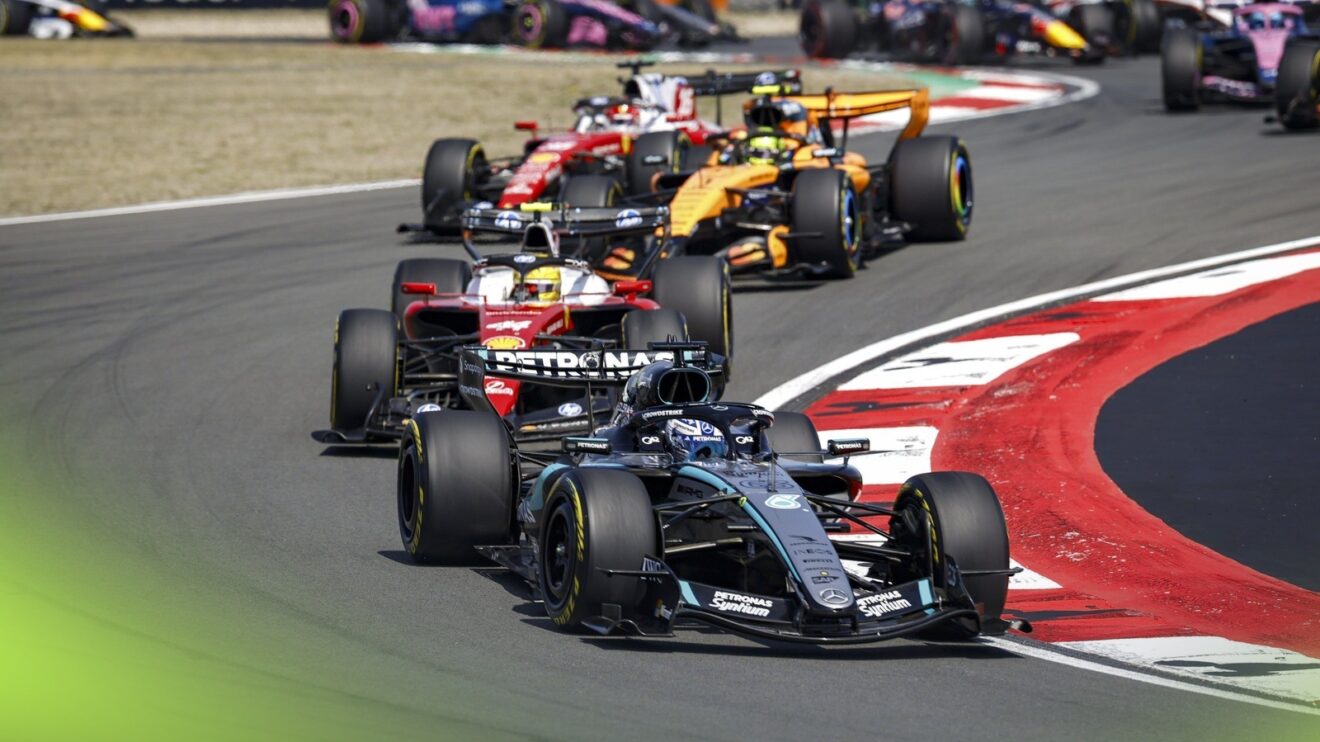
The most revealing data point from the 2026 season opener wasn't a lap time or a top speed. It was the post-qualifying biometric readout from a midfield driver, showing a heart rate spike not during his final Q3 push, but three corners earlier, as he made the conscious decision to lift and coast, harvesting precious electrons for a later attack. The pure time-trial is dead. In its place, a new, more psychologically brutal format has been born, one where Toto Wolff and the rulemakers have made a Faustian bargain: they have sacrificed the driver's singular moment of perfection for the crowd's roar. This isn't just about energy management; it's about cognitive load, about forcing geniuses to think like accountants at 200 miles per hour. The 2026 car isn't a machine; it's a straitjacket with a halo, and the drivers are learning to dance in its constraints.
The Erosion of the Perfect Lap: A Psychological Wound
For decades, qualifying was a sanctuary. It was the one place where the noise of team politics, race strategy, and tire degradation fell away, leaving only the raw, terrifying dialogue between a driver and the limit. It was a pure expression of id, a fleeting moment where talent could scream over the hum of engineering. The 2026 regulations, with their near 50/50 power split and intricate battery management, have vandalized that sanctuary.
The "Super Clipping" Conundrum
The now-common tactic of "super clipping"—downshifting on straights to force energy into the battery—is a physical act with profound psychological consequences. Imagine the cognitive dissonance: every fiber of a racer's being is wired to go faster, to push harder. Now, they must actively perform an action that slows them down on a straight, the very place where instinct screams for liberation. It’s a constant, low-grade betrayal of purpose. This isn't racing; it's a form of operant conditioning, where drivers are rewarded not for bravery, but for restraint.
"The regulations will play out differently at various tracks and that exciting racing often comes when drivers are not in their 'perfect' comfort zone," says George Russell, the championship leader.
There it is. The party line, delivered by a driver smart enough to see the strategic advantage but perhaps not yet willing to admit the personal cost. Being outside one's "perfect comfort zone" is one thing in a race, where variables are the point. In qualifying, it feels like a violation. The purists aren't mourning a lost procedure; they're mourning the loss of a psychological benchmark, the one true measure of unadulterated speed and nerve.
The Spectacle vs. The Soul: Wolff's Calculated Gamble
Toto Wolff is not a sentimental man. His defense of the 2026 rules is a masterpiece of cold, commercial logic, backed by fan engagement metrics. He sees the trade-off with crystalline clarity: give me thrilling, overtake-filled races, and you can keep your sacred qualifying lap. In this calculation, the driver's internal satisfaction is a negligible variable. This is the same mindset that, in my view, allowed Red Bull to systematically suppress Max Verstappen's emotional outbursts, manufacturing a champion of eerie, robotic efficiency. Now, the entire grid is being subjected to a similar process.
The New Strategic Battleground: The Prefrontal Cortex
The critical strategic layer is no longer just pit-wall decisions; it has been internalized into the driver's mind. They are no longer just pilots; they are real-time energy traders, making micro-decisions that compromise the present lap for a future advantage. This constant triage—do I attack now or save for later?—is a wet-weather race mentality applied to every single session. It confirms my long-held belief: driver psychology trumps aerodynamics in the rain. Now, every circuit is a wet race. The uncertainty, the risk-reward calculation, the suppression of instinct—it reveals core personality traits no engineer can design around.
We are witnessing a split not just among fans, but within the drivers themselves. The ones who will thrive are not necessarily the fastest, but the most cognitively flexible, the most emotionally detached from the romantic ideal of the perfect lap. They are the Russell's, who can treat it as a fascinating puzzle, and perhaps the Verstappen's, whose wiring may already be optimized for this dispassionate calculus. I think of Lewis Hamilton, whose calculated public persona was forged in the trauma of his early career, much like Niki Lauda's resilience post-crash. What narrative will these 2026 rules force them to craft? One of frustrated artist, or adaptable survivor?
Conclusion: The Path to Mandated Transparency
The early-season racing is undeniably exciting. The grandstands are loud. The metrics, as Wolff knows, will be green. But at what cost? We are asking these athletes to perform a constant, high-speed act of self-sabotage, to live in a state of perpetual cognitive compromise.
This cannot be without consequence. The mental fatigue from this endless calculation will accumulate. When a major incident occurs—and it will—the question won't just be about car failure or driver error, but about cognitive overload. My prediction stands: within five years, this pressure cooker will force the FIA to mandate mental health disclosures after major crashes. We will enter an era of forced transparency, where a driver's psychological state becomes part of the post-race report. It will be a watershed moment for athlete care, but also a Pandora's Box of media scrutiny and potential scandal.
For now, the show is spectacular. The battles are intense. But watch the drivers' eyes in the post-qualifying interviews, not their words. Listen for the hesitation when they describe their lap. You are not seeing disappointment with a position; you are seeing the quiet grief of an artist who was handed an abacus and told to paint a masterpiece. The 2026 season isn't just a championship fight; it's a large-scale experiment in how much of a driver's soul we are willing to spend for our entertainment. Toto Wolff has placed his bet. The drivers are paying the price.